The simple reason is that just the monthly parking fee, the income of those on the first floor is quite a large amount that no one wants to spend.
For a long time, the demolition of old apartment buildings in Hanoi and many places with the most problems, the first and second floors, has not been "advanced".
Decree 98/2024/ND-CP has taken a step forward when stipulating many flexible compensation options, such as compensation 1-2 times the area on the first floor, 1-1.1 times for the upper-floor apartment; or compensation in cash, arranging to buy business area if the first-floor household uses a house for trading. This mechanism has more "realized" the rights of the people. But that was not enough. Notably, the Decree also states the condition that 100% of residents agree before the old apartment building can be renovated.
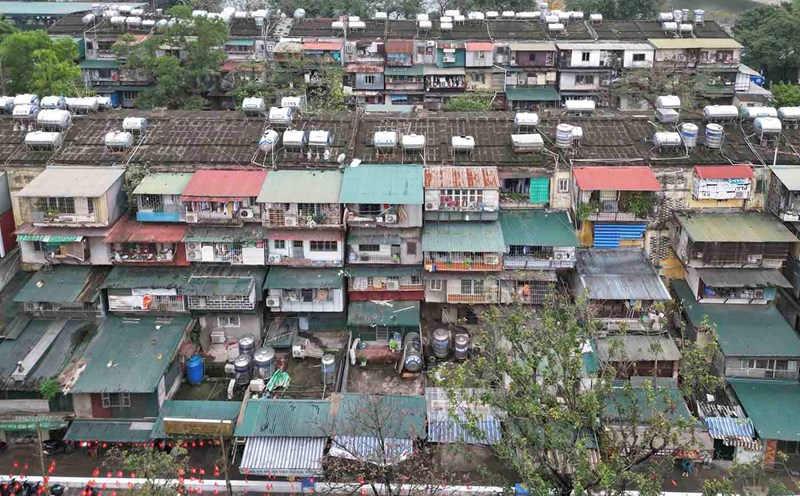
This is the reason why Hanoi is struggling to renovate more than 1,600 old apartment buildings, most of which were built in the 1960s-1990s and are now seriously degraded. Although many times the goal of "accelerating progress", "taking points", "taking the lead", in fact, less than 2% of old apartment buildings in the capital have been renovated, a figure that is too small compared to the urgent need for safety, renovation and sustainable urban development.
The answer lies in three main factors: Lack of a strong enough mechanism, lack of unity in planning and especially, lack of consensus among the parties. When the interests of the people, investors and the government have not met, it is difficult for all policies to come into reality.
The draft resolution to pilot some specific mechanisms for Hanoi is being discussed by the National Assembly for the first time, allowing the city to apply coercive measures for demolition if it reaches over 75% of the owner's consensus - opening up a new approach to remove the biggest bottleneck in the past. This regulation, according to the analysis of many National Assembly deputies, is the foundation for Hanoi to step through the "current cycle" of prolonged stagnation in renovating old apartment buildings. Because in reality, if only a few households do not agree, a project can be delayed for many years, seriously affecting the safety of thousands of residents living in degraded, even dangerous buildings.
However, enforcement is not and should not become the main solution. The more important part is how to achieve that 75% consensus, not through administrative orders, but through transparency, understanding and ensuring harmony of interests. The consensus problem has many layers. First of all, there are concerns of the people: Where to go and where to live during the relocation period? Is the resettlement area commensurate? Is the value of the new apartment guaranteed?
Experts point out that consensus does not mean unity. There will never be a 100% household that absolutely agrees. Renovating old apartments is not just about building new buildings. That is the process of rebuilding trust between the State - people - businesses. When trust is placed in the right place, consensus is no longer a barrier, but becomes the strongest driving force for Hanoi to enter a cycle of safer, more civilized and more modern urban development. Of course, when the new regulations come into effect, people on the first floor cannot " subside" for personal gain when the old apartment building has come to the point of being forced to be renovated to ensure the safety of those around them.