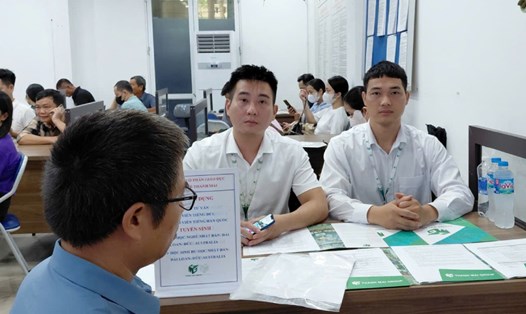
Based on the characteristics of the current labor market, experts say that there will be 3 main trends including: increasing labor on technology platforms, career transition associated with soft skills, and weak simple labor.
Advantages of qualified workers
Mr. Ha Anh Tuan - Director of Vinalink Company - commented that on the basis of digital technology development and influence as it is today, the labor market in the coming time will have 3 main trends: increasing labor on the technology platform, career transition associated with soft skills, simple labor is increasingly weak.
Regarding the trend of increasing labor on a technology platform, the market will require workers to be trained in depth. The development of technology and digital transformation changes recruitment demand, requiring human resources with deep professional qualifications and the ability to adapt quickly to new technology. In particular, employers will prioritize young workers because this group has the latest knowledge base, the ability to use technology and is often willing to work with a lower starting salary, Mr. Tuan emphasized.
Regarding career transition associated with soft skills, Mr. Tuan analyzed that in the context of many jobs increasingly requiring cooperation and interaction, skills such as communication, problem solving, teamwork and critical thinking will be a natural requirement in recruitment.
With the increasingly weak trend of simple labor, Mr. Tuan affirmed that the process of automating processes and the development of technology will replace some simple, low-skills jobs, leading to more fierce competition for these positions. Even when workers in simple positions proactively equip themselves with new knowledge and skills, especially skills in using technology, the risk of elimination and job loss is still very high. The biggest opportunity for this group to be able to adapt and seek other job opportunities in line with market trends is to be retrained in accordance with market requirements.
Key solutions
In order to improve the ability to connect labor supply and demand and improve the labor market in the coming time, in the context of the emergence of 3 trends in the labor market, experts propose key solutions.
Mr. Vu Quang Thanh - Deputy Director of the Hanoi Employment Service Center - said that first, it is necessary to build a digital, multi-platform, and inter-platform labor market data infrastructure. Currently, the number of foundational workers has increased sharply but there is a lack of standardized data while businesses do not have enough information for recruitment, and workers have to manage themselves, leading to a "slide" between supply and demand.
According to Mr. Thanh, the formation of an open, interconnected national labor database between the Ministry of Home Affairs - job exchanges - technology platforms - social insurance agencies is a key direction. In particular, the application of artificial intelligence in supply-demand analysis, forecasting human resource needs of each industry and each locality in real time will help connect the right - the right needs between job seekers and people seekers.
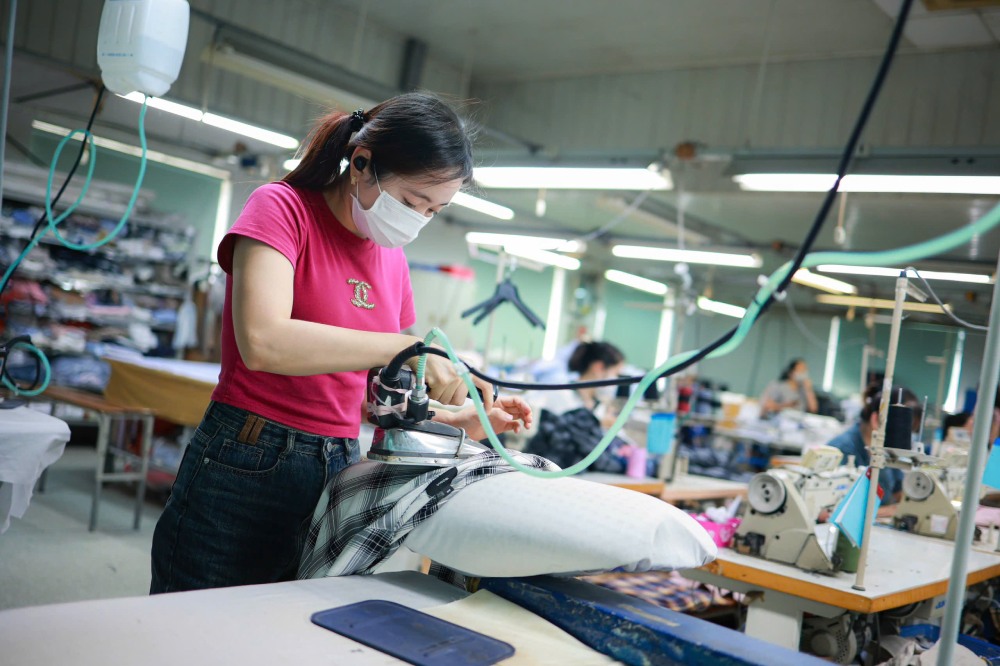
Mr. Thanh also noted that career transition is taking place strongly under the pressure of technology and automation. Workers need soft skills (communication, problem solving, teamwork, discipline, etc.), but the current training system is still heavy in theory and lacks flexibility. Establishing a model of "flexible learning - short-term training - soft skills standards" for workers who are changing careers is extremely necessary.
Accordingly, it is necessary to implement training courses associated with business needs; standardize national soft skills, integrate into vocational training and retraining; cooperate with businesses - vocational schools - employment service centers to organize training according to "orders", ensure at least 6070% of students have jobs after training; encourage businesses to invest in training funds with tax incentives and training cost support.
Finally, it is necessary to develop a policy to support the need for simple, disadvantaged and informal workers - ensuring that no one is left behind. Currently, simple workers (small-end sales, domestic help, pick-up and drop-off, traditional motorbike taxi drivers, etc.) account for nearly 55% of the Vietnamese workforce. This group is vulnerable to market fluctuations and limited access to job information.
Authorities can expand a mobile job consulting and introduction network, especially in industrial parks, rural areas, and areas with land use conversion. Support the digitization of informal labor records, put them in the labor database to be able to connect with suitable jobs, access voluntary social insurance and social security policies. Build a short-term public employment model, support temporary unemployed people (environmental sanitation, digitalization of records, community support...). Promote preferential loans to create jobs, especially for women, people with disabilities, and middle-aged workers.