The meeting aimed to share information and exchange experiences related to the activities of the Electricity Trade Union of both sides.
Attending the meeting, on the side of the Korea Electricity Trade Union (KTP), there were Mr. Choi Cheol-ho - Chairman of the NLHQ Trade Union, along with members of the working delegation who are Vice Chairman of the NLHQ Trade Union, Chairman of the Trade Union of the member Power Company, representatives of the NLHQ Trade Union's Professional Committee.
On the side of Vietnam Electricity Group (EVN), there was Mr. Pham Hong Phuong - Deputy General Director of EVN. Representatives of Vietnam Electricity Trade Union (VTC) include Mr. Do Duc Hung - Member of the Executive Committee of the Vietnam General Confederation of Labor, Chairman of VTC, Vice Chairmen of VTC, and representatives of the VTC's professional departments.
Sharing at the meeting, representatives of the two sides discussed contents related to the organization and operation models of the Korea and Vietnam Electricity Trade Unions; experience and vision in activities. In particular, the actions of the two power sectors as well as the Power Trade Unions of both sides in the face of common challenges related to climate change and fluctuations in the international energy market leading to increased electricity production costs; high demand for electricity to serve socio-economic development..., thereby demonstrating the role of protecting the rights and interests of workers in the Power sector on both sides.
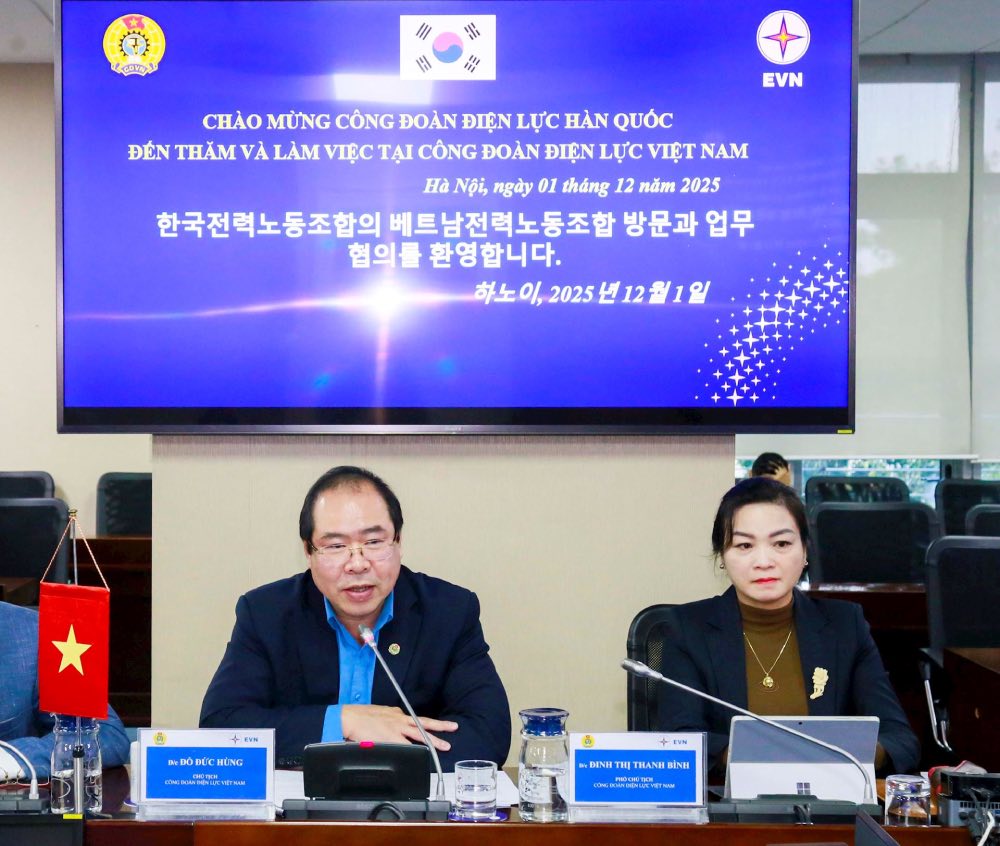
Representing the Vietnam General Confederation of Labor, Chairman Do Duc Hung said that the trend of digital transformation and the development of artificial intelligence (AI), along with the need for energy transition towards "green, clean, sustainable" are having a strong impact on the activities of the electricity industry in both countries, so the development of union members in Korea and Vietnam has also changed to suit practical requirements. In order to meet the demand for energy growth to serve socio-economic development, each Electricity employee in general and the Electricity Trade Union member in particular will have to make much more efforts. For the Vietnam General Confederation of Labor, which is an organization representing nearly 98,000 union members working in the Electricity industry, each EVN unit has a corresponding grassroots union level under its management, ensuring close operations with the employees of each unit.
Sharing about the difficulties and challenges in operational orientation, EVN Deputy General Director Pham Hong Phuong said that Vietnam is a developing country with a huge demand for growth, so the pressure to provide enough electricity for socio-economic development is huge. According to the Government's requirement that from now until 2030, the Electricity industry must meet the electricity demand for economic growth of 10% or more (two digits). This task puts great pressure on the Group as well as the staff of the Electricity industry.
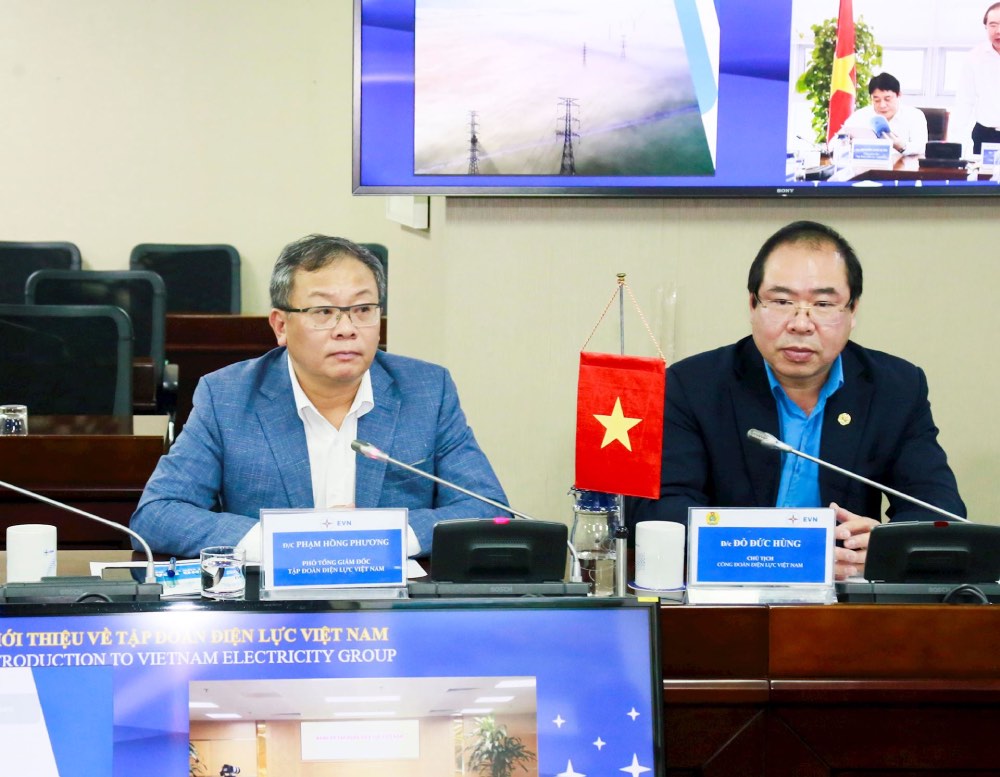
In addition, with Vietnam's commitment at COP26 to reduce net emissions by 0 according to the goal of NET ZERO by 2050, developing power sources that meet the criteria of green - clean - sustainable is very important. Vietnam in general, EVN in particular has been focusing on developing clean energy sources such as wind power, solar power and upcoming nuclear power...
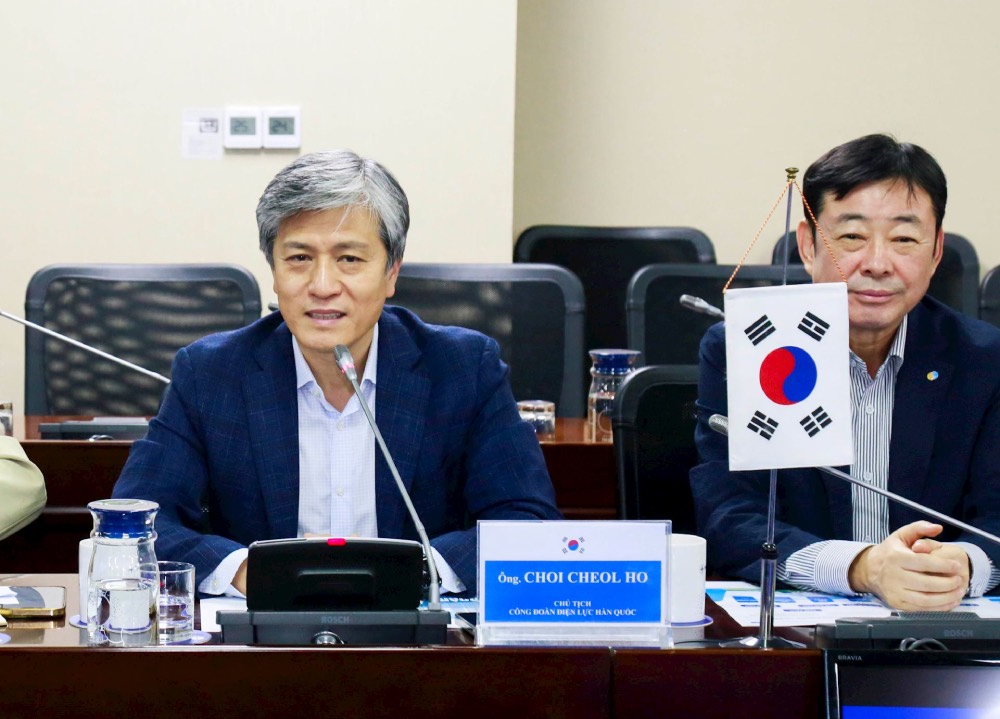
On the side of the Korea Electricity Trade Union, Chairman Choi Cheol-ho said that the Korea Electricity Trade Union was established on November 24, 4, representing the rights of 17,695,000 union members (as of June 2024); including 38 affiliated grassroots unions. Mr. Choi also shared many facets of challenges as well as information about the operation of the Vietnam General Confederation of Labor Trade Union in the context of many current fluctuations.
Previously, the working group of the National Assembly Trade Union visited the Vietnam Electricity Industry Traditional House, learning more about the history of formation, development and contributions of the Vietnam Electricity Industry to the cause of industrialization and modernization of the country.