Shortage of digital logistics human resources
According to Dr. La Bao Truc Ly - Head of the Faculty of Industrial Management, Can Tho University of Technology and Technology, despite having geographical advantages and a large source of goods, the Mekong Delta logistics is still developing slowly.
According to the report of the Vietnam Logistics Service Business Association, the whole region has only about 1,460 logistics enterprises (4.4% of the country) mainly small-scale, low-tech, with high logistics costs accounting for 25 - 30% of cost. The workforce is still manual, lacking digital skills, causing the digital transformation process to slow down and creating an urgent need for close linkage between schools, businesses and the government.
MSc. Nguyen Thi Le Thuy - Faculty of Industrial Management, School of Technology, Can Tho University - said that she and her research group on the topic "Current situation and challenges for logistics management activities in the agricultural - aquatic products sector of the Mekong Delta" showed that the industry is facing many bottlenecks from infrastructure, human resources to technology. The logistics workforce lacks in quantity and qualifications, with most companies having to self-train employees, while foreign languages and unprofessional training processes are prominent issues.
The logistics industry increases demand by 15 - 20% per year, but human resources only increase by about 7.5%. Of which, 85.7% of enterprises must self-train. 53.3% lacked professional personnel. 30% have to undergo retraining. Only 6.7% are satisfied with the quality of their staff. The biggest limitation is foreign language (58.6%) and the training process is not systematic (47.44%), MSc. Thuy cited.
According to Mr. Le Hong Son, Sales Director of MH Solution International Technology Joint Stock Company, in Can Tho and the Mekong Delta, logistics businesses mostly operate according to manual models, relying heavily on traditional human resources, causing high operating costs and the ability to trace goods as well as connect data in weak areas.
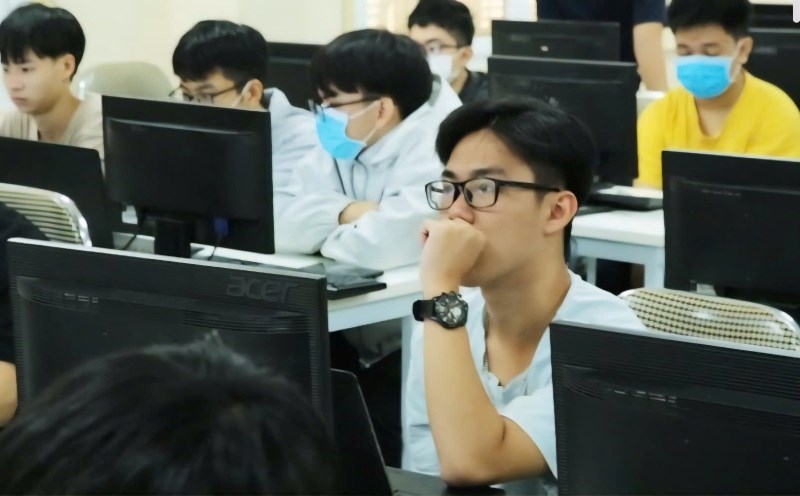
Educational institutions in Can Tho have only trained logistics at the theoretical level, without a laboratory or a smart simulation center for students to practice with real data, highlighting the urgent need for human resources with digital skills, technology understanding and operation of the Smart Logistics system.
Building digital logistics human resources
Dr. Le Thanh Hoa, Acting Director of the Can Tho City Institute of Economics and Society - said that the high-quality logistics and supply chain is the foundation for the Mekong Delta to improve competitiveness and international integration. According to him, in the context of logistics becoming the "blood" of the economy, systematic professional training, modern management thinking and technology application skills are urgent requirements.
Dr. Hoa proposed that businesses closely coordinate with universities and training institutions in Can Tho City and Ho Chi Minh City, forming a network of practical training associated with practical needs. The training program needs to aim at international standards, combining theory, simulation and practice at enterprises, fully equipping with supply chain management skills; from warehouse management, transportation, delivery to logistics strategic planning. According to him, this is the core resource that helps the Mekong Delta transform from a traditional agricultural region to a dynamic, modern and sustainable logistics center, creating momentum for long-term regional economic development.
Dr. La Bao Truc Ly said that to build a modern logistics training ecosystem in the Mekong Delta, it is necessary to coordinate between schools, businesses and the State. The digital training network and annual forums will connect business needs with training capacity. Training programs need to integrate AI, big data, improve lecturer skills, use digital learning platforms and a practical - theoretical combination model, helping students master technology and operate a modern supply chain.
According to Mr. Le Hong Son, businesses also need to cooperate in developing a training program " Data analysis in logistics" for students...