What are the causes of collective work stoppages?
Sharing with PV of Lao Dong Newspaper, Mr. Nguyen Quoc Ca - Chief of Office, Trade Union officer of Hop Luc Joint Stock Corporation - said that Thanh Hoa is one of the localities that attracts strong investment in the North Central region. However, in parallel with the dynamic development of the economy, the labor relations situation still has many complex factors. Some businesses still owe wages, are late in paying social insurance, have not guaranteed working conditions, and have not received commensurate welfare.
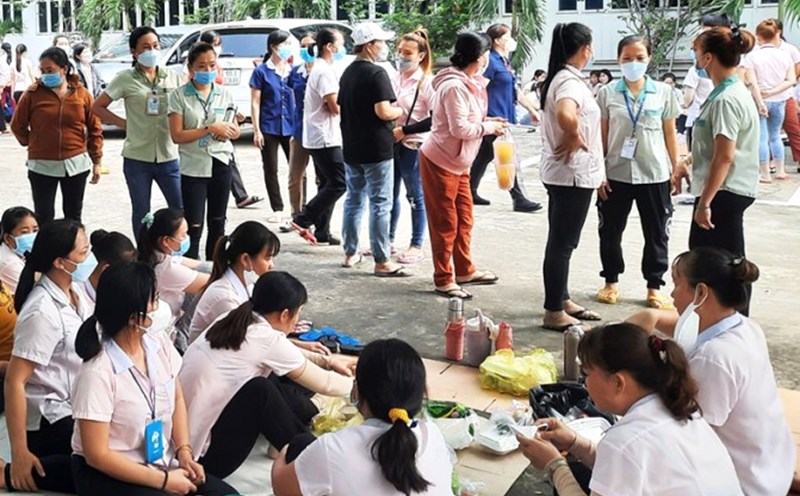
Through monitoring the incidents, I see that most of the work stoppages mainly take place in foreign-invested enterprises, especially in the textile and footwear sectors. Notably, the incidents all occurred spontaneously, without going through the Trade Union organization, and without complying with the legal process" - Mr. Ca said.
According to Mr. Ca, the cause of the work stoppages comes from conflicts over wages, working hours, bonuses, shift meals, housing, occupational safety and hygiene and the relationship between employers and employees. Meanwhile, work stoppages often do not comply with regulations, stemming from both objective and subjective causes.
In addition, some enterprises have not strictly complied with the provisions of the Labor Code. The signing and implementation of collective labor agreements are still formal; the adjustment of wages, bonuses, working hours, and benefits is not transparent. Some grassroots trade unions where collective work stoppages occur are still weak in their representative capacity; many union officials do not have experience, have not been properly trained in dialogue and negotiation skills, and are still hesitant in their relations with employers, leading to untimely grasp of workers' thoughts and aspirations.
"It must be frank that, through the work stoppages, it shows that the coordination between State management agencies, trade unions and enterprises is not synchronous. The forecasting and early detection of labor dispute risks are still limited, and the handling is still temporary. The CEO supervised and handled violations of labor laws that were still minor and not enough to deter; many businesses violated for a long time without being strictly handled" - Mr. Ca said.
Need to deploy synchronously from the province to the grassroots
According to Mr. Ca, to limit labor disputes and work stoppages that are not in accordance with regulations, it is necessary to synchronously implement many groups of solutions from the provincial to grassroots levels. In addition to promoting the dissemination, dissemination and education of labor laws to workers in many forms, it is necessary to strengthen the training of negotiation, dialogue and dispute handling skills for grassroots union officials; encourage young, qualified officials to participate in union activities.
Union officials must proactively approach workers, listen to their thoughts and aspirations and resolve problems right from the grassroots. Incorporate the criteria for not allowing illegal strikes into the annual emulation and reward content of grassroots trade unions. The higher-level trade union needs to proactively intervene and support negotiations at enterprises at high risk of dispute" - Mr. Ca shared.
According to Mr. Ca, businesses need to strictly implement labor law regulations, publicly and transparently disclose wages, bonuses, working conditions, social insurance regimes, benefits, etc. This is a key factor to avoid conflicts accumulating into "hot spots".
In addition, departments, branches, sectors and localities need to coordinate synchronously and drastically in inspecting, examining, and strictly handling violations of labor law - especially acts of late payment of social insurance, unpaid wages, and violations of occupational safety and hygiene. It is necessary to establish a "Workers' Hotline" to receive information, feedback from workers and promptly handle immediately when there are signs of conflict.