
Facing difficulties
Digital transformation is one of the important goals in the development strategy of the Quang Tri provincial government, especially in mountainous and border communes. However, this process still faces many major challenges, not only in terms of infrastructure but also in terms of economic conditions and people's education level.
In the border commune of Thuong Trach, with more than 3,600 people, mainly ethnic minorities, the implementation of e-government faces many difficulties.
The lack of grid electricity, telecommunications infrastructure and the rate of people not using smartphones have hindered the level 2 electronic identification process, a mandatory condition for implementing online public administrative procedures.
Thuong Trach commune is one of the typical localities when it comes to the difficulties in implementing e-government in remote areas. Ms. Y Nuong, a resident of Ca Roong 1 village, previously did not have a smartphone and did not know electronic identification.
Recently, thanks to the support of local authorities and the Military Industry - Telecommunications Group, she was granted a phone SIM and a smartphone to install level 2 electronic identification. Ms. Y Nuong's story clearly reflects one of the major difficulties in digital transformation in the mountainous areas of Quang Tri.
The Thuong Trach commune government has taken positive steps such as mobilizing socialization to provide free phone SIM cards to people, borrowing smartphones to install level 2 identification. However, the results are still very limited.
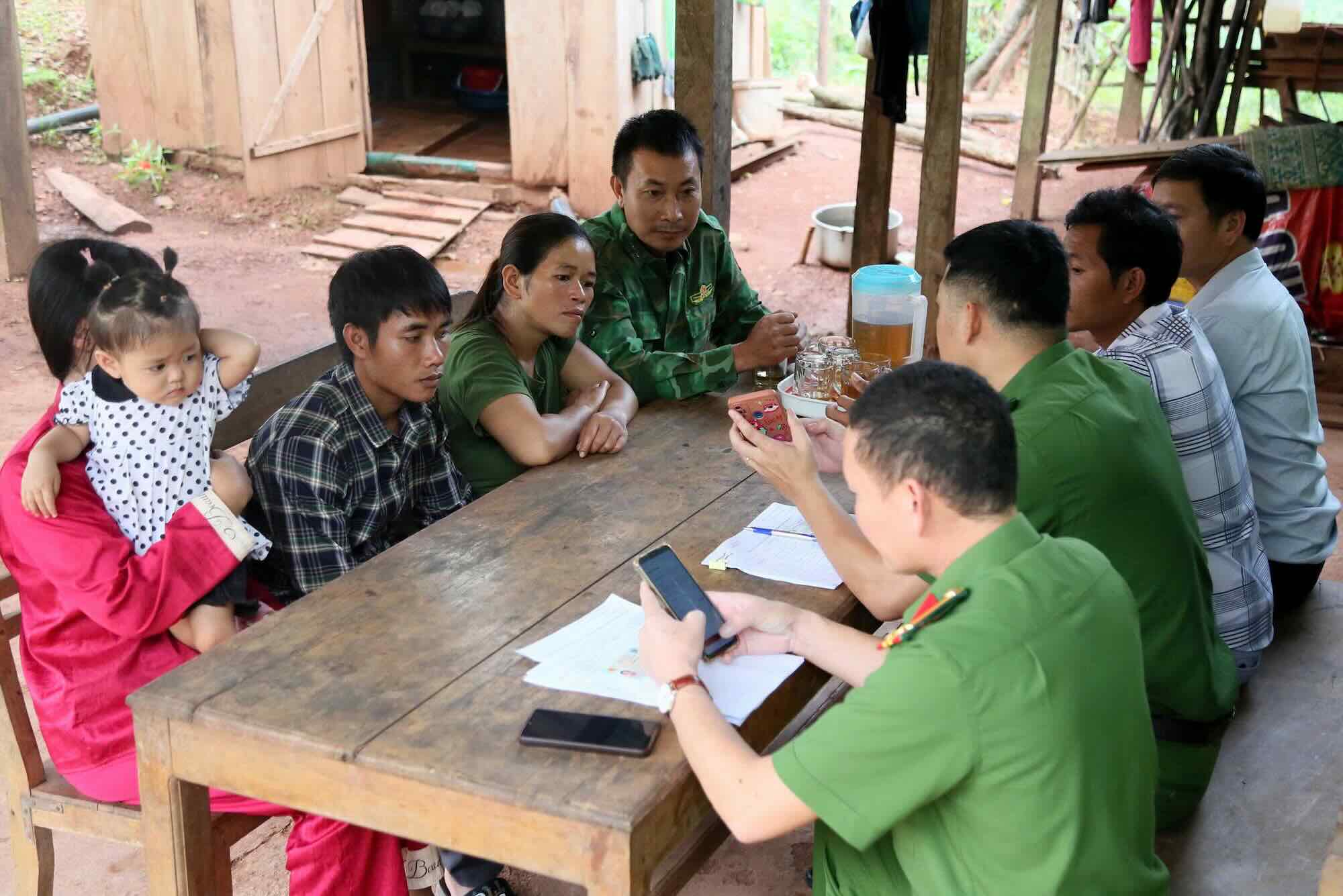
According to Mr. Ho Ngoc Thanh, Chairman of the People's Committee of Thuong Trach commune, currently only about 250 people are qualified to implement level 2 identification, while the commune has up to 1,678 eligible cases.
Many organizations join hands
Dan Hoa commune, Quang Tri province, which was formerly the two border communes of Trong Hoa and Dan Hoa, is also facing a similar situation. More than 60% of households here do not have level 2 identification and most of the people do not have smartphones.
To overcome this difficulty, the commune government has established 28 digital technology groups, including youth union members, police, border guards and commune officials, to support people in carrying out administrative procedures and installing electronic identification.
Every week, these groups travel on bumpy roads to each village to support people, helping them carry out administrative procedures online.
Mr. Cao Xuan Thai, Deputy Director of the Dan Hoa Commune Public Administration Service Center, said that digital technology teams have helped about 20 - 30 cases in each village, which not only supports people to access technology but also creates conditions for local authorities to carry out comprehensive digital transformation.
One of the bright spots in the digital transformation in Quang Tri is the enthusiastic participation of young volunteers. The Quang Tri Provincial Youth Union has deployed 79 youth volunteer teams with more than 1,500 volunteers to communes and wards to support the government and people in carrying out administrative procedures.
The volunteer teams not only instruct people on how to use VNeID but also update ID information, support online declaration of records and synchronize personal data.
The Quang Tri government is making efforts every day to remove barriers to infrastructure and education. Building e-government in mountainous and border communes of Quang Tri province is an urgent task, both urgent and a foundation for the province to develop in the future.
Despite many difficulties, the government and the community are still constantly coordinating and learning to carry out digital transformation and serve the people better.


