
On April 13, Mr. Lo Hong Phong - Deputy Director of the Department of Agriculture and Environment of Dien Bien province said that currently, the People's Committees of communes and wards in the province are organizing the planting of coffee and macadamia trees and testing the low-level space economic development model in 2026.
This is a major policy and orientation of the province to expand the area, form large-scale concentrated production areas, associated with new economic models to improve people's income.
However, the leader of the Department of Agriculture and Environment said that localities must strictly implement the provisions of Vietnamese law in the field of forestry and the regulations on combating forest loss and degradation of the European Union (EUDR) when organizing the planting of coffee trees and macadamia trees in forestry planning land, ensuring sustainable development.
According to Mr. Lo Hong Phong, EUDR is a mandatory regulation for some export items to the European market such as coffee, wood, rubber... Accordingly, these products must meet the requirements of not causing deforestation or forest degradation from after December 31, 2020.
Specifically, products must not be produced on land areas originating from deforestation or forest land affected by degradation. In addition, the entire production process must strictly comply with Vietnamese law on land, labor and environment.
In case the regulations are not met, imports into the EU market will not be allowed.
Leaders of the Department of Agriculture and Environment also noted that for areas that already have forests, only intercropping agricultural crops, non-timber forest products, livestock and aquaculture under the forest canopy is allowed, but it does not reduce forest area, forest quality, or affect forest regeneration...
In particular, coffee trees belong to the group of long-term industrial crops, so they are not allowed to be planted under the forest canopy.
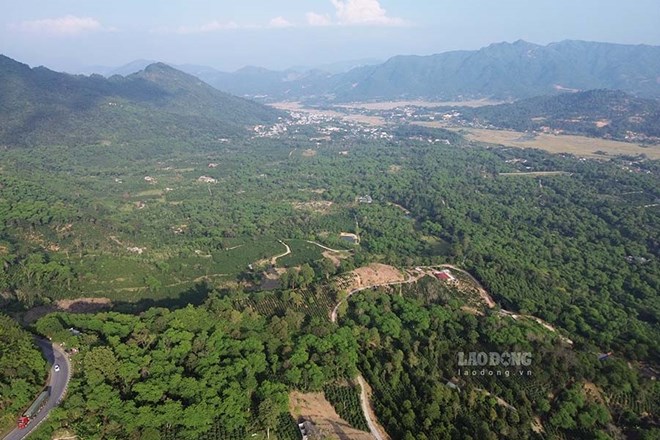
For areas without forest, forest owners who are households, individuals, and residential communities are allowed to use land for combined production but must ensure forest cover. Specifically, after intercropping industrial crops, the planted forest area must ensure 80% or more for protection forests and 70% or more for production forests.
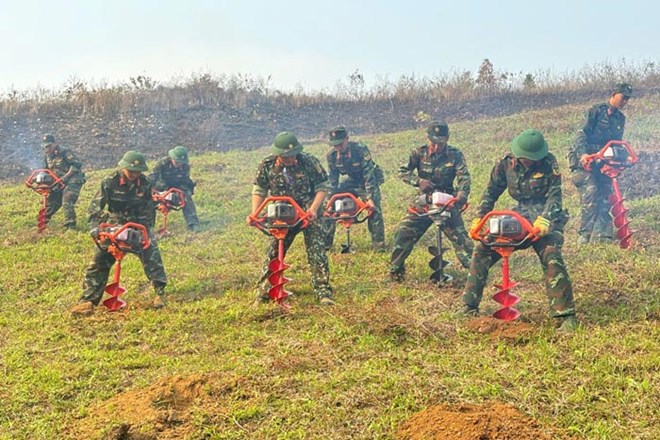
In 2026, Dien Bien strives to dig more than 21.6 million planting holes, equivalent to about 12,000 hectares, including 5,930 hectares of coffee and 6,070 hectares of macadamia (including intercropping and pure planting).
It is expected that about 6,000 households will participate, with each household planting an average of about 1 hectare of coffee and 1 hectare of macadamia.
To implement the plan, the province mobilized about 14,150 workers, including 12,000 people, 900 militia and self-defense forces and 1,250 officers and soldiers of the armed forces to participate in support, especially in difficult areas.
Tightening regulations is expected to help Dien Bien coffee and macadamia have a firm foothold in demanding markets like the EU.