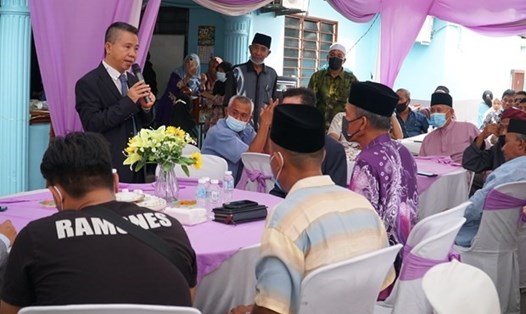
On National Highway 91C (located in Vinh Hau commune, An Giang province), Cham villages appear with typical images: stilt houses close together, mosque domes rising in the sky, along with echoing prayers.
For the Cham people, religion and culture are closely associated with daily life. From daily prayers, eating habits, family activities to community rituals, all are associated with regulations and customs that have been preserved through many generations. Every day, people still maintain prayer rituals according to regulations, participate in religious activities at the shrine, thereby contributing to preserving the long-standing cultural identity of their nation.
Mr. Du So - Secretary of the Party Cell of Ha Bao 2 hamlet (Vinh Hau commune, An Giang province), shared that from a young age he was taught about traditional customs, from how to dress, how to behave to regulations in religious life. "We always remind our children to know how to preserve the tradition of the nation. Although society is changing, the Cham identity must still be preserved," Mr. Du So said.
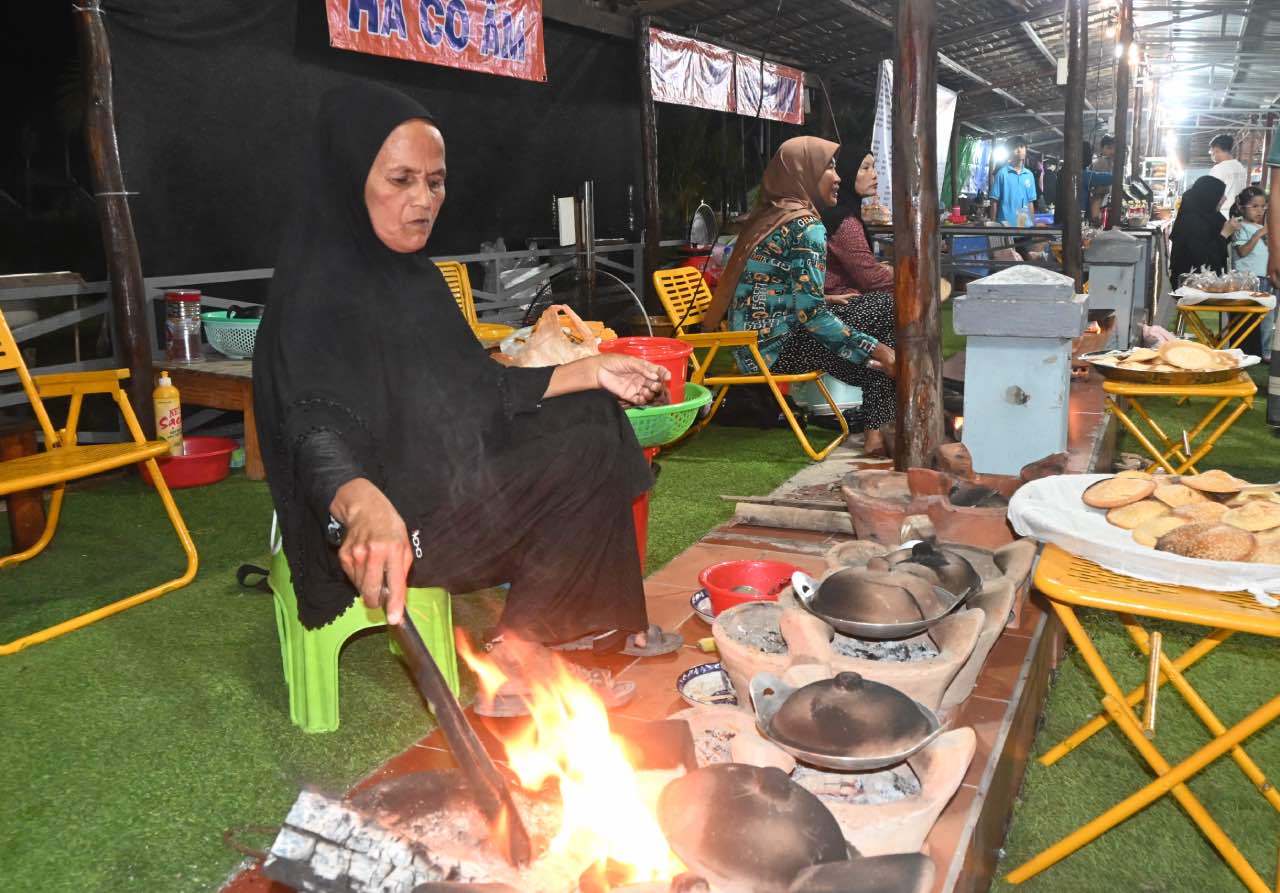
According to Mr. Du So, one of the most easily recognizable characteristics in Cham villages in An Giang is traditional costumes. Cham women often wear ao dai, wear hijabs discreetly, while many men still maintain the habit of wearing traditional hats when going to the shrine. Besides costumes and handicrafts, cuisine is also an important part of the cultural life of the Cham people.
Mr. Du So also shared: "Because they follow Islam, the Cham people have their own rules in eating and drinking. All dishes strictly follow Halal rules. Beef and chicken are common ingredients in meals, processed into many typical dishes. Some traditional dishes such as beef curry, rice nị or tung lo mo (a type of characteristic beef sausage - PV), have become a unique culinary feature of the Cham community in the Hau River region. These dishes not only appear in family meals but are also indispensable dishes during festivals.