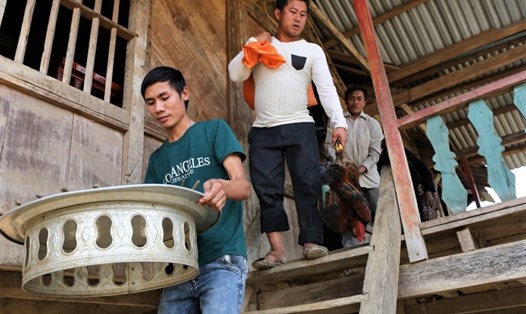
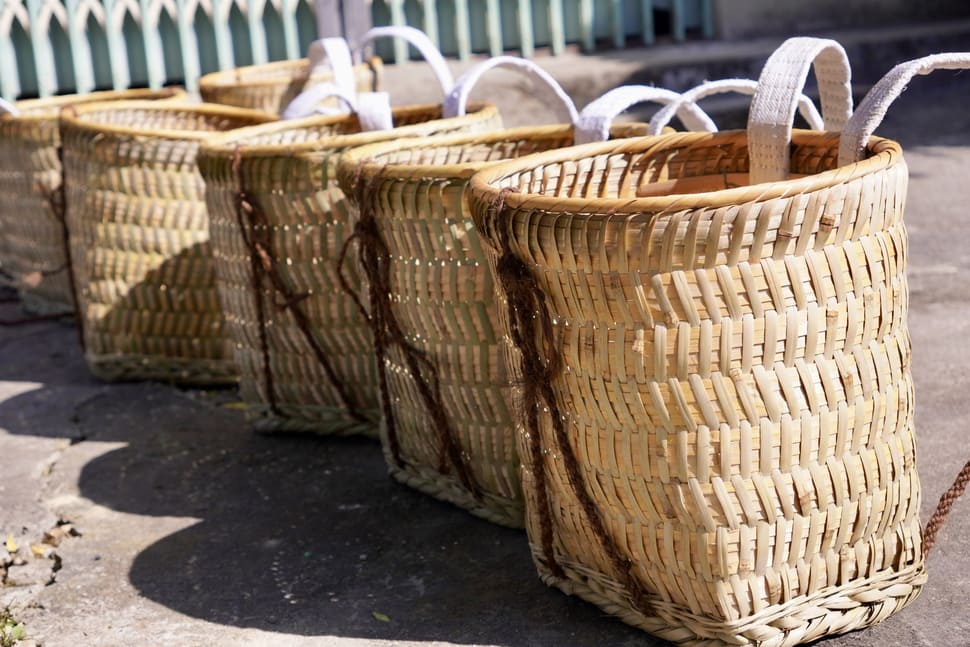
From readily available natural materials such as bamboo, rattan and forest vines, the people of Na Day village have created many familiar items for daily production and living such as carrying poles, ki, baskets, trays...
These are not only labor products but also bear the cultural imprint of the Nung people in the highlands.
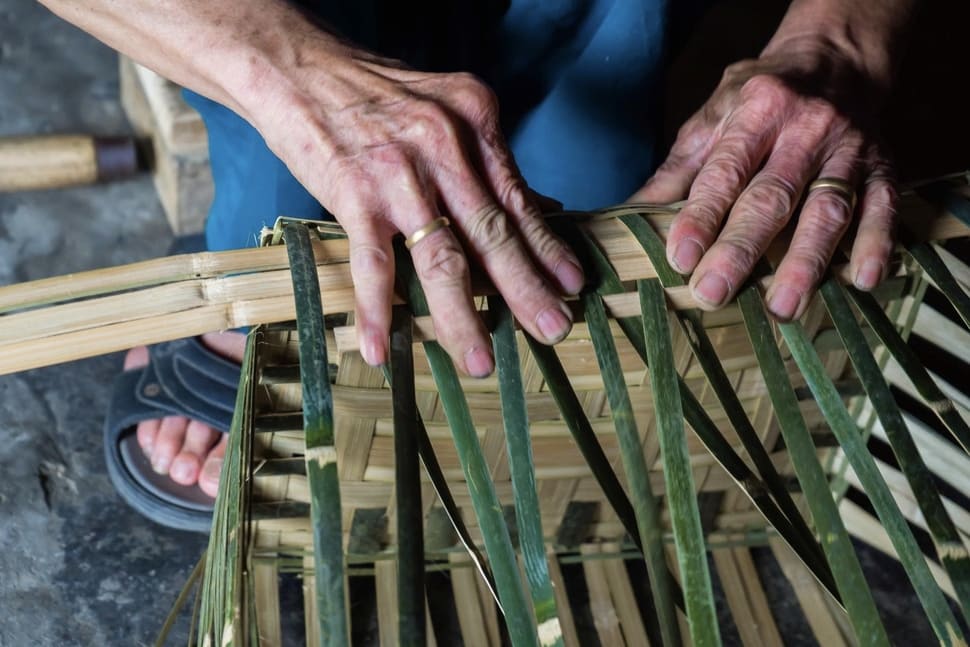
Among those who are still attached to the craft, Mr. Hoang Phu Vang (75 years old) is considered by local people as a "living story" of traditional weaving. For more than half a century, every day he has been diligently by the porch, meticulously grooming each bamboo strip, weaving each bent fold to create durable carrying poles.
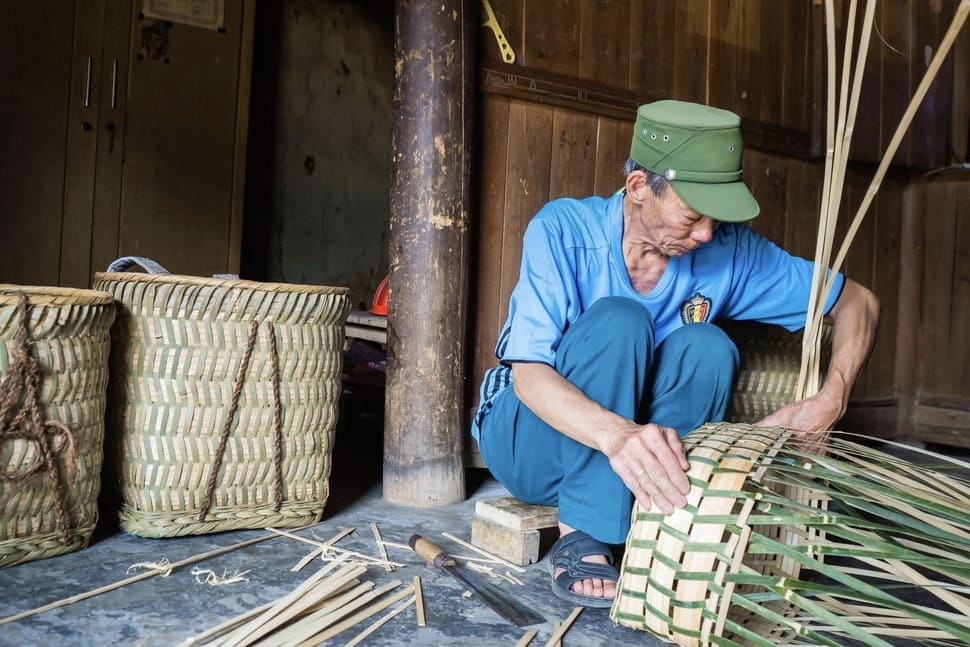
According to Mr. Hoang Phu Vang, to complete a carrying pole, the craftsman must go through many elaborate stages, from choosing suitable bamboo trees in the forest, bringing them back to process raw materials, splitting bamboo strips, shaping bamboo strips, to creating frames and knitting them into shapes.
You must choose straight, yellow-brown trees, soak them until they wither and then split and shape them. Young trees look beautiful but cannot be knitted because they wither quickly and are easy to break," Mr. Vang shared.
With many years of experience in the profession, he can complete one to two carrying poles each day. These products are still used by many local people in production labor, especially during the harvest season.
Every week, my wife and I carry them to the market fair to sell to people in the commune and neighboring areas. Many tourists also buy them to use or as souvenirs. Thanks to that, the family has an additional source of income to cover living expenses," Mr. Vang said.
However, like many other traditional handicrafts, bamboo and rattan weaving in Na Day is facing many difficulties. The appearance of industrial plastic products with cheap prices, diverse designs and convenience has gradually made handicrafts lose their advantage in the market.
According to Mr. Then Lu Son - Head of Na Day village, the number of people following the profession is no longer large. Young people mainly go to work as workers or choose jobs with more stable incomes, making the risk of traditional crafts fading increasingly present.
Despite many challenges, those who preserve the profession like Mr. Hoang Phu Vang still work diligently by the bamboo strips every day. For them, each completed product is not only the crystallization of ingenuity and experience, but also a way to preserve national cultural identity amidst the flow of modern life.