Primary School 2 in Dat Mui Commune, Ngoc Hien District, Ca Mau Province has 350 students, nearly 80% of whom go to school by water, mainly by boat.
In front of the gate of Dat Mui Primary School 2 (Ngoc Hien District), there are several shops providing food and drink services and hammocks for customers to rest. These shops are always crowded from morning to afternoon. The customers of the shops are mainly parents taking their children to and from school.
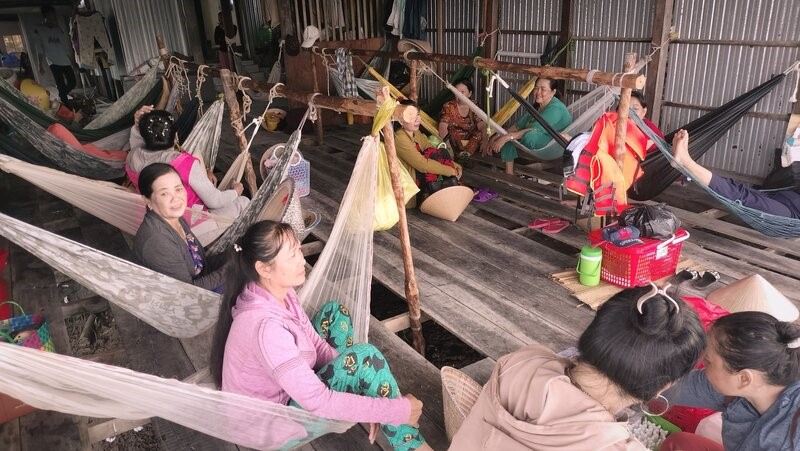
Ms. Chem My Hien (Cai Xep hamlet, Dat Mui commune, Ngoc Hien district) has a grandson in grade 3 at school, who goes to school by boat every day.
“It is very difficult for students to go to school here. They have to wake up very early to prepare for school. The river is deep and the water is strong. I am not comfortable letting my child take the boat alone, especially during the rainy season. So I have to leave my job to go to school with him to take care of him,” said Mrs. Hien.
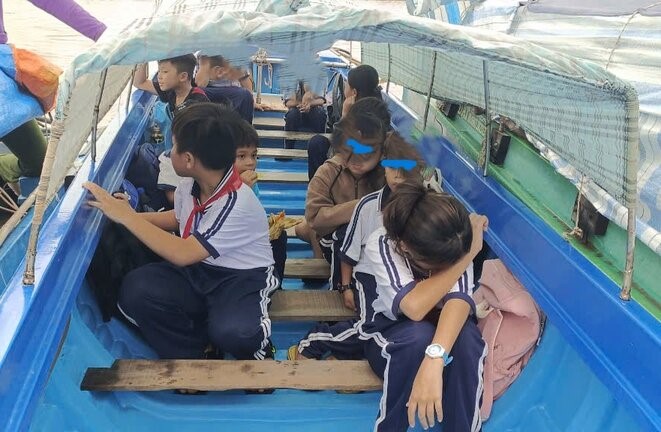
Ms. Nguyen Thi Ven (Cai Moi Hamlet, Dat Mui Commune, Ngoc Hien District) said that she has 3 children studying at Dat Mui Commune Primary School 2. It takes more than 30 minutes to get to school by boat from her house. If she lets her children go by boat, it will be expensive, about 50 to 60 thousand VND per child per day, so she takes her children herself to save money.
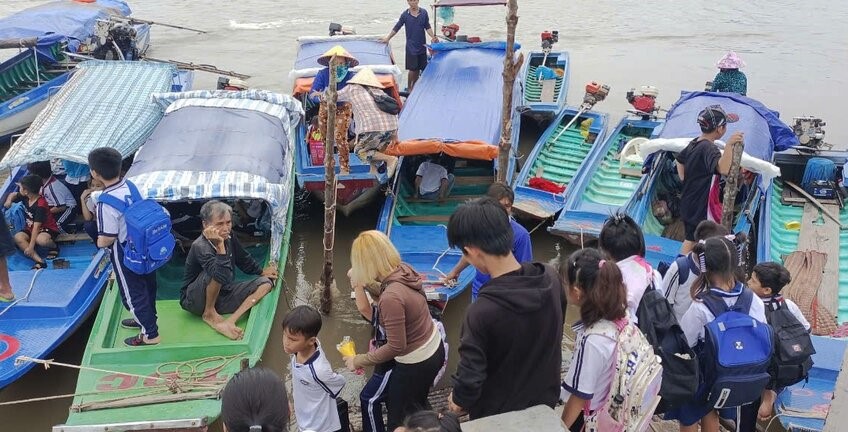
Ms. Ven explained how she went to school with her children and grandchildren: “Because my children study two sessions, I take them in the morning and then wait until the afternoon when they finish school to pick them up. Taking them every session is time-consuming and costly. Before, I used to catch crabs, snails, and work for hire to earn extra income. Now I have to go with my children all day, and I have to give up my job, but I have to accept it. I am poor and illiterate, so I just want my children to learn to read and write so that they can support themselves in the future.”
Also waiting to pick up her grandchildren from school, Mrs. Ma Be Em (Cai Moi Hamlet, Dat Mui Commune) said that she has 4 grandchildren studying at Dat Mui Commune Primary School 2. Their parents work far away and leave them with their grandparents to take care of. Every day, from early morning, when the grandchildren go to school, she also packs up and goes with them, and only comes back when the grandchildren come home from school.
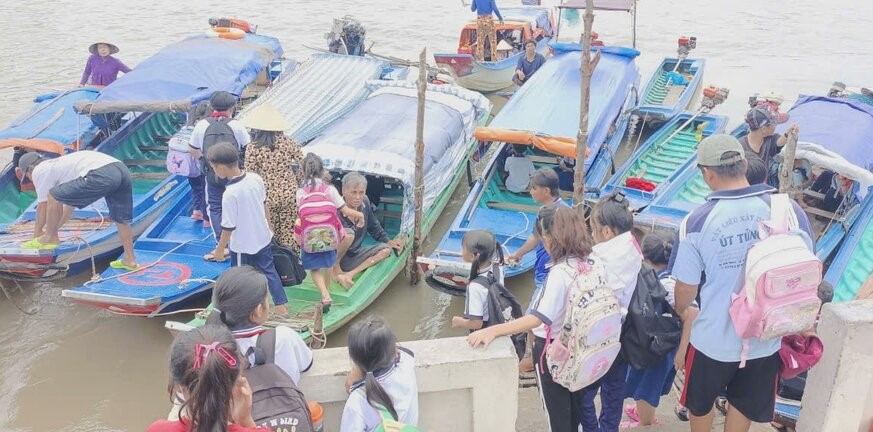
Mr. Le Duc Thanh - Principal of Dat Mui Commune Primary School 2 - said that because the road traffic infrastructure in this area is not yet widespread, most students still go to school by water, mainly by boat.
“Going to school by boat during low tide is difficult to get on and off, and it is easy to fall. On days of heavy rain and strong winds, it is very dangerous because many children do not know how to swim. In addition, parents also spend time, money on boat fare, gas, and food while waiting to pick up and drop off their children. Many families with many children will have difficulty sending their children to school,” Mr. Thanh shared.
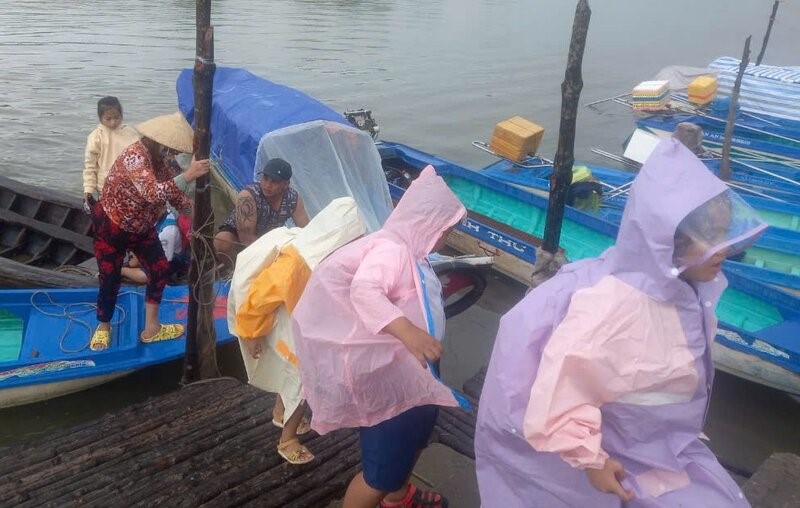
According to Mr. Thanh, from the beginning of the school year, the school has coordinated with local authorities to encourage ferrymen to try to go to remote, sparsely populated locations to pick up and drop off students. At the same time, the school has encouraged parents with motorbikes to support parents without motorbikes on the same route, giving students a ride to ensure that all students get to school.