Vietnamese cuisine marks on the world map
According to the World Food Tourism Association (WFTA), more than 80% of international tourists consider experiencing local cuisine as a goal in their trip, with food spending accounting for about 30% of the tourism budget. This shows that cuisine is becoming an important driving force to attract tourists.
In recent years, Vietnamese cuisine has been continuously mentioned at many international awards and rankings. Vietnam was honored by the World Culinary Awards as "Best Culinary Destination in Asia 2025". Hanoi was also awarded the title "Best Emerging Culinary City in Asia 2025", while Ho Chi Minh City was ranked 4th by Time Out magazine in the list of 20 cities with the best cuisine in the world.
Familiar dishes such as pho, banh mi, spring rolls, Hue beef noodle soup or Vietnamese coffee are increasingly attracting international tourists, becoming "cultural ambassadors" contributing to promoting the country's image.
From rustic dishes to Hanoi culinary symbols
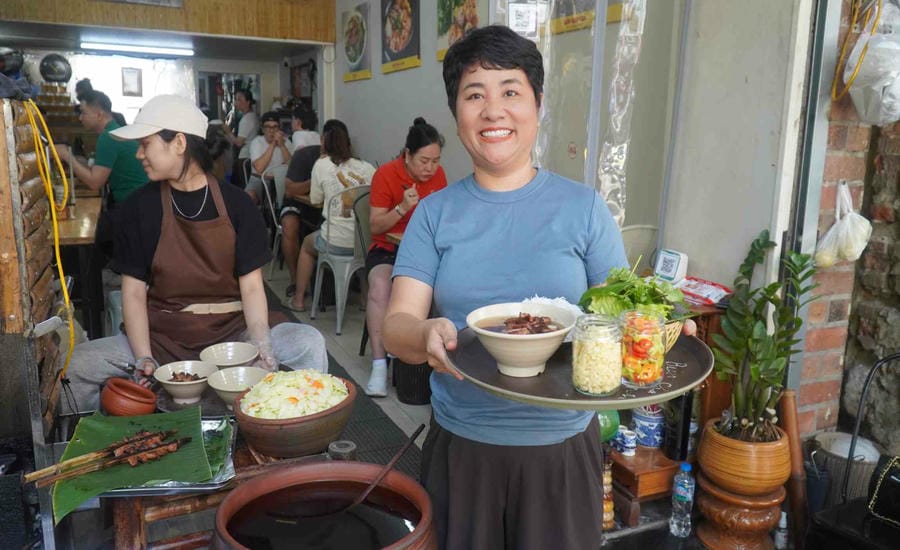
In Hanoi, dishes such as pho, banh cuon, banh mi or bun cha are often sought after by international tourists. Among them, bun cha has long become a familiar part of the Capital's cuisine.
Not only is it a familiar dish, bun cha is also a way Hanoi people introduce culinary culture to tourists. In particular, bun cha sandwiched with bamboo sticks evokes the old Hanoi with grilled meat on charcoal, blended with the characteristic burnt bamboo flavor.
Today, tourists can easily find bun cha restaurants in many areas of Hanoi. However, the number of addresses still maintaining the traditional bamboo stick grilling method is increasing, making this experience even more special for those who want to learn about Hanoi culinary culture.
The attraction of bun cha is not only in the flavor. It is also the way the dish is prepared right in front of diners, from grilling meat on charcoal to combining cha, bun, dipping sauce and raw vegetables. For tourists, this is a cultural experience that can be felt with many senses.
Turn food into a tourist product
If the North has pho and bun cha, the Mekong Delta has dishes imbued with river and water imprints, in which banh xeo is an experience not to be missed.
Mekong Delta banh xeo has a rustic, liberal flavor like the people of this land. The cake crust is made from rice flour mixed with turmeric and coconut milk, creating an eye-catching yellow color and a light fatty taste.
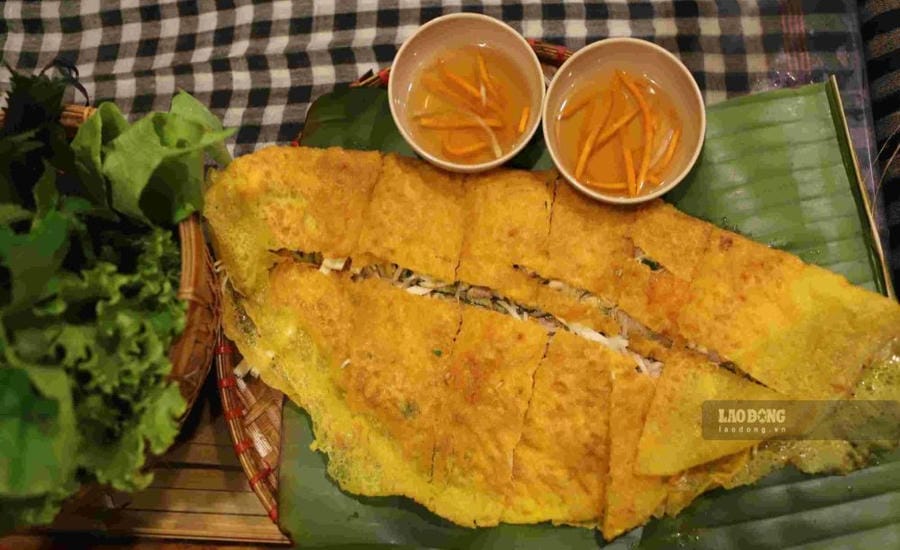
Unlike Central Vietnamese banh xeo, Western Vietnamese banh xeo is usually larger in size, thinner and crispy in crust. The filling can include shrimp, pork belly or minced Vietnamese duck, combined with green beans, bean sprouts, cassava root or coconut tubers.
What creates the appeal of banh xeo also lies in the way of enjoying it. The hot and crispy banh is wrapped in green mustard leaves and many kinds of vegetables such as cách leaves, young mango leaves, cóc leaves, fish mint, basil, herbs... then dipped in sweet and sour fish sauce.
The combination of crispy crust, rich filling, green vegetables and dipping sauce makes the dish a unique experience that visitors can hardly find elsewhere.
The strength of Vietnamese cuisine lies in its diversity. Each region has its own ingredients, processing methods and ways of enjoying it. With the same dish, when passing through each locality, different variations can appear, creating a colorful culinary picture.
Cuisine also has the ability to create connections between local people and tourists. Cuisine is not just about advantages or "image ambassadors", but can completely become an important driving force to help Vietnamese tourism improve its competitiveness and bring Vietnamese identity closer to the world.