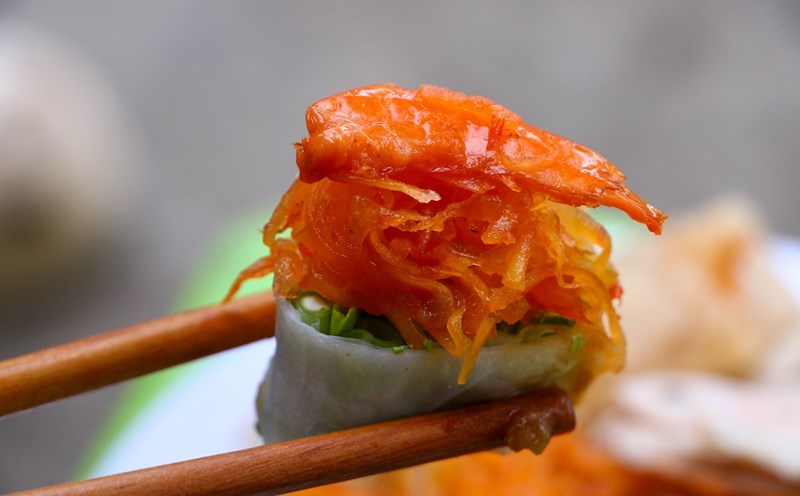
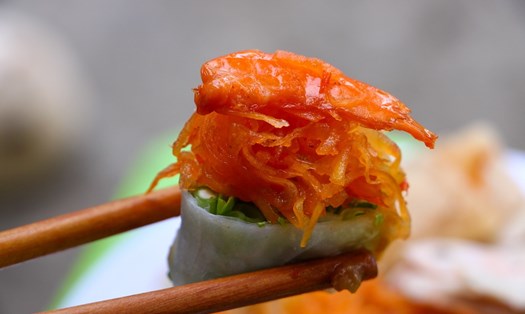
Shrimp rolls are a unique specialty in Do Son, little known to tourists when traveling to Hai Phong. Special cake from ingredients. Fresh sea shrimp are pre-processed clean, then marinated with just enough seasoning. Steamed or boiled shrimp, taken to grind, roasted dry into shrimp floss. Sea shrimp floss retains the natural sweetness and characteristic aroma of the filling.
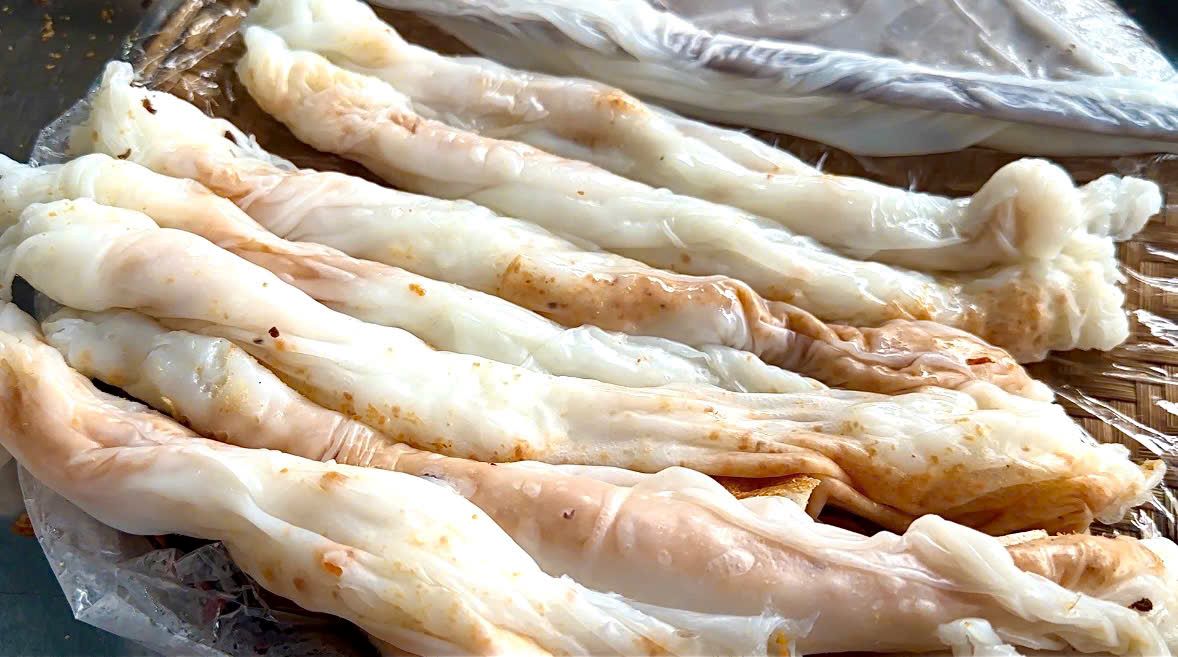
The shrimp filling is loose, fragrant and buttery, completely different from traditional meat filling. Enveloping that filling is the soft crust of the cake, made from finely ground ordinary rice flour. The flour is mixed manually, spread on a steam stove and only cooks in about 30 seconds to one minute.
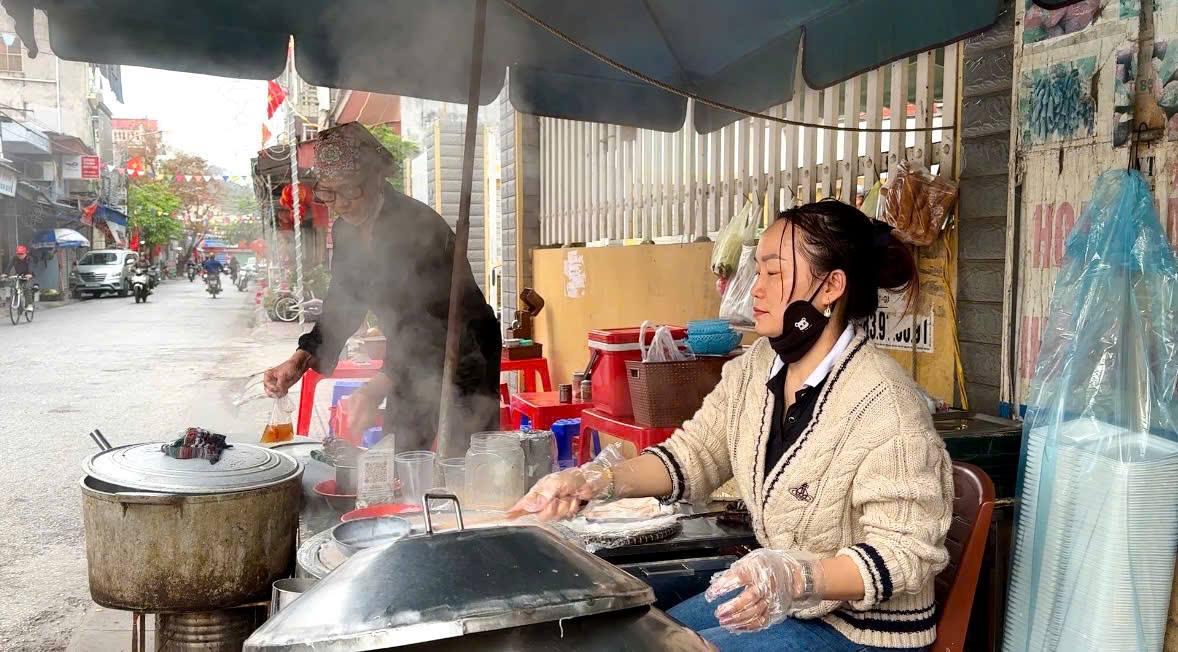
Having been attached to the profession for nearly 10 years, Ms. Pham Thi Hao, owner of a traditional shrimp roll shop on Hai Son street (Do Son ward, Hai Phong) said that she still maintains the traditional way of making cakes from her family. Every morning, from the stage of selecting shrimp, making shrimp paste to making cakes, everything is done meticulously, as a way to preserve the flavor of the homeland.
According to her, dipping sauce is also a factor that creates the "unique quality" of this specialty dish. The standard flavor of Do Son shrimp rolls must lie in fish sauce - a dipping sauce with a characteristic thickness, unique aroma, and richness.
Today, banh cuon with shrimp is also served with fermented fish sauce, suitable for the majority of diners. The fermented fish sauce dipping sauce has a mild, sweet and sour taste that is easy to eat, not too rich like fish sauce, and can also be adjusted according to each person's own taste.
With prices ranging from only 20,000 to 30,000 VND per meal, shrimp rolls will bring novelty and attractiveness to visitors who experience for the first time.
Do Son shrimp banh cuon originally originated from the simple family meals of fishermen, gradually over time stepping out into the street food space and becoming a familiar dish to tourists. Many families maintain the banh cuon making profession and family recipes through many generations. This persistent continuation has helped the dish increasingly affirm its position in local culinary life.