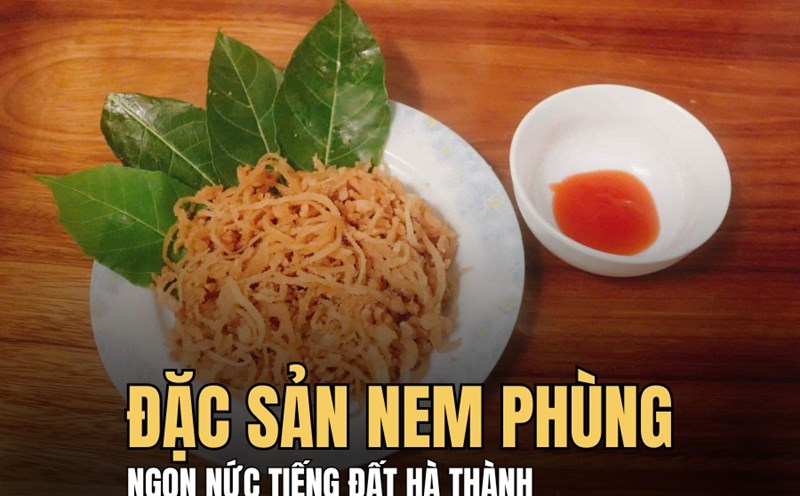
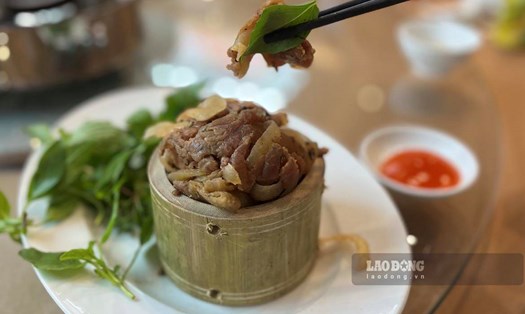
As many traditional dishes are gradually being replaced by industrial foods, Bui village (Ninh Xa ward, Bac Ninh) still quietly keeps the fire burning for the famous nem making profession. In a small alley, Mr. Pham Cong Dai's Bui nem production facility (49 years old) has been lit up very early.
At 1:30 am every day, the village is still immersed in a deep sleep, Mr. Dai's Bui fermented pork roll factory has brightened up, bustlingly entering a new day. Inside the factory, 8 workers are diligently and quickly preparing for the first batches of fermented pork roll, preserving the hometown flavor.
Doing this job requires going against other people's living hours. I work at night to deliver goods to customers in the morning," Mr. Dai said while quickly checking each batch of newly imported meat.
Every day, his facility produces from 80-200kg of meat, possibly up to 1,500 spring rolls. All must be completed before 8 am to be delivered to Hanoi and neighboring provinces in time.
According to Mr. Dao's sharing, the main ingredients of Nem Bui include tenderloin, lean meat, fatty meat and pork skin, all must be fresh meat, taken from reputable slaughterhouses right in the area.
If the meat is not fresh, it is considered a whole batch spoiled. Making spring rolls is to choose meat first, that is the most important thing," Mr. Dai emphasized.
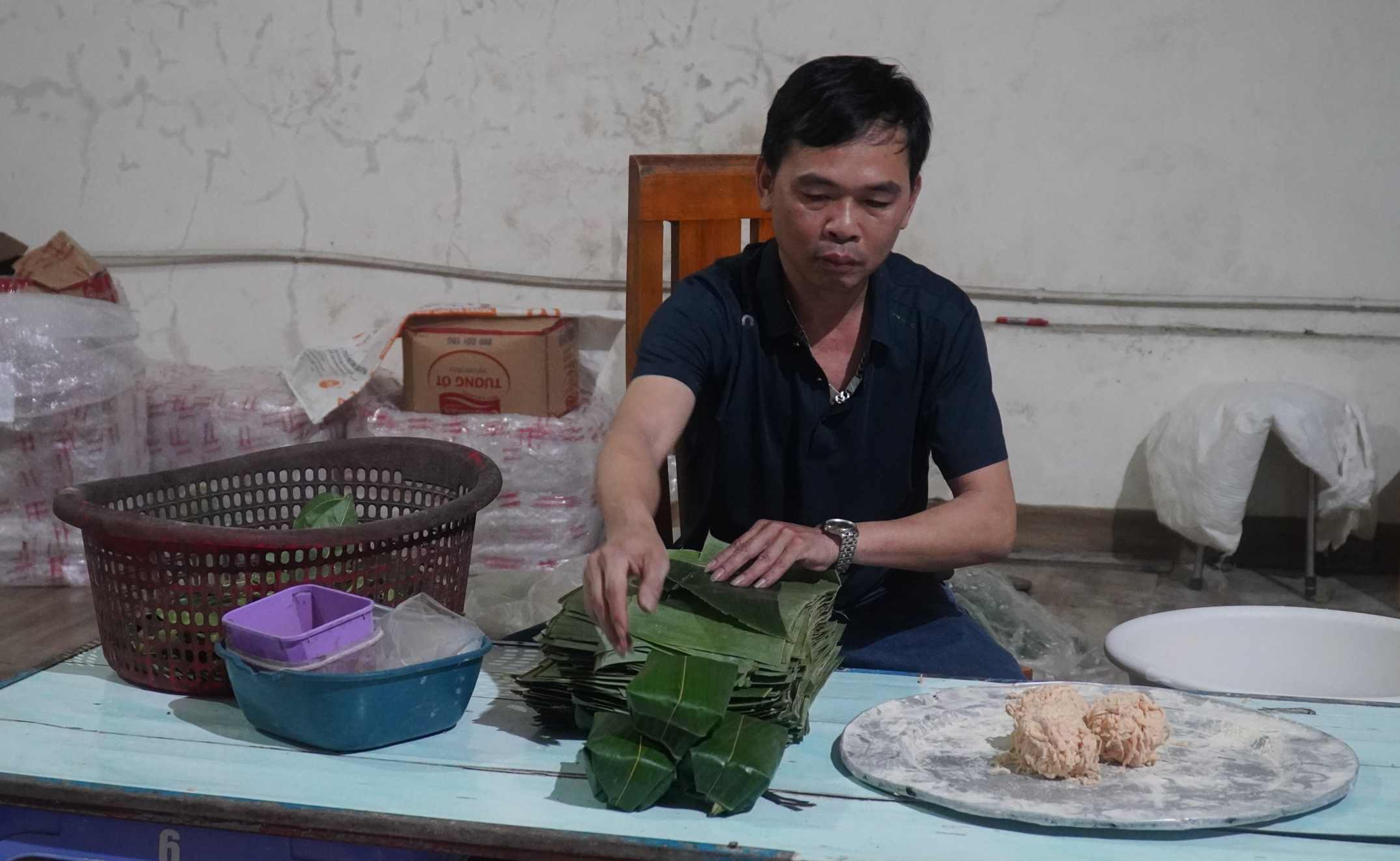
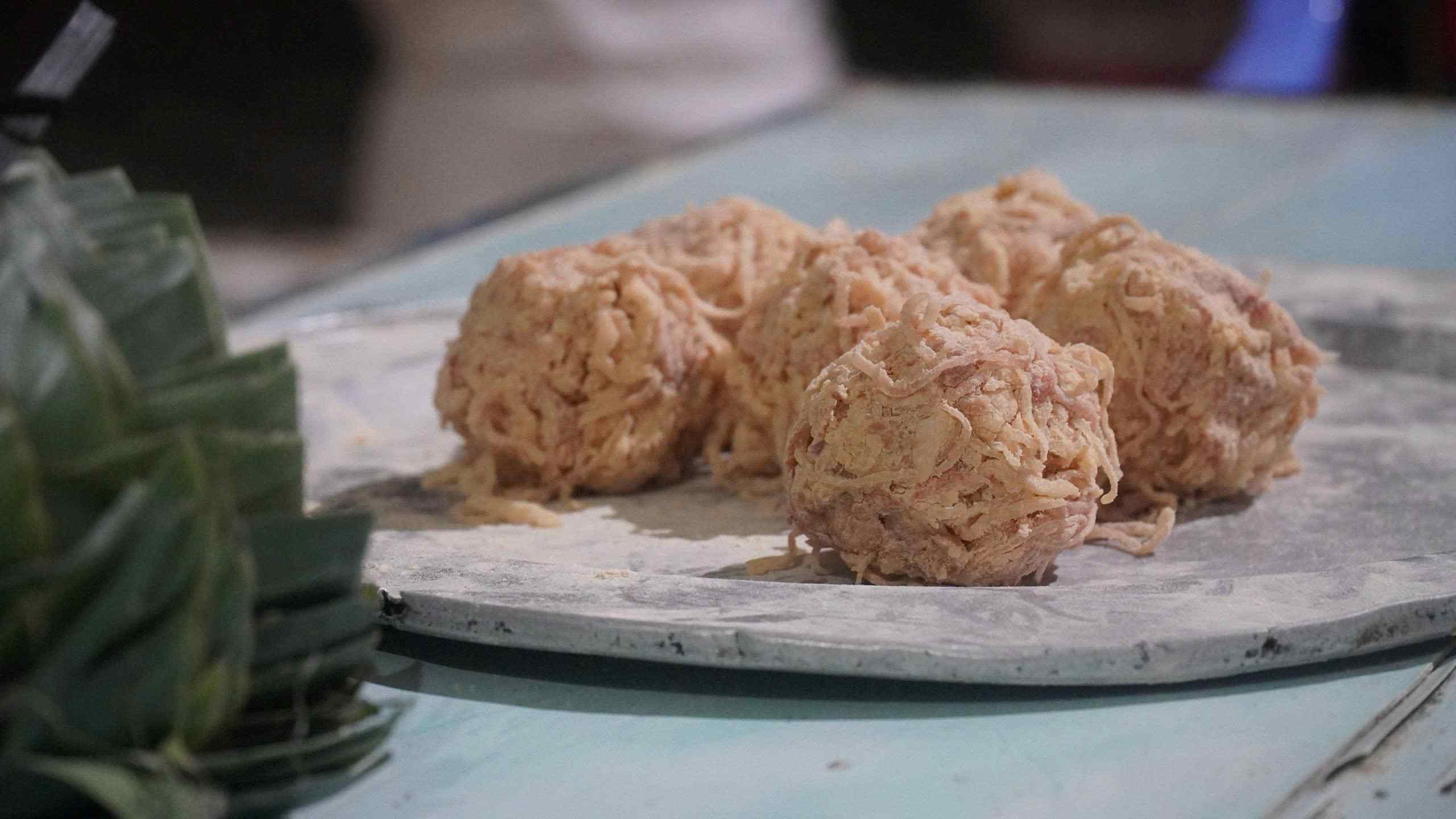
The meat after being brought to the workshop will be clearly classified: lean meat separately, fat separately, skin separately. The pork skin is processed, thinly sliced evenly; the meat is sliced and mixed in proportions suitable to customer taste. People who like to eat crispy will increase the skin, people who like to be fat will add fat, all can be adjusted.
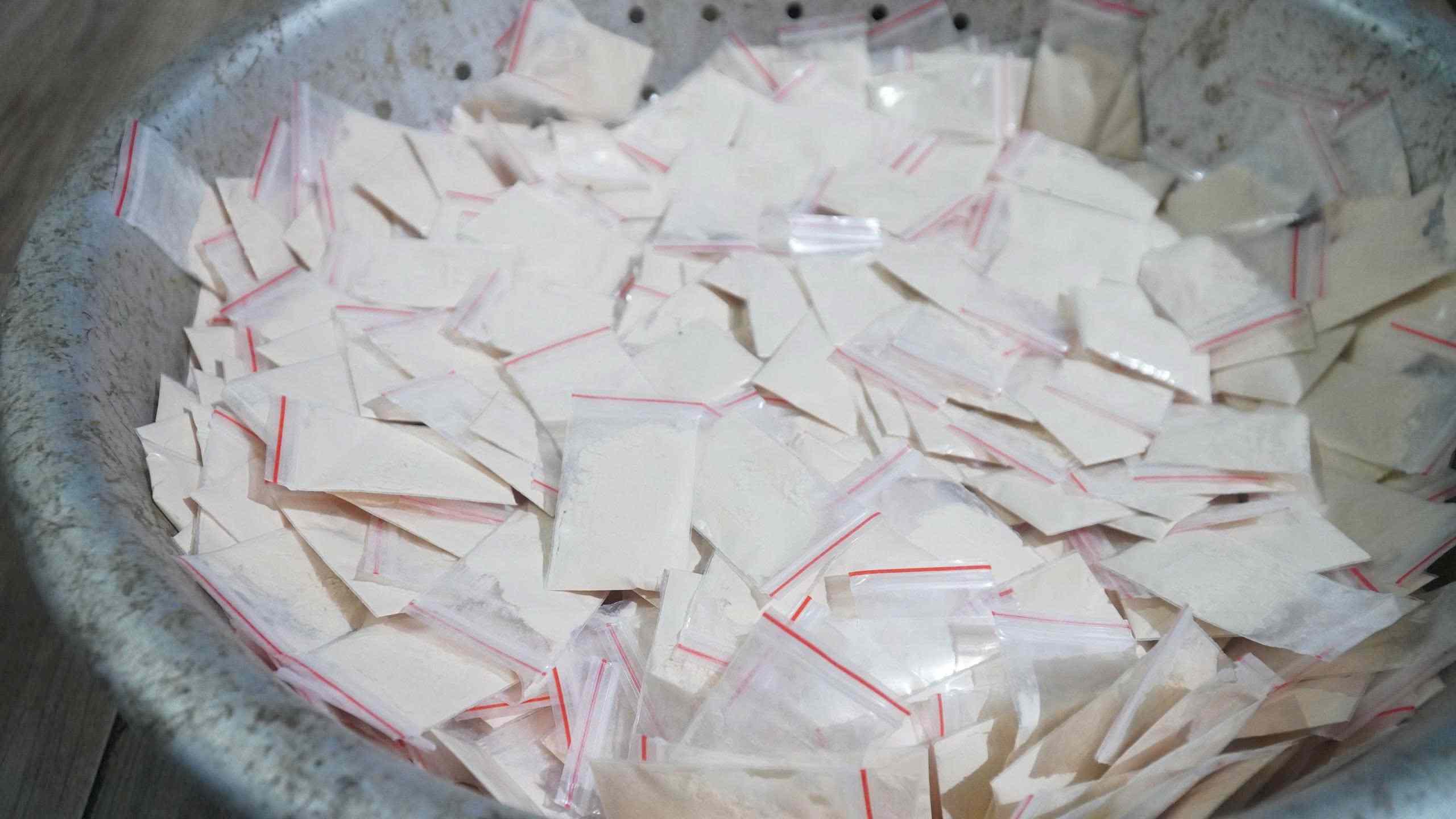
One of the factors that creates the characteristic flavor of Bui fermented pork roll is rice powder. Not buying ready-made, his facility roasts and grinds rice powder from local rice. Rice must be even grains, fragrant, and roast at medium heat to maintain the characteristic smell.
Thinh is the soul of nem. If rice is not delicious, nem cannot be delicious either," he shared.
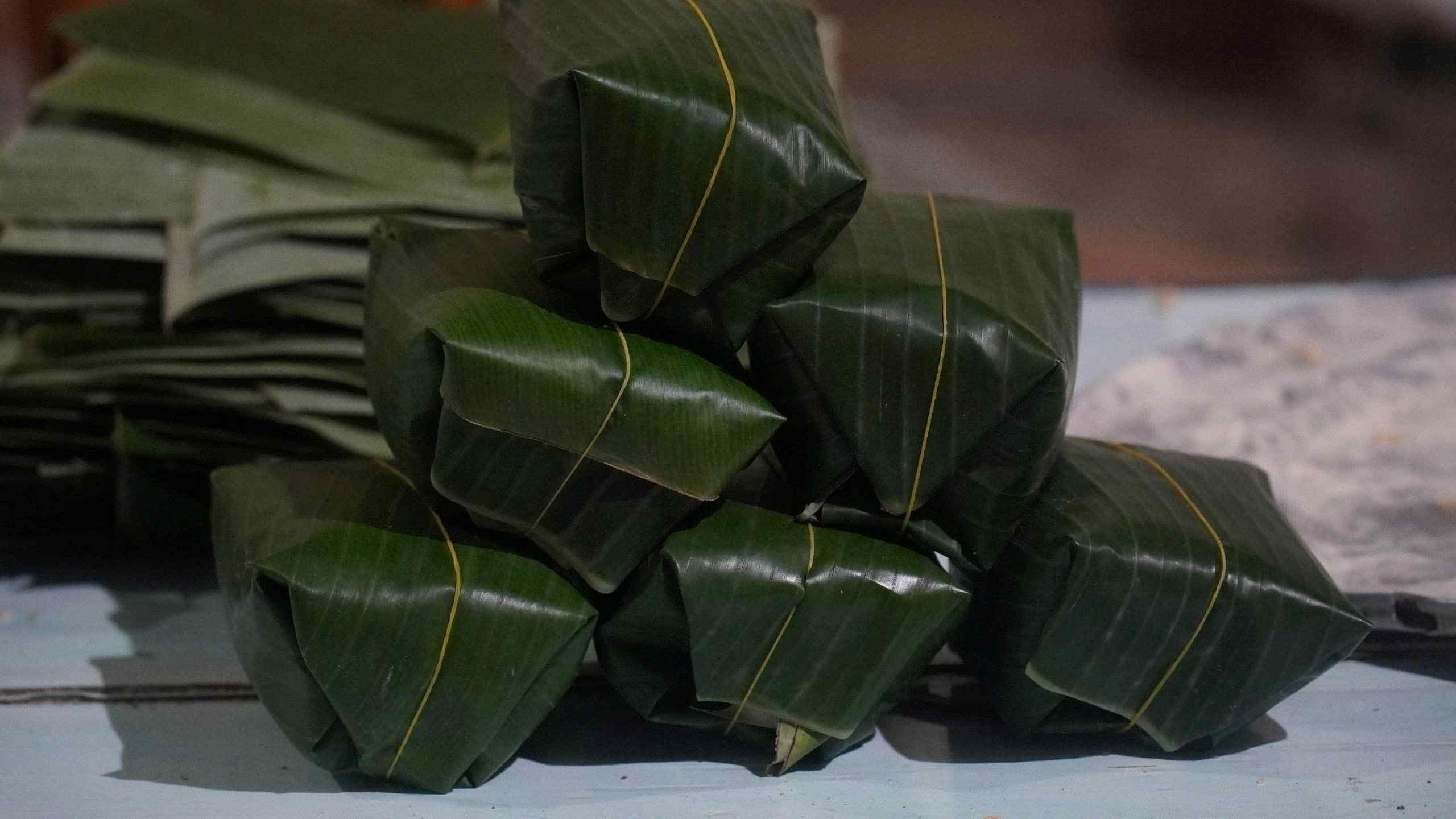
Wrapping Bui fermented pork roll is also an art. The craftsman will press the mixture of fermented pork roll into small, medium-sized fermented pork rolls. The fermented pork roll is then wrapped in a layer of fresh young sung leaves or dinh lang leaves, giving the fermented pork roll a characteristic aroma. The fermented pork roll is wrapped in green banana leaves, which not only keeps the fermented pork roll clean but also retains moisture and fresh flavor.
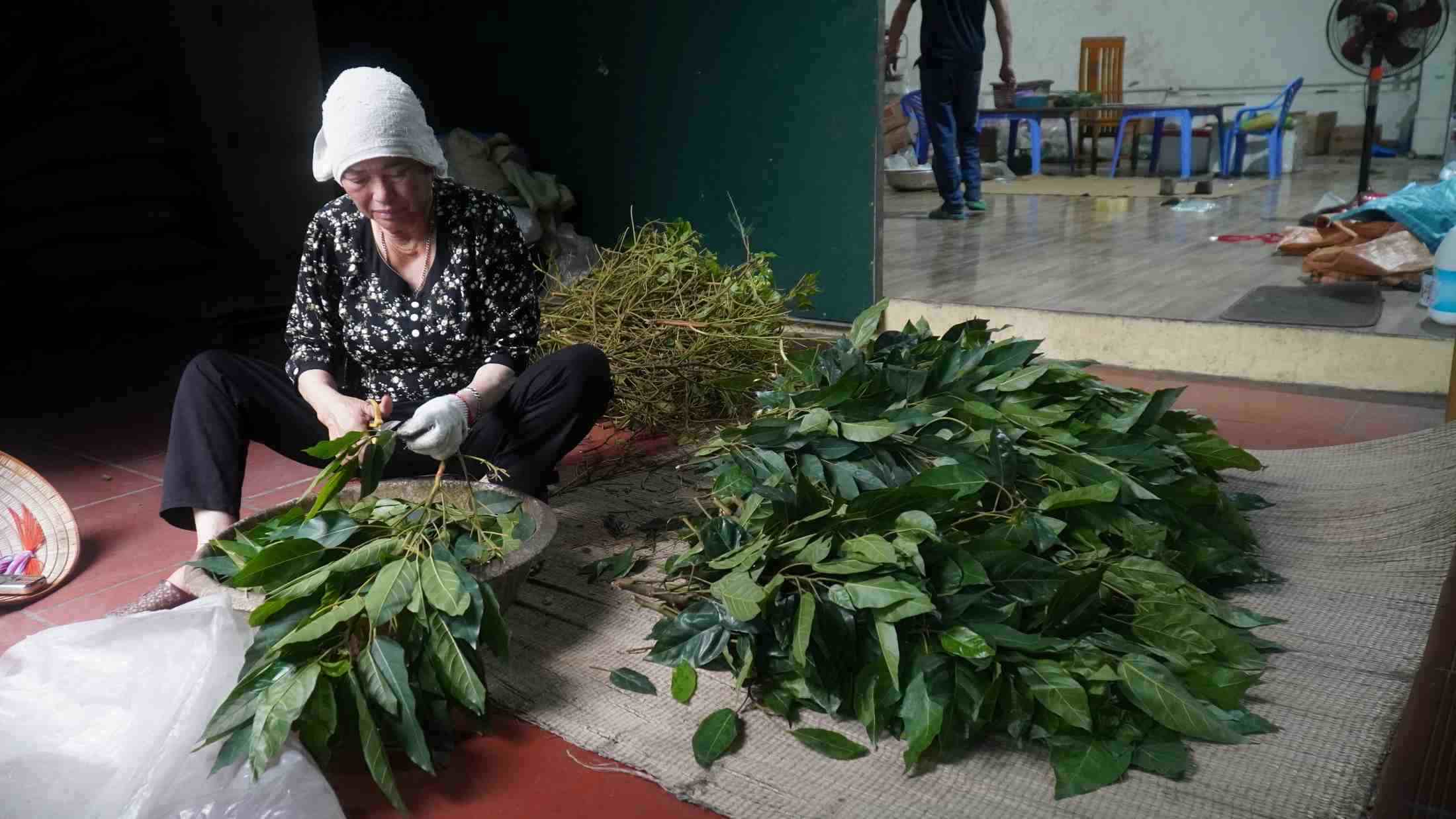
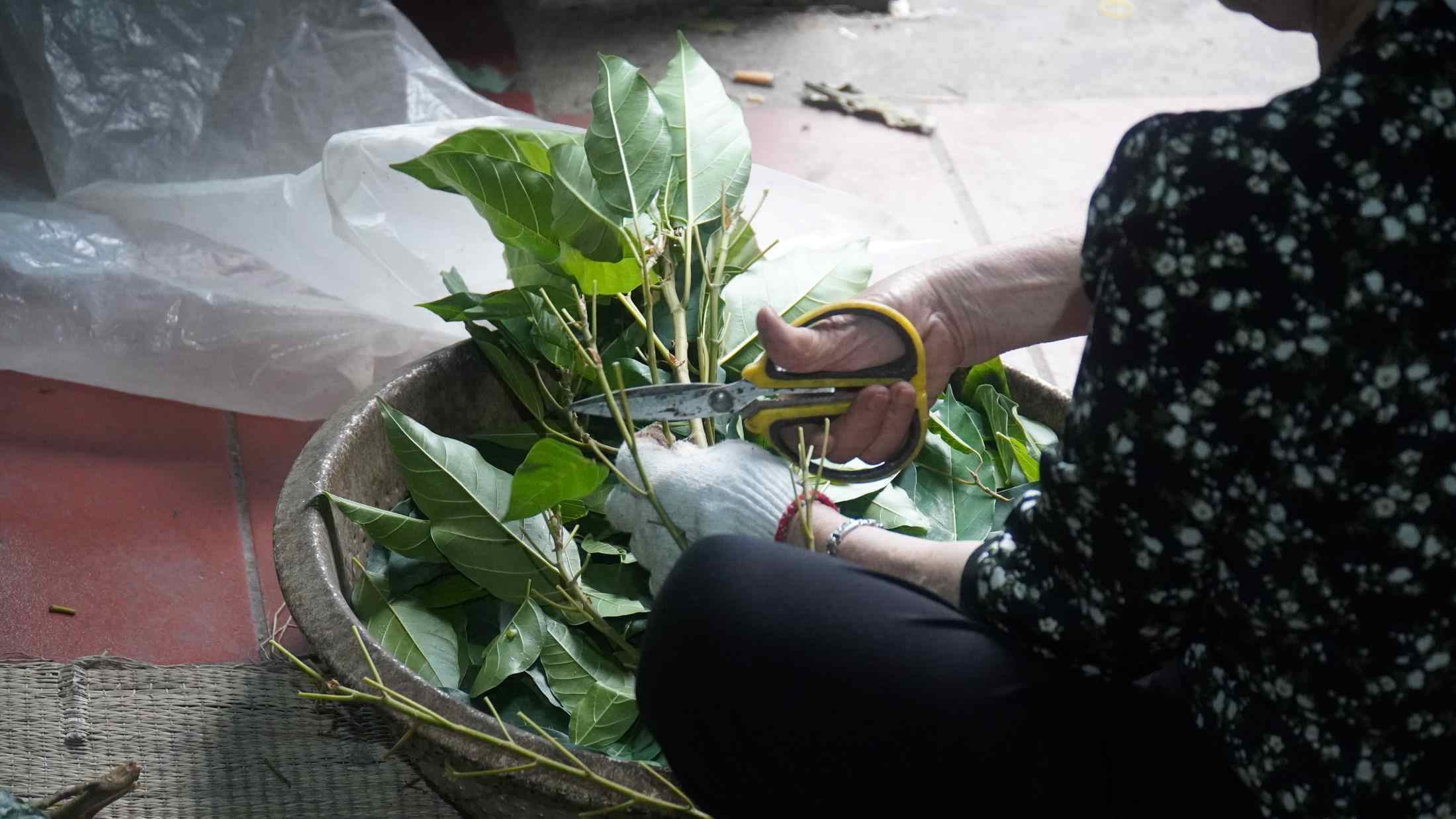
Having been in the profession since 2000, for more than 25 years now, Mr. Dai has been associated with Bui fermented pork roll not from a random choice, but continuing the family tradition.
I don't think about doing the job to earn a living, because my family has a long tradition of making Bui spring rolls. I am the next generation, so I have a responsibility to preserve and develop the family's traditional craft," Mr. Dai shared.
Bui fermented pork roll is not just a dish. For the people of Bui village, it is a memory, a cultural feature passed down through many generations. Mr. Dao shared that the fermented pork roll making profession has existed since around the 1930s, and has been around for nearly a century now, always a familiar dish during holidays and Tet.
Currently, the whole village has more than 100 households engaged in the craft. But to preserve the traditional flavor, not everyone can do it. "The secret is each household a little bit. But the core is still to choose raw materials and keep the heart for the craft," Mr. Dai said.
What worries him is not only production, but how to make the profession last long. In the context of an increasingly competitive market, retaining customers and expanding output is not an easy problem. Currently, his facility has about 20-30 consumption outlets, stretching from Bac Ninh to Hanoi.
In the conversation, there are moments of silence. That is when he talks about his desire to preserve the profession for future generations. "I just hope this profession does not disappear. So that later my children and grandchildren will know and be proud of my hometown's profession," he said, his voice lowered.
In a society that is changing day by day, where many traditional values are gradually being forgotten, people like Mr. Dai still quietly keep the profession, not noisy, not ostentatious. Each fermented pork roll preserves the story of time, of memories and of love for the profession of Bui villagers.