
In Nam Nghep village, Ngoc Chien commune, H'Mong women are still diligently working by the red charcoal stove to paint beeswax. The wax is continuously heated to maintain its liquidity.
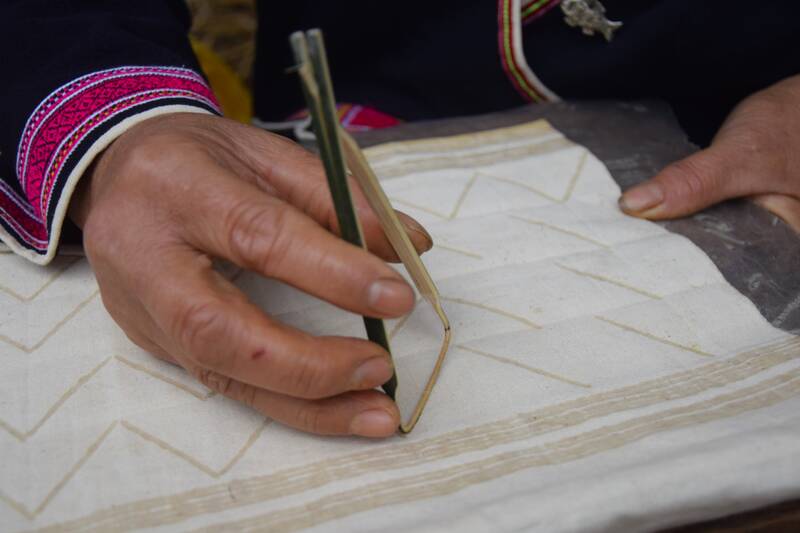
The painter uses a bamboo brush with a small bronze head to create patterns on linen fabric. Each line requires firmness and high concentration.
Ms. Phang Thi De, from Champ Pộng village, said that she learned the craft from her mother and grandmother. To complete a product, it can take months, even months. Each motif is created by the painter himself or transformed from old patterns.
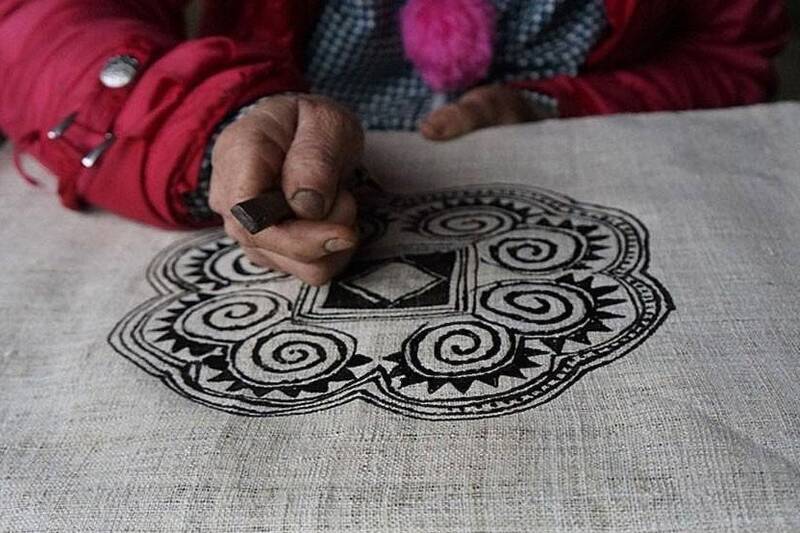
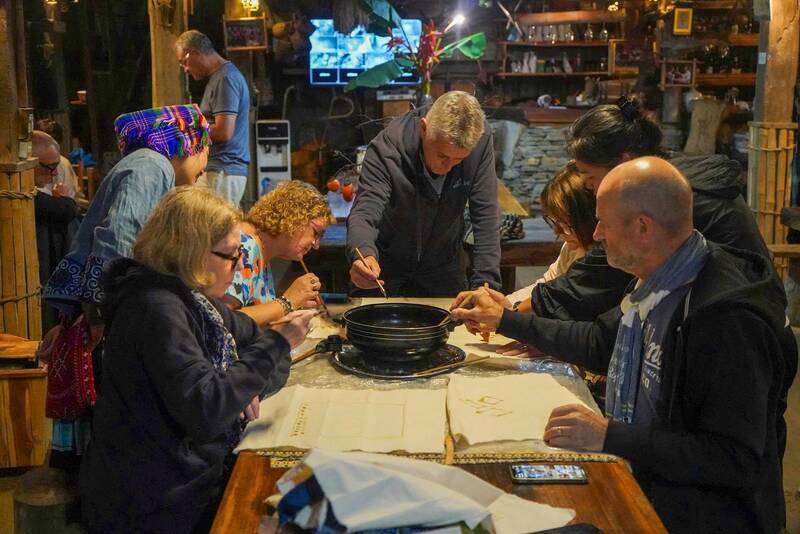
The pattern creation process includes many stages, linen fabric is woven, washed, dried and then stretched flat on the wood surface. The painter dabs hot beeswax and draws directly on the fabric.
The fabric is dyed indigo many times. Parts with beeswax do not absorb color. When boiled in hot water, the wax dissolves, white patterns are clearly visible on the indigo background.
Common motifs are straight lines, geometric shapes, sawtooths, and diamonds. Each motif has its own meaning, reflecting life and aesthetic concepts.
In the Moc Chau and Van Ho areas, many Dao Tien women still maintain the craft of painting with beeswax on fabric. Ms. Trieu Thi Huong, Van Son ward, said that painting with beeswax is the most difficult stage. The painter must maintain a stable temperature and firm hands. If the wax cools down or hands tremble, the strokes will be broken.
According to Ms. Huong, to complete the product, it needs to go through many steps, from waxing to dyeing and finishing.
Not only serving daily life, the beeswax painting profession is also associated with tourism development. In Van Ho commune, Mr. Trang A Chu has brought the experience of beeswax painting into homestay activities in Hua Tat village, so that tourists can directly try painting beeswax on fabric.
Mr. Chu said that many foreign tourists really like this activity. Through this, they understand more about local culture, and people also have more income and motivation to keep their profession.
In Muong Coi commune, the villages of Du Lau, Suoi Leo, Khoai Lang still maintain this traditional craft.
Ms. Ly Thi Son - Khoai Lang village - said that this profession requires patience and meticulousness. Young people today rarely study it, but she still teaches it to her children and grandchildren in the family. According to her, each pattern has its own meaning, if not preserved, cultural identity will gradually fade away.
Currently, the beeswax painting profession is facing many difficulties, ready-made clothes are increasingly popular. Handmade products take a lot of time, so it is difficult to compete, people who know the profession are mainly elderly women, and the successor force is still small.
Faced with that reality, many localities have included beeswax painting activities in festivals and cultural events. Contests, performances and experiences are organized regularly. These activities attract a large number of people and tourists. Since then, traditional crafts have been widely promoted.
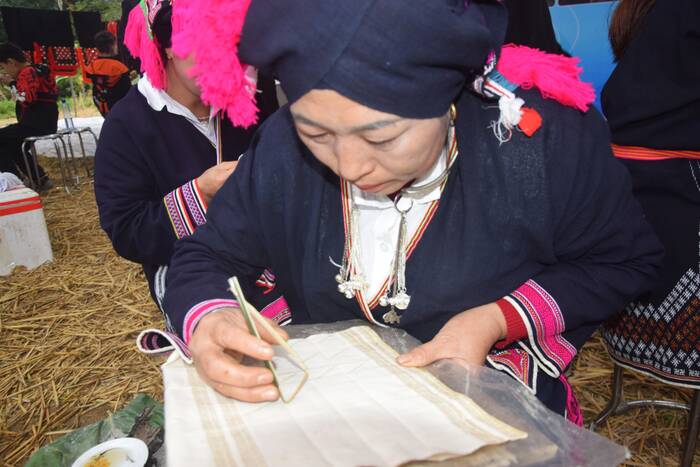
Beeswax painting art is not just a handicraft technique. This is also a "living memory" of the H'Mong and Dao Tien ethnic communities in the highlands. Each line is a cultural story, preserving the craft is preserving identity. Preserving and promoting the craft is opening up a sustainable direction, contributing to increasing income and preserving traditional values.


