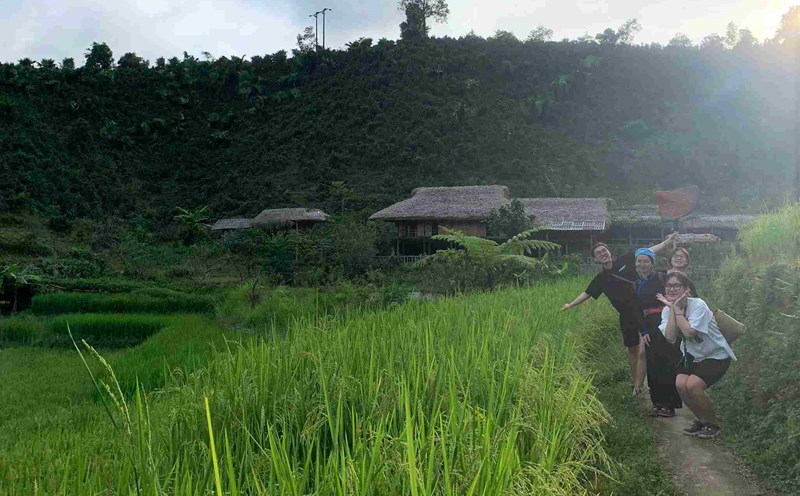
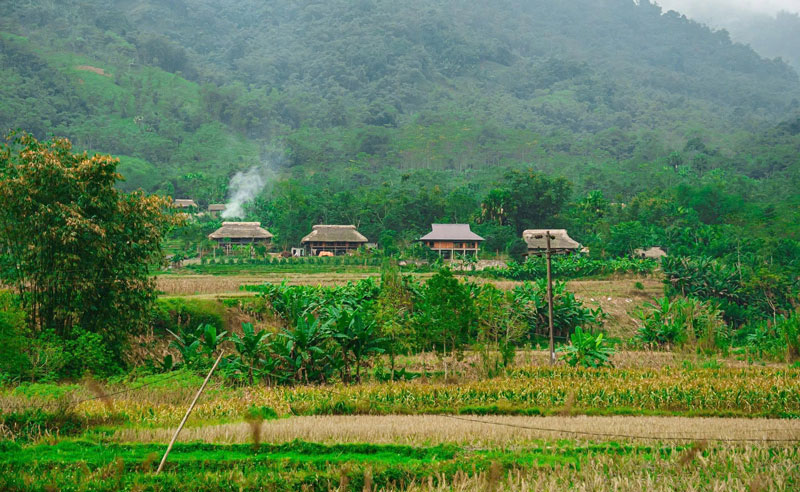
Early in the morning in Lam Thuong commune, Lao Cai province, mist still slowly drifts on the mountainside, the sound of streams murmuring through the stilt houses of the Tay people. In the small kitchen of Dung Phieu homestay, Ms. Hoang Thi Nay both lights a fire and prepares breakfast for guests.
The sticky rice pot is steaming, the aroma of new sticky rice blends in the peaceful space of the village. For many tourists, it is the moment of starting a trip. But for the people here, it is their way of preserving culture with the simplest things.
Customers come here not only to sleep one night, but to live like people in the village" - Ms. Nay said, quickly preparing a meal.
Also because of this, at her homestay, tourists can pick vegetables with the host, cook, sit by the fire and listen to stories, even learn to weave fabric or try out the daily tasks of the Tay people.
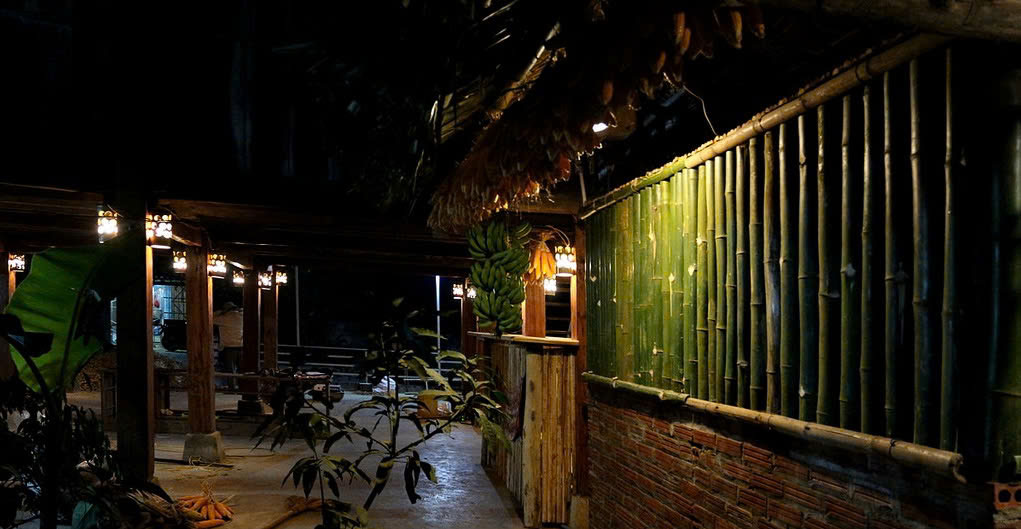
In recent years, from a few initial small-scale models, Lam Thuong commune has developed more than 10 homestays, attracting tens of thousands of visitors each year. It is worth mentioning that most homestays still retain the traditional stilt house style, from palm roofs, wooden floors to familiar items such as fireplaces, woodcushions, and rustic tables and chairs.
According to Mr. Au Van Tinh - Chairman of the Vietnam Fatherland Front Committee of Lam Thuong commune, the overarching principle in community tourism development in the locality is to do tourism but not lose culture.
If homestays are just like a normal accommodation, there will be no difference. Our value lies in our identity, in the house customs, customs, and lifestyles that are preserved," Mr. Tinh said.
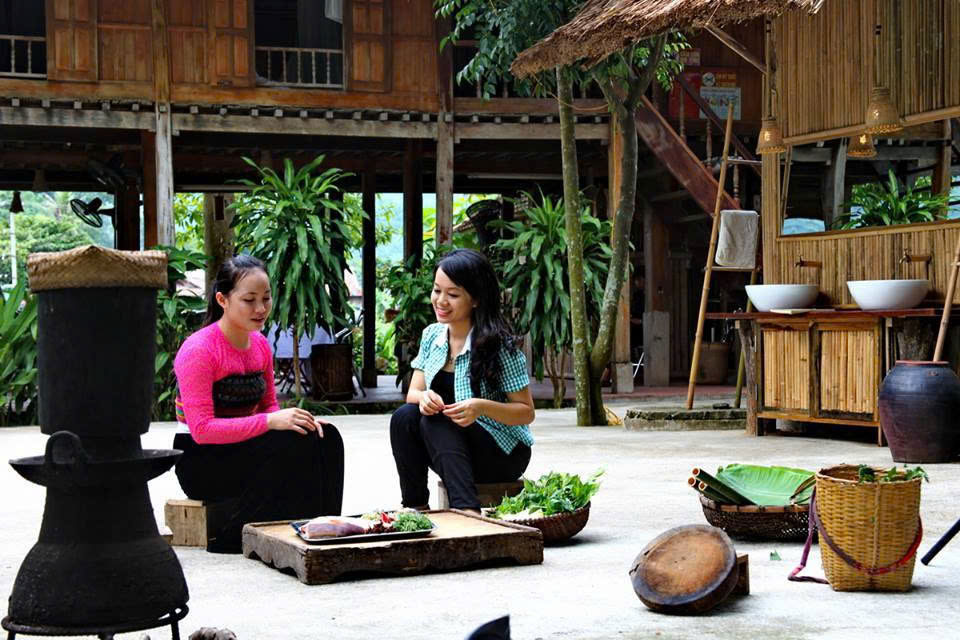
Not only Lam Thuong, in Muong Lo region, the homestay model associated with local culture is also creating its own mark.
Different from the quiet, rustic appearance of the Tay people's space, homestays in Muong Lo are more brilliant, imbued with Thai culture. Colorful brocade panels, traditional costumes, dishes such as Tu Le sticky rice or kitchen-smoked meat... all present as a natural part of daily life.
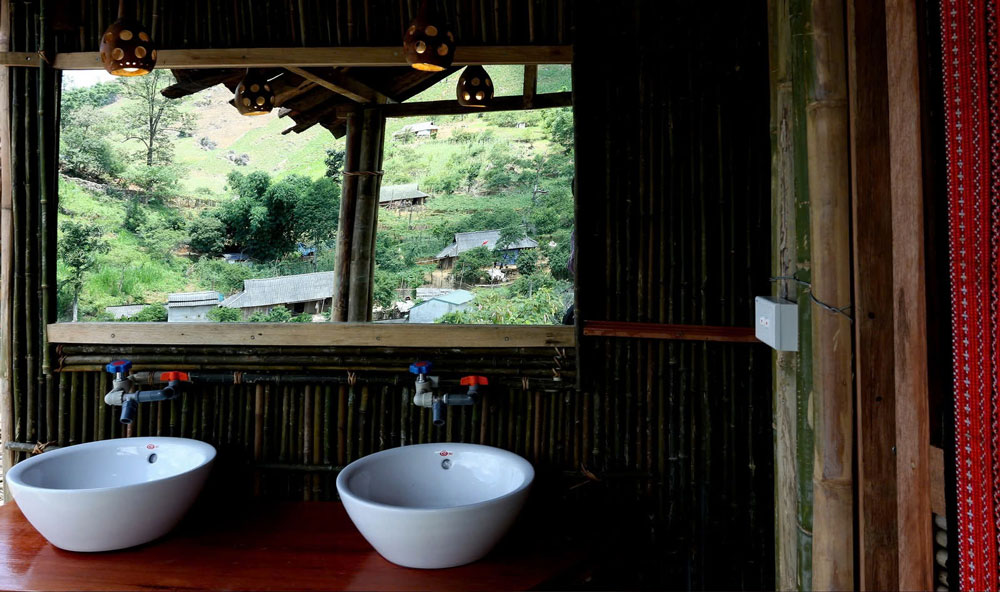
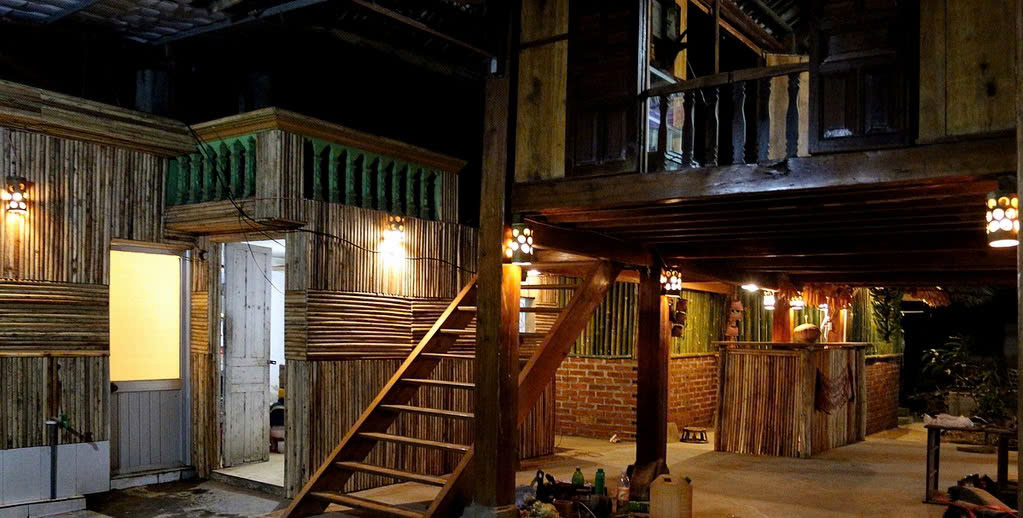
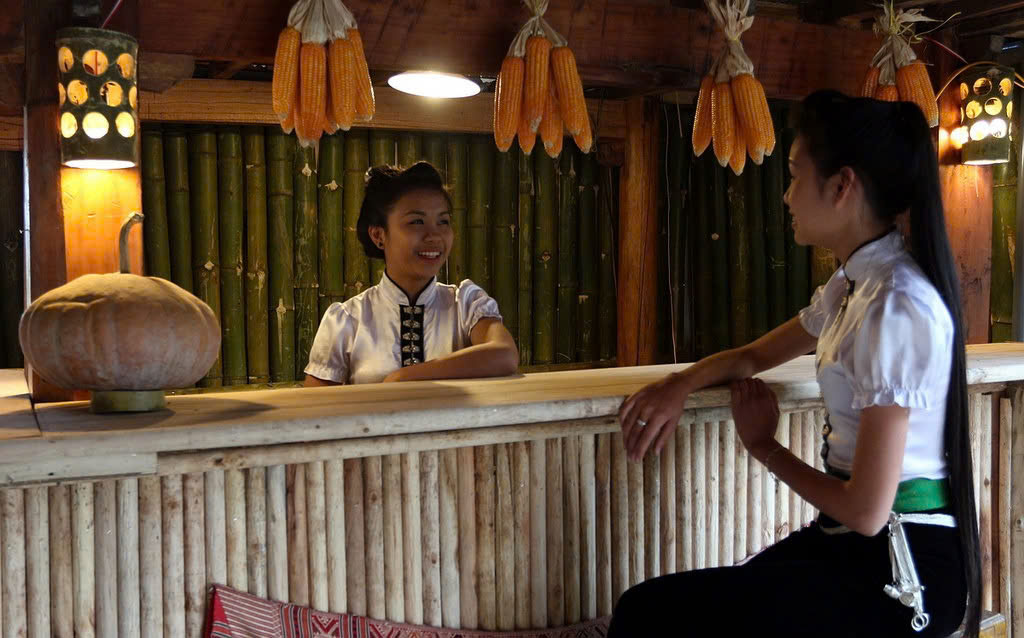
For many tourists, the most attractive thing is not a beautiful room, but the feeling of living in a "living museum", where culture is not displayed behind glass but present in every meal, greeting, xoe dance or story by the fire.
Mr. La Minh Tien, official of the Culture and Social Department of Trung Tam ward - said that homestays today are not just a place to rest, but a space to fully experience culture.
Tourists are increasingly wanting to delve deeper into indigenous life. They like to hear about why the Thai people weave this pattern, why that dish is prepared in that way. Those stories are what create different values," Mr. Tien expressed.
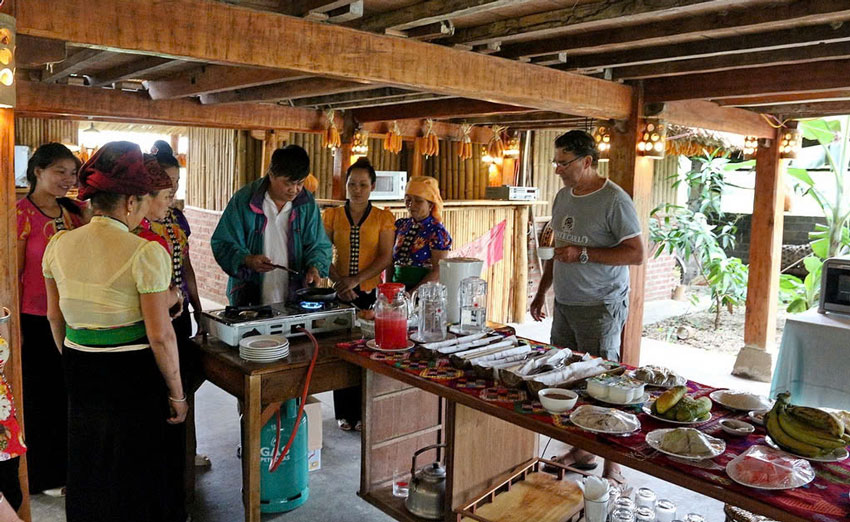
In many homestays, homeowners are becoming special "storytellers".
They tell about the origin of stilt houses, the meaning of patterns on brocade panels, wedding customs, farming habits... Not following any tourist script, those simple stories make visitors remember longer than any formal introduction.
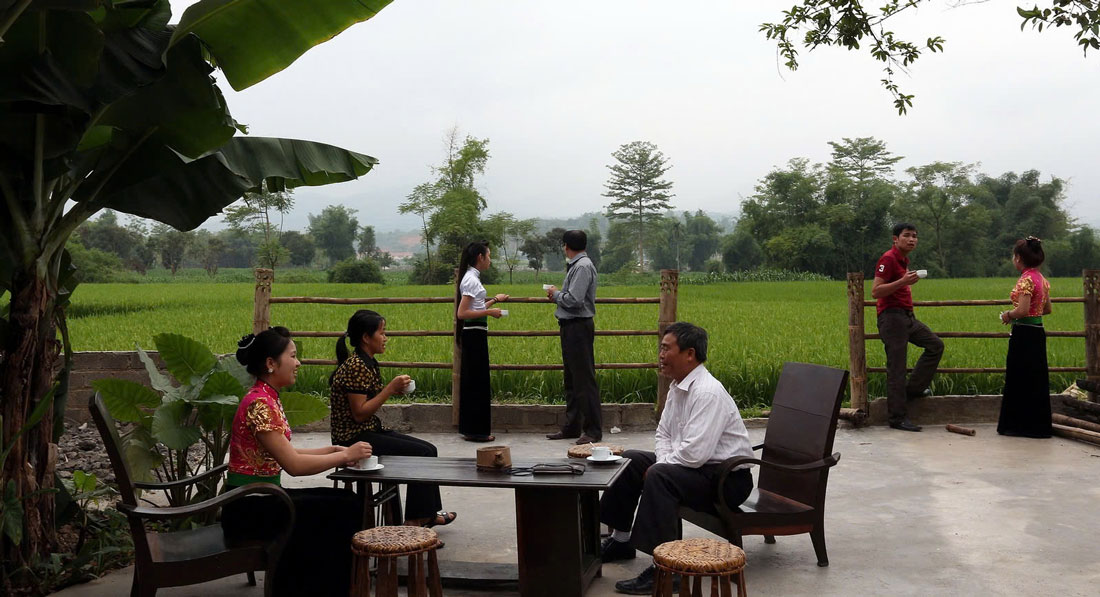
Ms. Dinh Thi Huyen - Director of the Northwest Development Cooperation Center assessed that the good news is that many communities have changed their thinking about doing tourism.
Previously, there were places that made homestays according to the trend, but now people understand that cultural identity is the core factor for sustainable development. When we maintain our own uniqueness, tourism will have competitiveness," Ms. Huyen added.