
A place where the fire of craftsmanship is preserved lastingly
Chang Son village (Thach That commune, Hanoi) has long been famous for making handmade fans - a profession closely associated with the traditional activities, beliefs and art of Vietnamese people. According to the memories of the elderly in the village, the fan profession in Chang Son was formed hundreds of years ago, developed strongly during the feudal period. At that time, fans were not only used to cool but also appeared in communal houses, pagodas, festivals, Cheo - Tuong stages and court life.
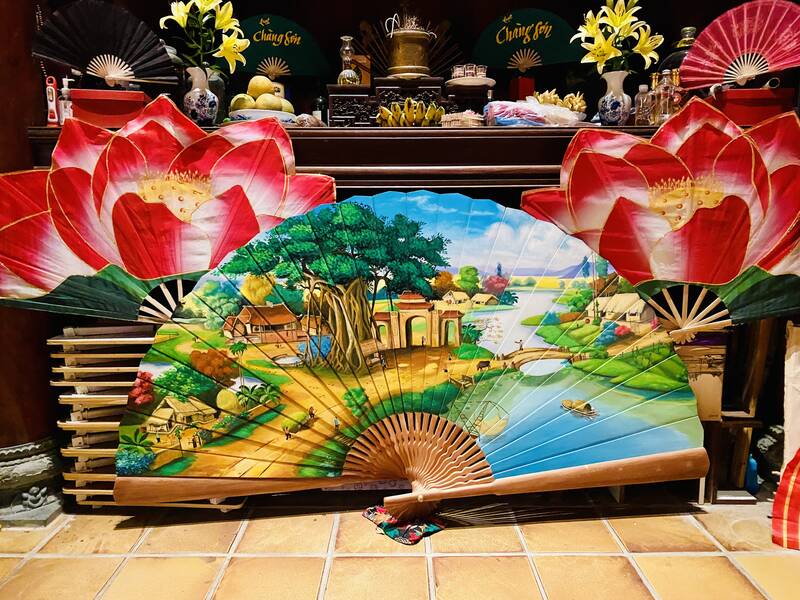
Chang Son fan has a rustic but sophisticated appearance. From carefully selected old bamboo, split ends evenly, to do paper or hand-wrapped paper with sticky rice husks, each stage requires patience and dexterity. On the fan surface are hand-drawn strokes, calligraphy, village scenery, folk tales, a convergence of traditional aesthetics and the soul of Vietnamese culture.
There was a time when the whole village of Chang Son heard the sound of splitting bamboo and carving bamboo. The fan profession nurtured generations, becoming the pride and identity of the land of Xu Doai. However, when society entered the period of industrialization, hand fans gradually retreated behind in the face of the rise of electric fans, air conditioners, and mass-produced products.
The decline of traditional crafts is a significant challenge for Chang Son. Many households abandon the craft, young people leave the village to find other livelihoods. In that context, maintaining the craft not only requires skills, but also a lasting belief.
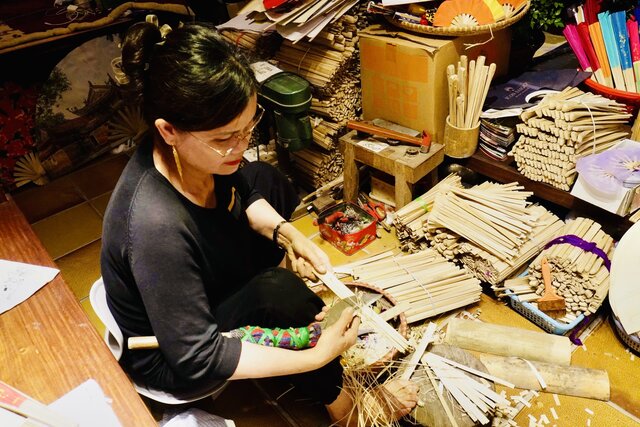
Artisan Nguyen Thi Tuan is one of such people. Attached to the fan making profession since she was young, for her, making fans is not simply manual labor, but preserving the cultural memory of the village. Through nearly 20 stages, from choosing bamboo, filling paper, to each fold, she always strictly adheres to the traditional craft standards.
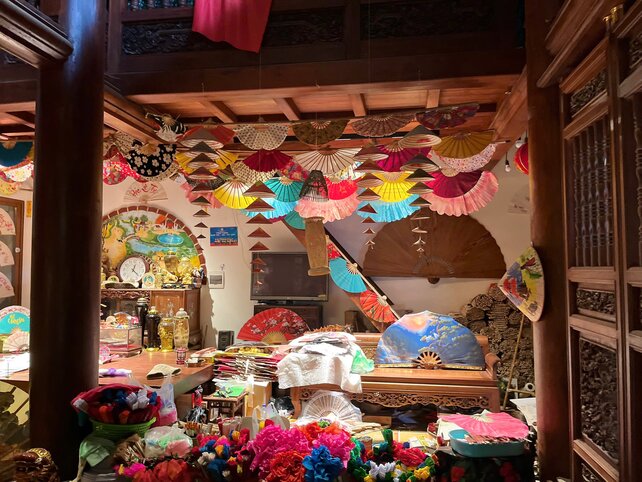
To ensure a beautiful fan, the most important step is the stage of splitting bamboo and gluing the fan. Bamboo must be old bamboo, soaked thoroughly to prevent termites, maintain flexibility and then dried naturally, so that when folding the bamboo poles, the fan can open smoothly, close neatly, and not bend. The paper rolling part is also a stage that requires a lot of experience. Do paper or diep paper is rolled with pliers, glued in layers to make the fan surface flat and firm but still maintain lightness.
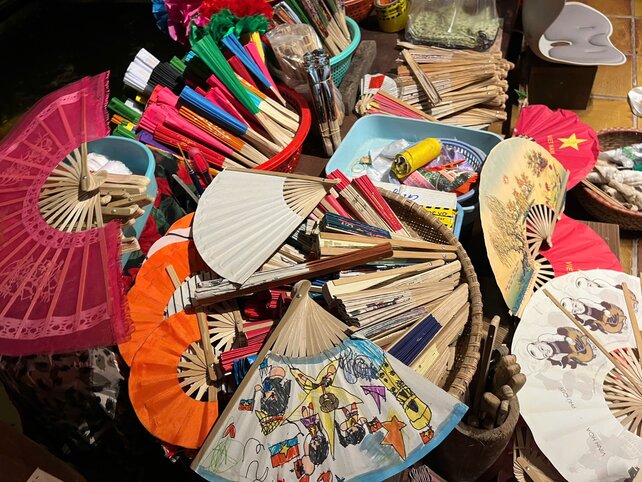
The point that makes up the soul of Chang Son fans lies in the drawing and decoration stage. On the fan surface, the craftsman can draw traditional patterns, countryside scenery, calligraphy or images with messages as required.
According to Ms. Tuan, the handmade paper fan is not simply a cooling item. “The beauty of Chang Son paper fan is not only to use but also to tell stories. Each fan surface is a creative space. When there are patterns, images, and messages, the fan becomes an object that carries a cultural story and has very clear communication value,” the artisan shared.
Amidst the ups and downs of the craft village, persistently maintaining all traditional handicraft stages is the way artisan Nguyen Thi Tuan is preserving the fire of the craft. Not chasing after mass production, she chooses to do it slowly and carefully. For her, only when the craftsman understands the value of each bamboo pole, each layer of paper, will the Chang Son fan truly have a soul and continue to be present in today's life.
Maintaining the profession to preserve the soul of culture
Not stopping at maintaining the craft, artisan Nguyen Thi Tuan also proactively passed it on. She participated in guiding fans making for students and visitors; opening experiences at craft villages so that young people could directly hold knives to carve bamboo, glue paper, and draw fans. Through this, the fan profession is no longer a story of the past, but has become a vivid experience in the present.
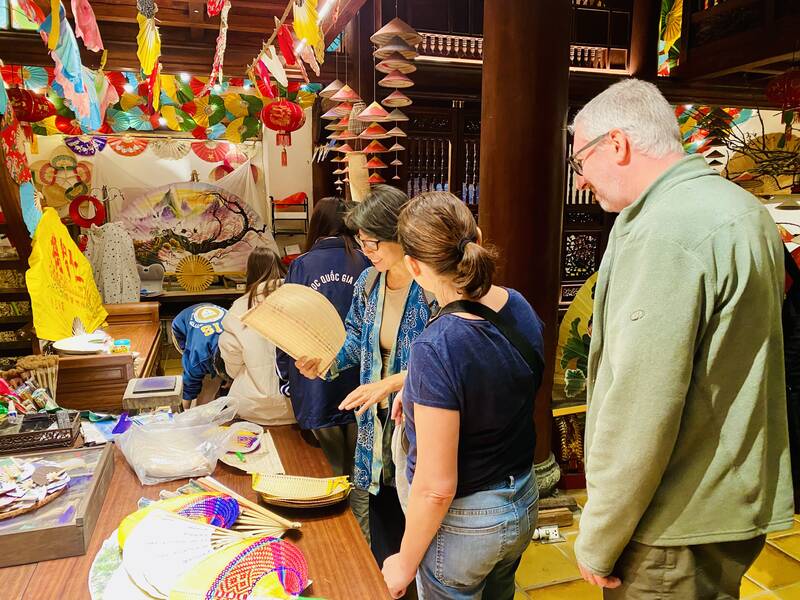
Besides traditional paper fans, Chang Son today also produces large decorative fans, stage fans, event fans, calligraphy fans, souvenir fans for tourism and art display. The fan is not only for use, but has become a decorative item, performance prop, and creative cultural product.
Linking the fan profession with experiential tourism also opens up a new direction for the craft village. Tourists coming to Chang Son not only buy fans, but also hear stories about the profession, about the village, about the people quietly guarding the soul of bamboo and paper. This connection has helped the value of the fan go beyond the physical form, becoming a bridge between the past and the present.
Faced with the wave of modernization and globalization, the future of Chang Son fan village still faces many challenges. Maintaining the craft today is not only about keeping a livelihood, but also about preserving cultural memories, preserving folk knowledge, and preserving the identity of a land. When Chang Son fans continue to be arranged and opened in the space of art, tourism, and education, that is also when the craft village finds new vitality for itself.
In the urgent pace of modern urban life, Chang Son fan village still quietly exists as a necessary slow motion, where people can hear the sound of splitting bamboo, watch dry paper in the sun, and deeply feel the value of manual labor. And there, artisans like Nguyen Thi Tuan still persistently keep the fire, so that the homeland fan is not only a memory of the past, but also a vivid part of the present and future.


