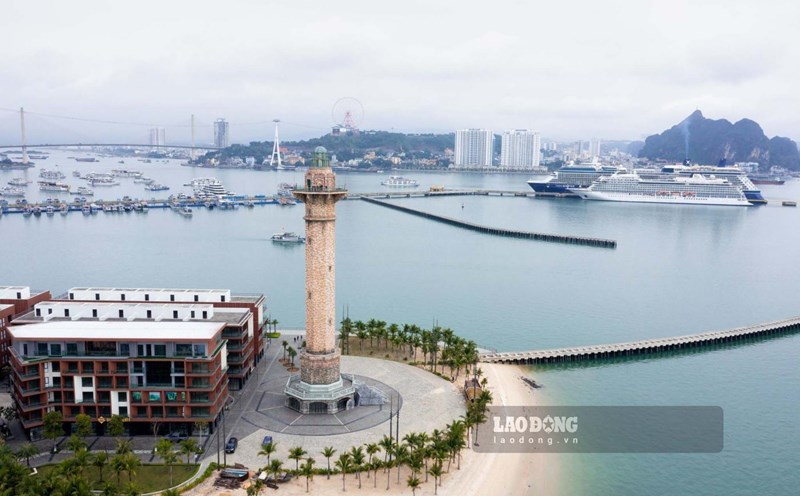
Over the long history of creation with many different geographical changes such as paint creating, seas advancing, seas receding, subsidence, etc., nature has created thousands of limestone islands with unique shapes in Ha Long Bay.
Deep in those rocky islands are beautiful caves, where the rattan and mangrove crystallize into a sparkling space, likened to "electric mines" in the bay.
Notable in this cave system are the caves: Thien Cung Cave, Dau Go Cave, Bo nau Cave, Me Cung Cave, Trong Cave, Sung Sop Cave...
Of which, Dau Go cave is located about 3km from Tuan Chau island and about 6km from Bai Chay tourist area. The cave is 27m above sea level, with an area of about 5,000m2, a 17m wide cave entrance and 12m high.
Scientists believe that this cave was formed about 2 million years ago, at the same time as Thien Cung Cave, only 300m away.
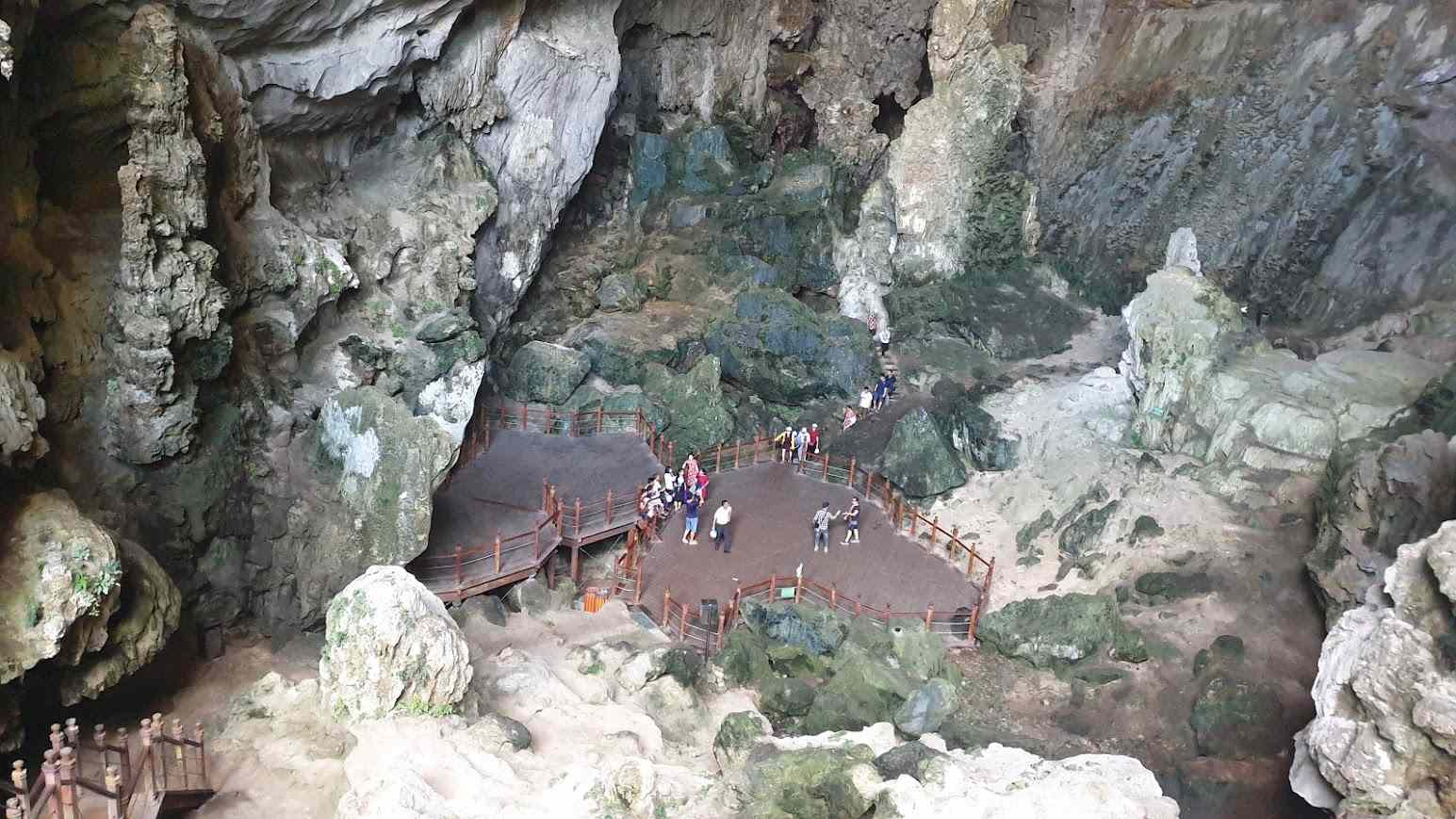
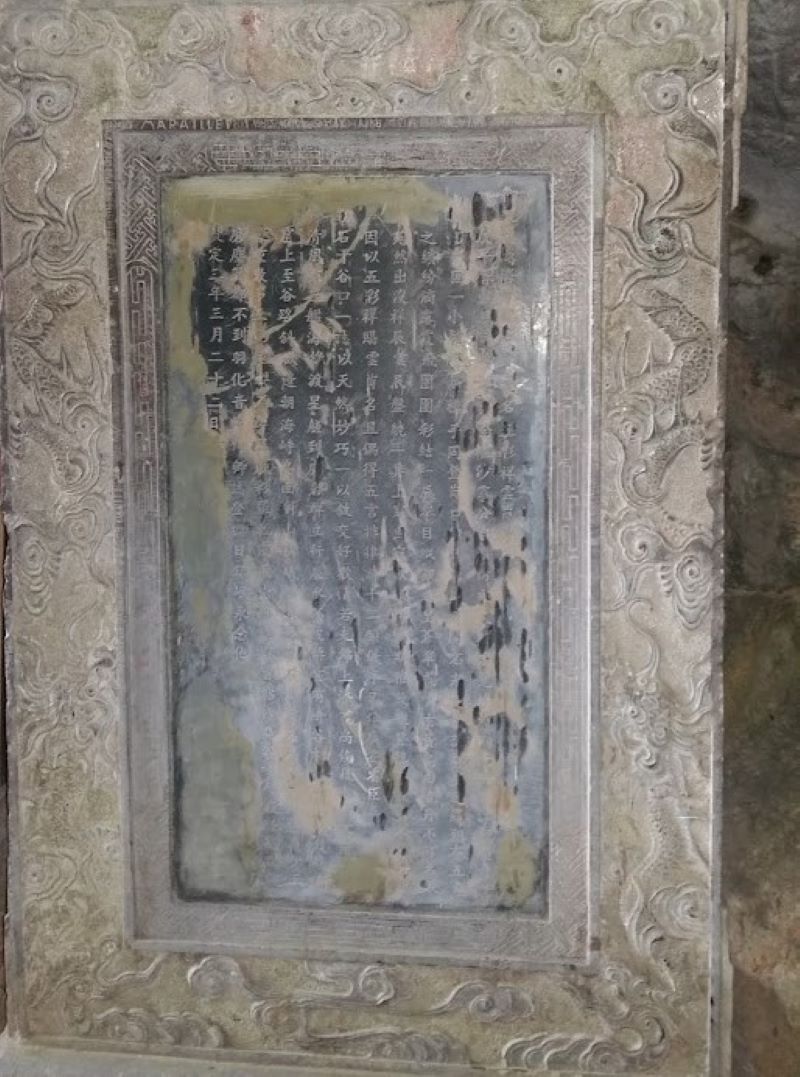
Compared to many other caves in the bay, Hang Dau Go is favored by nature with rich flora and fauna and a massive, majestic architecture. In particular, there is also a poetic stone stele praising the beauty of Ha Long Bay by King Khai Dinh, built in 1918 during his trip to the North, expressing his admiration for the beauty of this natural wonder.
Sung So Cave, located on Bo Hon Island, impressed with the surprising beauty of the stone jars shaped like wild chickens, worms, dragons, waterfalls... In 2012, the cave was in the top 10 most beautiful caves in the world voted by the Association of Czech travel bureys and brokers.
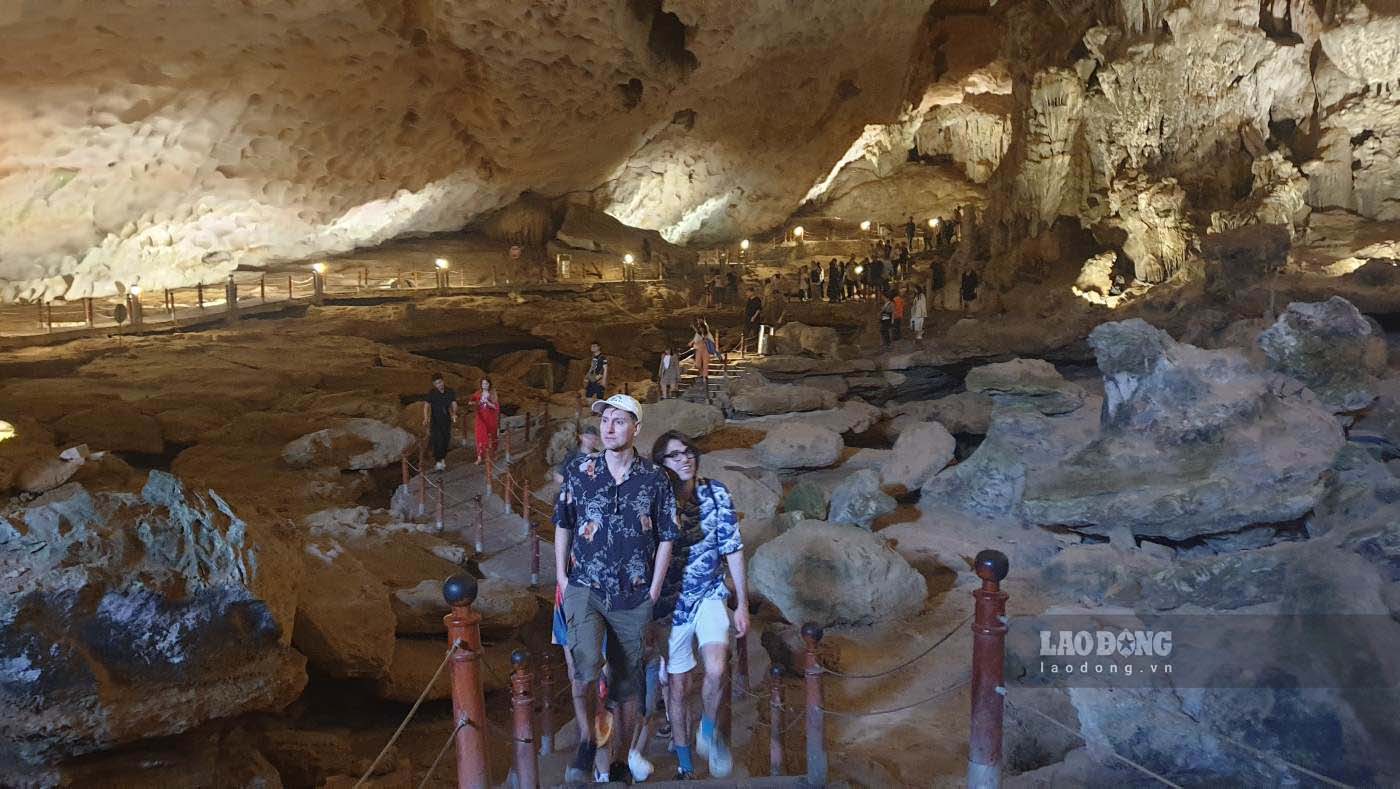
Notably, Thien Cung Cave is one of the largest and most beautiful caves in Ha Long Bay. The cave is located on Dau Go island, southwest of the bay, about 4km from the tourist port. The temple is at an altitude of about 25m above sea level, with an area of nearly 10,000m2, with complex architecture expressed through stone mortar and stone jars with unique shapes, likened to a magnificent and beautiful temple. Not only has it landscape value, Thien Cung Cave is also a relic of Soi Nhu culture, where the sedimentary layers of Melania snail shells and stone tools were discovered. On May 1, 1998, the restaurant officially opened to visitors.
On the way to explore Ha Long, visitors can visit Bo nau Cave located on tourist route No. 2, about 13km southeast of Tuan Chau international cruise port. This is an ancient limestone mountain cave, once considered by the French and Vietnamese press in the early 20th century as one of the beautiful landscapes of the bay. The cave entrance is a short sand beach, only reached by kayaking boat or boat. The shape of the cave's arch is like a shell that has sunk down, creating the feeling of a ceiling of a theater with a soft, loose rock ball.
Me Cung Cave is located in the absolute protection area of the bay, on Lam Bo Island, at an altitude of 25m above sea level. The cave has a complex terrain structure, many levels, many compartments, and a corridor over 100m long. This is an early Ha Long cultural heritage, dating back 10,000 7,000 years, with many intact remains of stream and mountain snails.
Tien Ong Cave, located on Cai Tai Cave, not only has a unique landscape but is also a witness to ancient Vietnamese culture, with an archaeological exhibition area right in the cave.
Hang Trong belongs to tourist route No. 2, with an area of about 300m2, an archaeological site of Soi Nhu culture. In particular, when the wind recedes through the stream, the sound resounds like a drum, creating a unique experience for visitors...
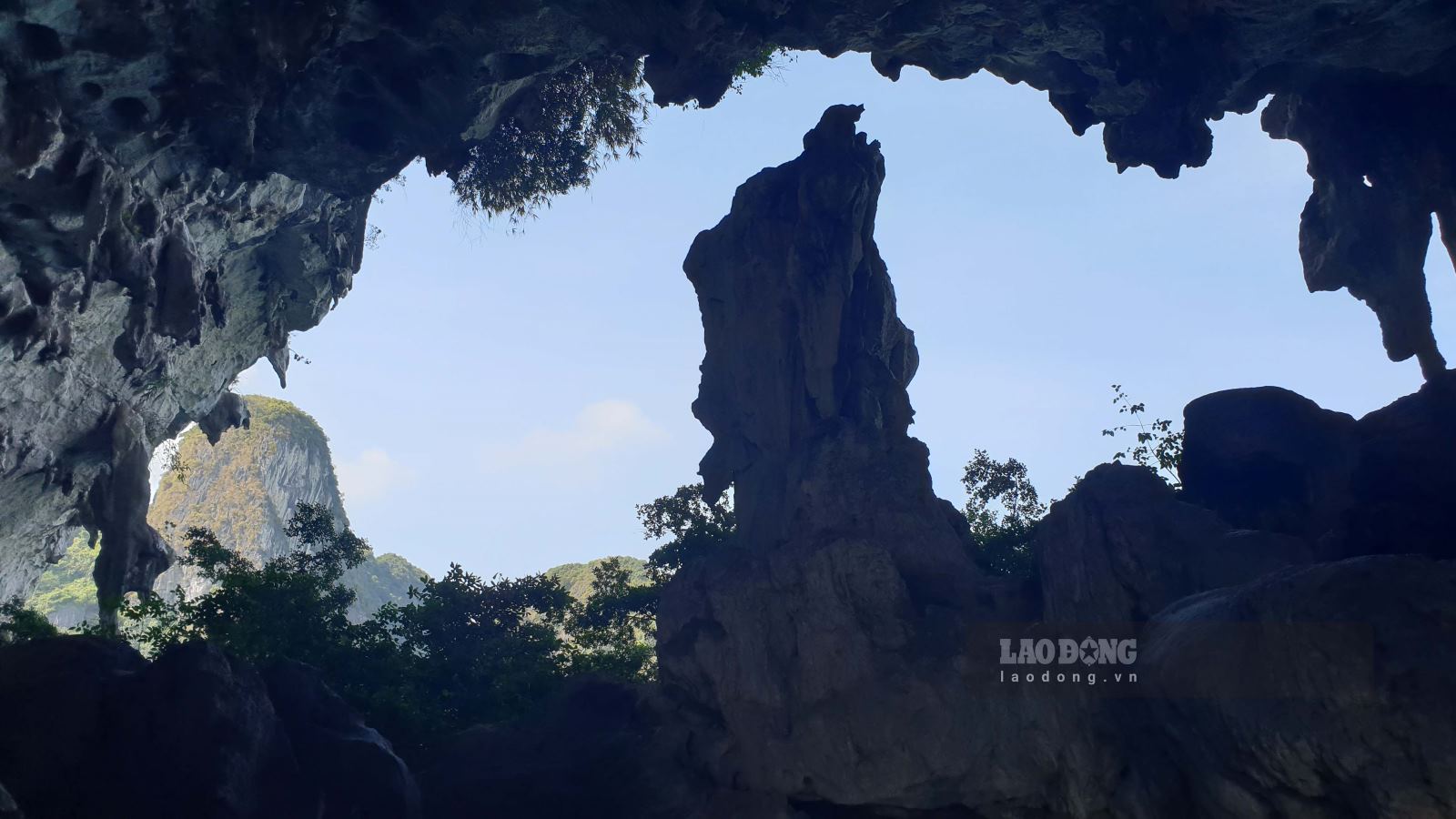
In addition to their aesthetic value, many caves in Ha Long also have special archaeological value. The harmony between natural beauty and historical depth has turned this place into unique "electric mines".
There are currently about 70 caves in Ha Long Bay, of which about 20 have just been put into tourism development, contributing to the global value of this world natural wonder.