
In the peaceful countryside of Dong Thinh commune, Ninh Binh province, Hung Loc communal house has existed for nearly 600 years as a witness to history. Not only famous as a place to worship Thai Uy Pham Cu Luong - a general with great contributions during the Dinh Dynasty, the communal house is also known for the art of exquisite solid wood carving, attracting a large number of tourists to explore.
According to records preserved at Hung Loc communal house, the ancient communal house was built in the 14th century according to the traditional architecture of "first chữ nhất, second chữ đinh", including tiền tế, trung đình and hậu cung. After many renovations, the communal house still retains many original wooden components and a system of carved patterns with high artistic value.

Going deeper into the harem, a series of wooden sculptures appear with soft, vivid lines. On the wooden planks in front of the harem and in front of the statue of Thai Uy Pham Cu Luong, dozens of dragons are carved in a very unique artistic style of the Nguyen and Later Le dynasties, vividly winding with animals such as phoenix, unicorn, squirrel...
In particular, the carving "Four Folk Smiles" is considered by many to be the most unique work of Hung Loc communal house. The work not only reflects the daily life of ancient Vietnamese people but also shows the liberality in folk sculpture art.
In the same harem, there is also a bronze statue of Thanh Hoang Pham Cu Luong weighing about 800kg on an ancient stone pedestal finely carved, contributing to enhancing the solemnity of the worship space.
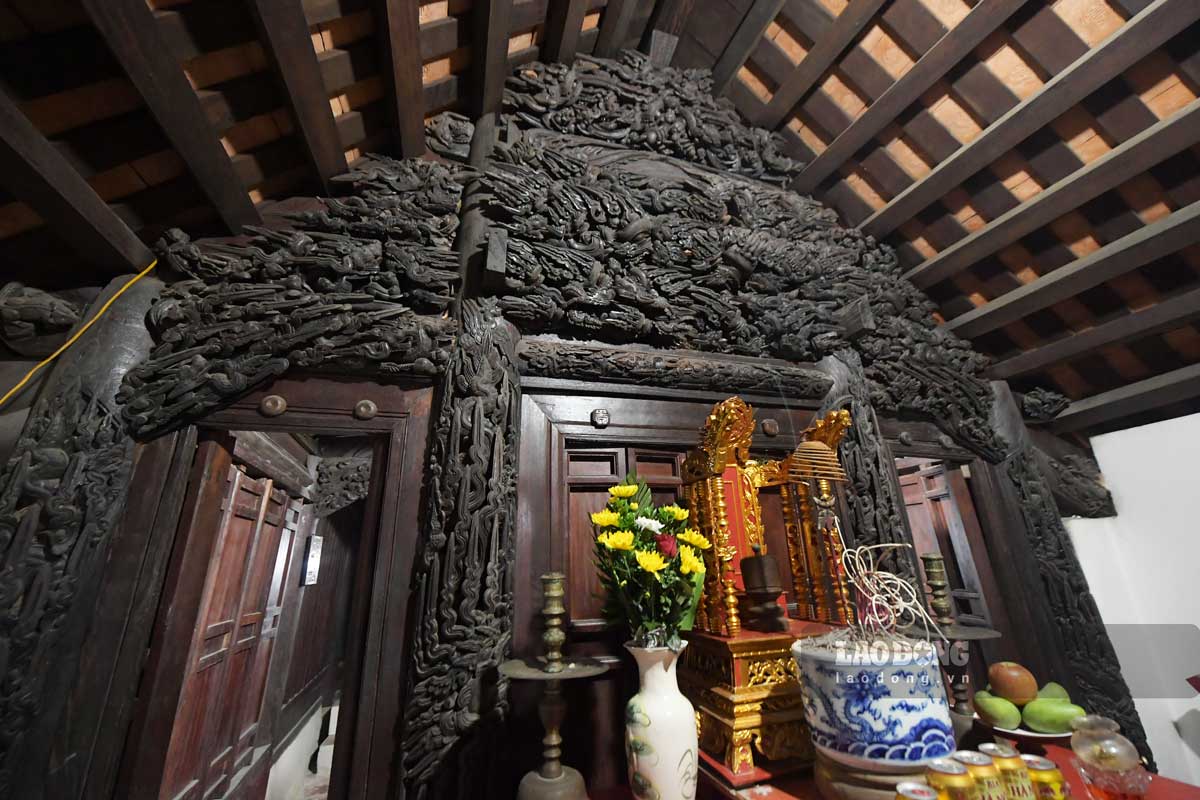
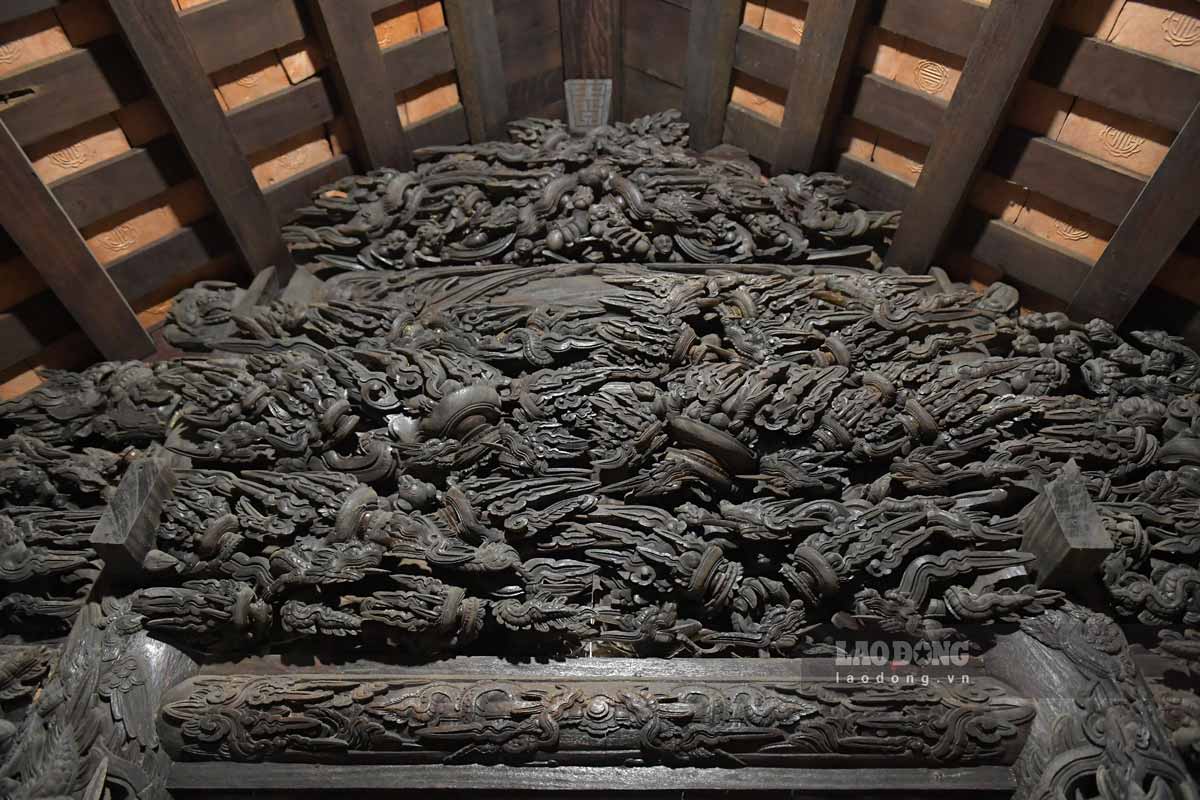
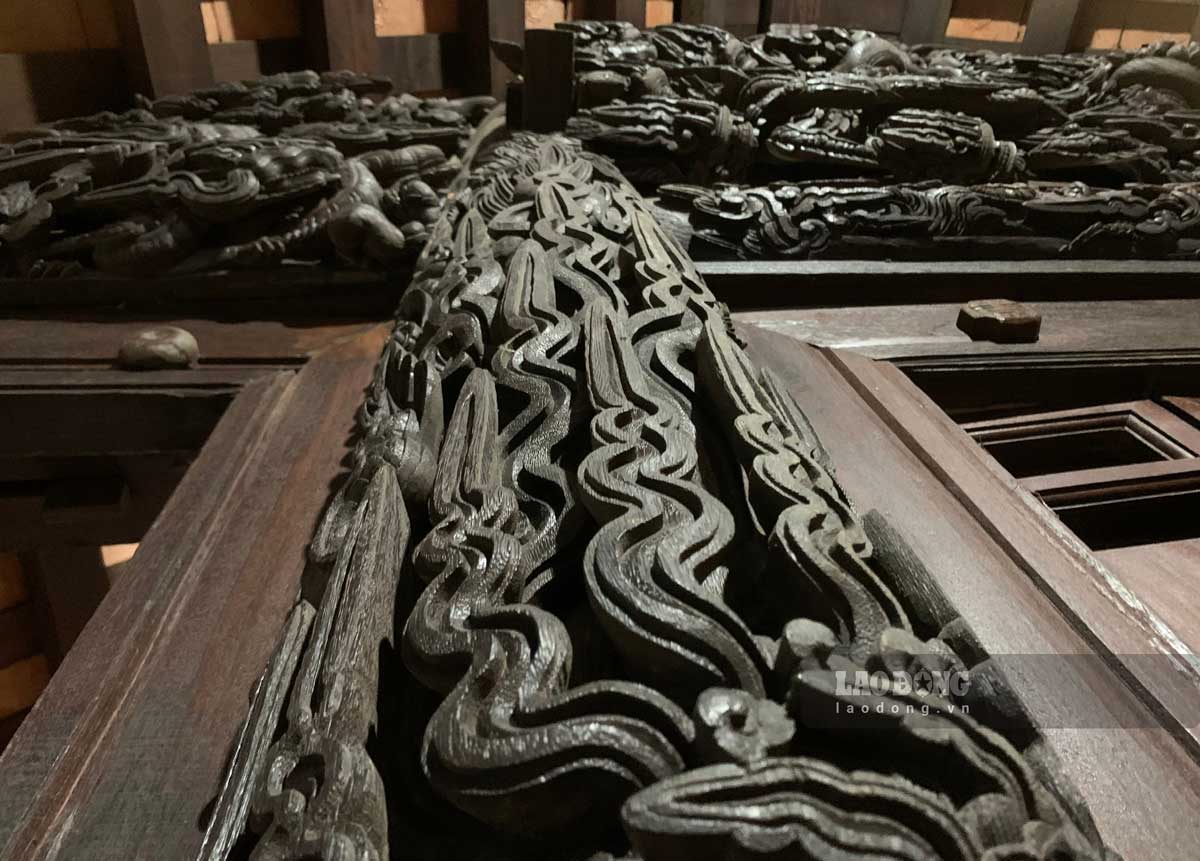
The first time visiting Hung Loc communal house, Ms. Nguyen Thu Ha (a tourist from Hanoi) could not hide her excitement. "I have visited many ancient communal houses, but very few places still retain such beautiful wood carving systems as here. Looking at each line, you can see the talent of the ancient artisans. Each carving is like a story told in wood," Ms. Ha said.
Not only carrying historical value, Hung Loc communal house is also a treasure trove of unique folk sculpture art of the Northern Delta region. Over nearly 600 years, solid wood carvings have persisted over time, becoming a unique mark, contributing to preserving and spreading traditional cultural values to tourists from near and far.


