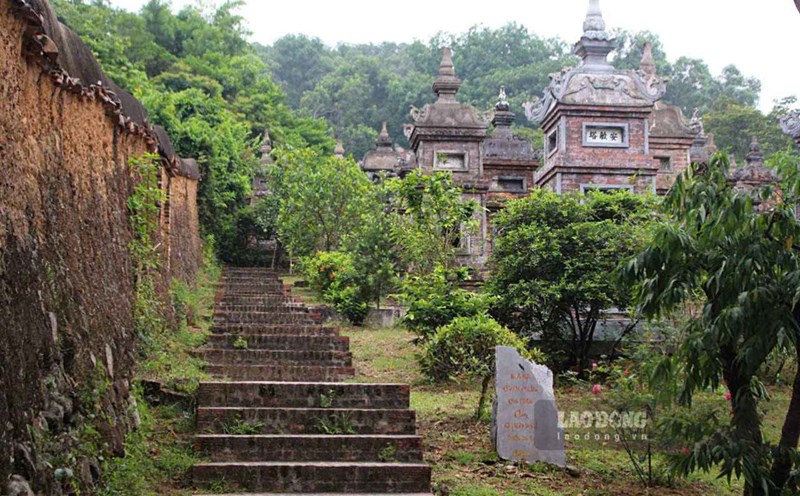
Historical traces of more than 4 centuries in the border region
Sop Cop commune, Son La province is a long-standing living area of many brotherly ethnic groups, in which the Lao ethnic community plays an important role in the formation and development of Muong Va village. According to historical documents and legends passed down in folklore, around the 17th century, Lao people following migrations came to settle in this land. Muong Va in local language means a land with many people living, flat, fertile and beautiful landscapes.
Legend has it that when passing through Muong Va, a Chinese geographer noticed that the terrain here has a "back leaning against the mountain, face facing the plain, converging forward", very favorable for long-term residence. He discussed with Chau Hua (the leader of the community at that time) to build a pagoda and tower as a religious activity center for the villagers.
People in the area, mainly Lao and Thai people, together built a hill right in the center of the village to build a tower. The soil was taken from the surroundings, creating large ponds and lakes whose traces still exist today. When completed, the tower and pagoda became places to worship Buddha according to the Buddhist faith of the New Year, and also a space for community activities, where festivals take place, discussing common tasks of the village.
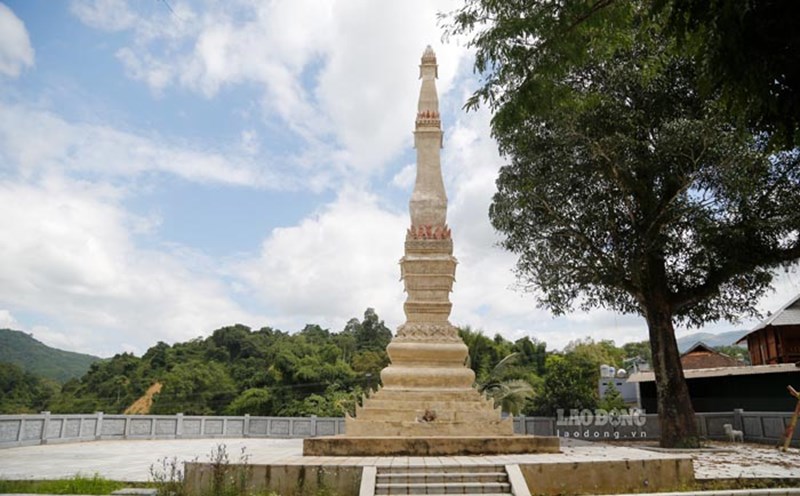
Through war and changes of time, the ancient wooden pagoda is no longer there, only Muong Va tower stands firm in the sky and earth as a historical witness. In 1998, the project was ranked as a National-level architectural and artistic relic by the Ministry of Culture, Sports and Tourism, affirming the special value of the tower in the treasure of cultural heritage in the Northwest region.
Unique architecture imbued with Lao Buddhism
Muong Va Tower is built in the shape of a tower pen, 13m high, consisting of 5 floors, placed on top of an artificial hill in the middle of the village. The overall structure is high, elegant but solid, creating a feeling of majesty and sacredness when viewed from afar.
The highlight of the tower lies in the art of decoration between floors with delicate lines, rich in symbols. The floors are separated by semi-circular indentations. The adjacent part of the second floor is decorated with spiral patterns, dotted with chrysanthemums; the third floor is an elephant walking up the mountain - symbolizing strength and endurance; the top floor is shaped like a lotus bud, expressing Buddhist philosophy of enlightenment and purity.
The tower is built entirely of red tiles, each piece 35cm long, 15cm wide, 6cm thick, adhered by a mixture of lime, sand and honey. The building is built densely, without doors, divided evenly on 4 sides facing in four directions, harmonizing with the natural space.
From the foot of the tower, looking far, you can see the entire center of Sop Cop commune with vast rice fields, stilt houses with mossy tiled roofs and Pu Hong Loc mountain range overlapping behind. Early in the morning or at dusk, thin fog lightly spreads, creating a magical scene, highlighting the ancient, contemplative beauty of Muong Va tower in the border culture space.
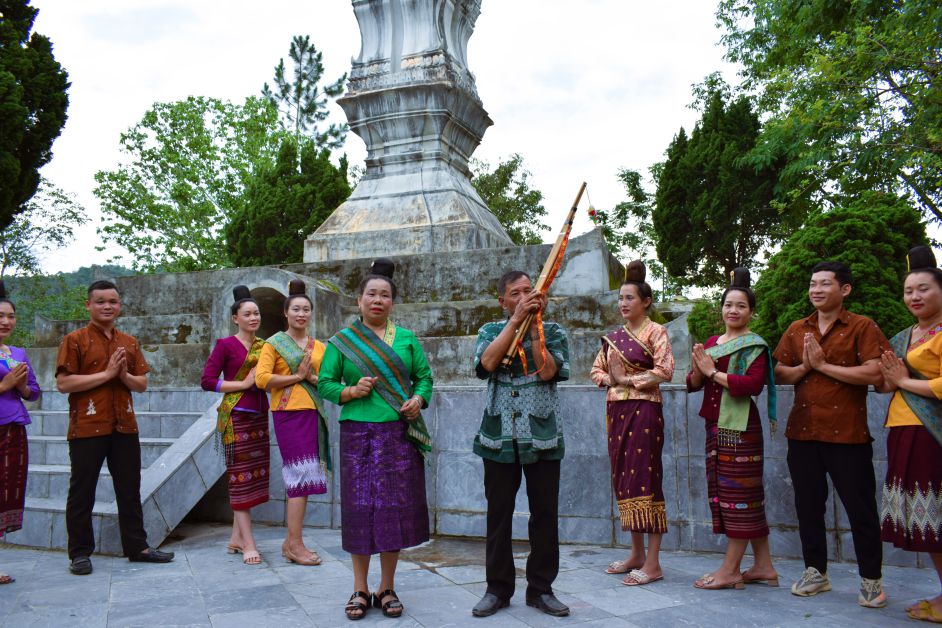
Khau Ho festival space and the driving force for community tourism development
Not only having architectural and artistic value, Muong Va tower is also an important cultural and religious activity center of the Lao ethnic community in Sop Cop commune. Every year, many traditional rituals take place in the tower area, typically Khau Ho Tet - the New Rice celebration of the Lao people, usually held on the full moon of the 8th lunar month.
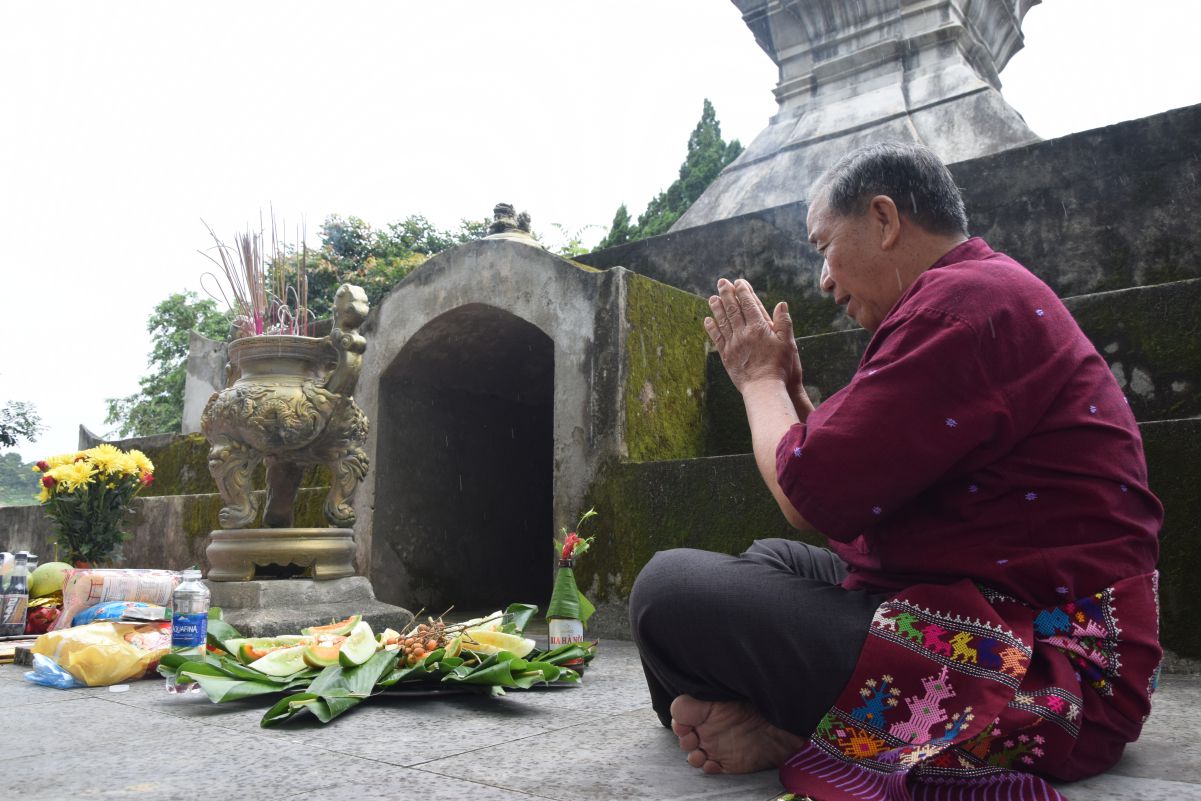
Khau Ho Tet (packaged rice) is imbued with agricultural beliefs, expressing gratitude to ancestors and gods for blessing favorable weather and bumper crops. On the holiday, people organize Khau Ho worship at Muong Va tower, the shaman performs rituals to express gratitude to ancestors, heaven and earth, praying for bumper crops, plants blooming and bearing fruit. The ritual of tying hands to wish each other good health, luck and success... The festival part took place soi noi with folk games, Xoe dances, cultural exchanges, creating an atmosphere of solidarity and attachment in the community and attracting a large number of tourists.
In recent years, along with relic conservation work, Sop Cop commune has gradually exploited the value of the ancient tower associated with community tourism development. Tourists come here not only to visit the relic but also to experience local cultural life such as brocade weaving, enjoying traditional cuisine, and participating in folk dances of the Lao people.
Ms. Pham Thi Thanh Nhan, a tourist from Hanoi, shared: "The first time I came to Muong Va, I was very impressed with the architecture of Muong Va tower. Living in the village atmosphere, witnessing people weaving brocade with my own eyes and participating in Xoe dance brings a wonderful feeling, especially the people are very friendly and hospitable.
According to Mr. Nguyen Quoc Tuan, Chairman of the People's Committee of Sop Cop commune, Muong Va tower is an important support in the local tourism development orientation.
The commune determines that preserving the ancient tower associated with preserving the Khau Ho festival and the traditional cultural values of the Lao ethnic group is the foundation for sustainable tourism development and creating livelihoods for people," Mr. Tuan emphasized.
Over more than four centuries, the ancient Muong Va tower still quietly stands in the Northwest border region, like a thread connecting the past with the present, a gathering place for spiritual and cultural life and the aspiration for a peaceful and prosperous life of the Lao ethnic people in the borderland of the Fatherland.
It's a bit of a bit of a bit of a bit of a bit of a bit.
It's a bit of a bit of a bit of a bit of a bit of a bit.