
Supermodel Qi Mengyao (Ming Xi) and businessman He Youjun just held a lavish banquet at the Les Franciscaines cultural complex (France).
For food travel enthusiasts, what captures the "spotlight" of the event is not only branded dresses, but also the menu guaranteed by Potel et Chabot - a party unit with a history of more than 200 years.
In which, the appearance of langoustine prawns from Northern Europe has opened up an interesting story about one of the most expensive products in the world today.
Langoustine (also known as hammerhead shrimp, Norwegian giant river prawns) has long been dubbed by the high-class culinary community as the "gold" of the cold seas of Northern Europe.
Unlike ordinary shrimp, langoustine grows in deep, cold waters with high salt concentrations in the Atlantic Ocean. This harsh habitat slows down their growth rate, but in return, the flesh fibers of langoustine achieve ideal firmness, naturally rich sweetness and superior nutritional content.
The process of exploiting this seafood requires strict standards of conservation and quality. Norwegian fishermen often have to use manual fishing methods using traps instead of using trawl nets to avoid damaging the thin shell and keep shrimp intact and fresh when they come ashore.
It is the scarcity and strict shipping procedures by air that absolutely retain the cold that have made the langoustine one of the most expensive ingredients on the global Fine Dining table.
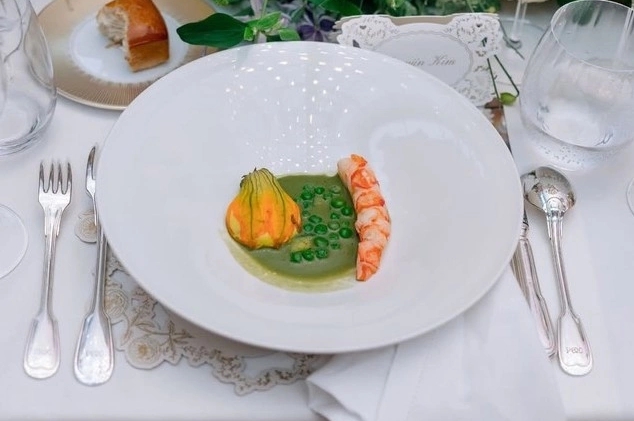
In the menu at He Mengyao's wedding with her young master husband, the long-standing banquet supplier Potel et Chabot put langoustine prawns in the main appetizer. The unique highlight is not only the freshness of the ingredients transported directly from Norway, but also the creative thinking of the chefs when deciding to break the old-fashioned French processing standards.
Instead of pan-fried with garlic butter or served with European-style fatty cream sauces, langoustine prawns are combined with Tom Kha broth - a typical culinary heritage of Thailand.
The sour, light spicy taste from lemongrass and lemon leaves combined with the mild fattyness of coconut milk in Tom Kha soup acts as a catalyst, both completely eliminating the natural fishy taste of deep sea seafood and highlighting the original rich sweetness of shrimp meat. The dish is served with zucchini flowers to increase the coolness and balance the dish structure.
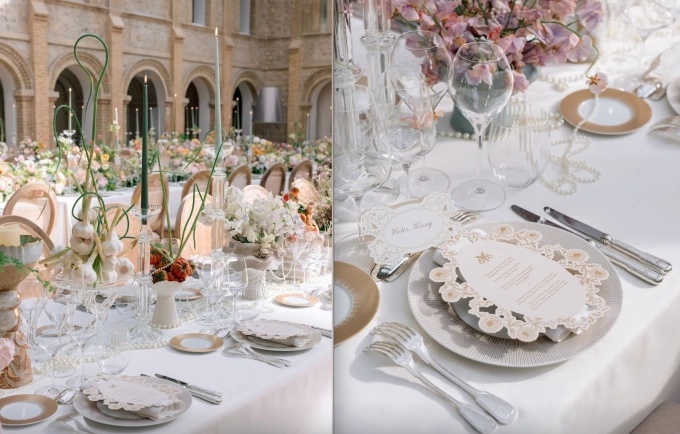
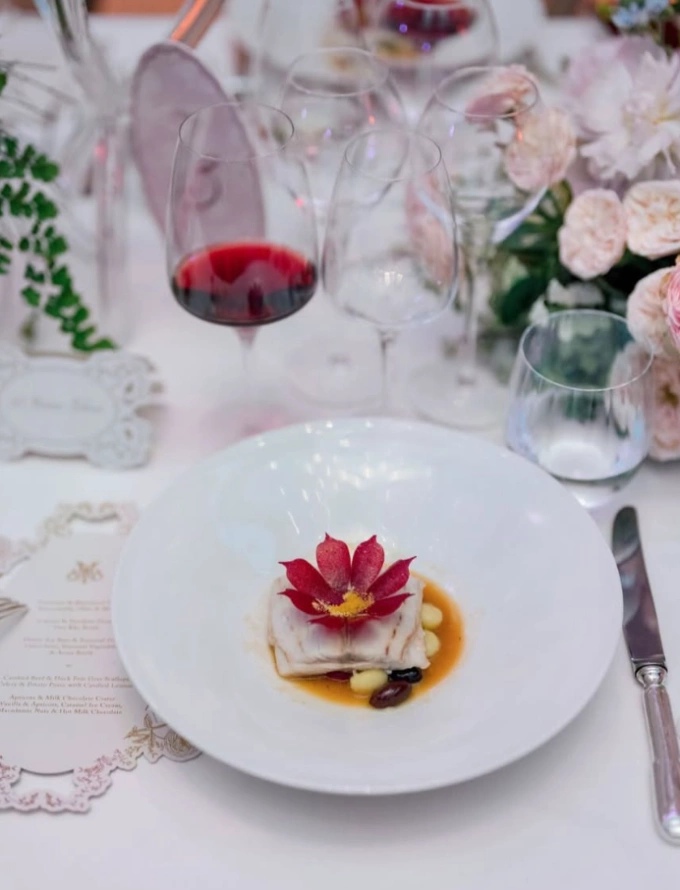
After an impressive opening with Norwegian prawns, the menu continues to lead diners through other premium flavors that are moderately controlled. That is French pan-fried foie gras reduced in greasiness by combining it with white radish and clear broth (consommé), the main dish honoring indigenous French beef with stewed sauce for many hours, and closing with a dessert with pink spring flower colors in harmony with the ancient banquet hall.
Choosing langoustine prawns as the main highlight shows the shifting trend of high-end cuisine: not only stopping at familiar luxury ingredients, but a search for rare natural products, combined with localized thinking to bring unique experiences to diners.


