At the request of the Ministry of Culture, Sports and Tourism and the National Standards, Metrology and Quality Commission, the Minister of Science and Technology issued Decision No. 1166/QD-BKHCN dated February 11, 2026 on announcing the National Standard TCVN 14602:2026 - ISO 3021:2023 on Adventure Tourism - Long-distance walking activities and adventure long-distance walking - Requirements and recommendations.
The Ministry of Culture, Sports and Tourism requests the National Standards, Metrology and Quality Committee to appraise, and the Ministry of Science and Technology to announce.
National Standard TCVN 14602:2026 - ISO 3021:2023 on Adventure Tourism - Long-distance walking and adventure long-distance walking activities - Requirements and recommendations stipulating requirements for adventure tourism activities related to long-distance walking (hiking) and adventure long-distance trekking, related to the safety of participants, team leaders and assistants.
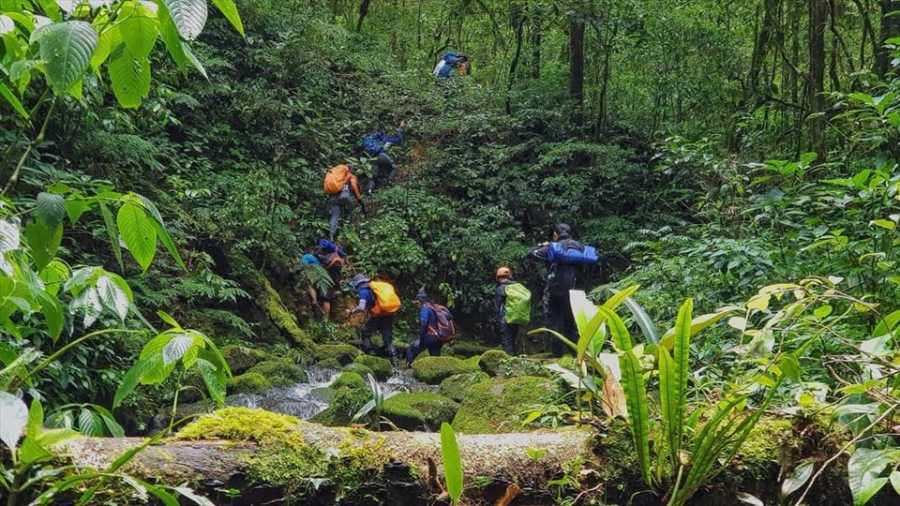
The standard specifies the criteria for characteristics and difficulty levels for classifying long-distance hiking and adventure long-distance hiking routes; applicable to long-distance hiking and adventure long-distance hiking activities and provided as a tourism product. The standard does not include the design of tourism products related to the planning stage, product development and does not apply to other auxiliary tourism services (e.g., shuttle, catering, accommodation).
Regarding service requirements, the National Standard TCVN 14602:2026 - ISO 3021:2023 requires long-distance walking and adventure long-distance walking tourism products to be designed and provided in a way that ensures safety for participants, team leaders and related personnel, and clearly informs of internal risks to all stakeholders or interested parties.
The adventure tourism provider responsible for operating activities must ensure that the group leaders meet the professional qualification requirements specified in the standards; maintain records of the group leader's continuous capacity development process.
Ensure that services provided by third parties that affect the quality and safety of tourism products must comply with the standards and additional requirements set by the organizing unit; ensure a plan and safety inspection process for equipment, tools and materials to be used throughout adventure tourism activities; these safety inspections must be carried out before the activity takes place and the inspection results must be recorded and available for consideration.
Ventures providing adventure tourism activities must comply with current regulations on the use of the sightseeing environment; apply existing eco-area plans or plans when the sightseeing site is located in a protected area or in an area with environmental limitations. Propose measures to implement and improve sanitation care, prevent infection for staff, participants and communities visited and improve health conditions at the adventure tourism destination. Ensure that weather forecasts and all hazards are taken into account before starting operations; it is important to monitor information available from relevant agencies about dangerous conditions.
The unit providing adventure tourism activities must be based on the characteristics of the place where the activity takes place and the tourism product provided, and it is necessary to consider determining the maximum number of participants for each activity.
When planning and organizing long-distance walking and adventure long-distance walking activities, it is necessary to apply responsible environmental and social practices, recommendations on conscious behavior in the natural environment; it is necessary to consider official medical recommendations related to hygiene measures at the time of organization, to determine the number of safe participants.
It is necessary to consider the capacity of the tourist destination where the activity takes place, which may include reducing the number of participants, considering the characteristics of each specific route, determining the routes of movement of participants and how to use the common space.
The minimum age of participants in tourism products with hiking and adventure hiking activities is determined by competent management agencies.
A adventure tourism provider - if providing tourism products for children under the minimum age or for participants who are disabled - must develop a separate plan that takes into account the characteristics, procedures and necessary equipment to ensure the safety of participants. The unit may require specialized experts, equipment and conditions, other than what is specified in the standards.
The applied measures must be valid, technically proven and made in writing; the roadmap needs to be determined in advance and the schedule must be made in writing.
Long-distance hiking or adventure long-distance hiking routes should be classified. The classification must comply with Article 4 and the group leader, participants (and assistants, if any), as well as other stakeholders are well aware.
In addition, the National Standard TCVN 14602:2026 - ISO 3021:2023 also sets out related requirements for leadership capacity; participants; equipment; preparation for participants; safety and insurance requirements; risk management; service completion; service control; minimizing impacts on the environment, society and protected areas; route classification.