According to Xinhua, the research results announced by the Sichuan Provincial Institute for Research on Cultural and Archaeological Relics (China) focus on the bronze statue kneeling holding the Zun vase, discovered at archaeological pit No. 3 in Sanxingdui (Suschuan province, China).
According to researchers, this artifact has a special structure, assembled from many separate cast parts with sophisticated crafting techniques. Metal composition analysis shows that the parts of the artifact use raw materials originating from many different regions.
Mr. Guo Jianbo - a researcher at the Sichuan Provincial Institute for Research on Cultural and Archaeological Relics - said that the Zun bronze vase was likely crafted in the Central Plain region, while the statue and decorative details were cast in Tam Tinh Doi. These parts were created at different times and locations before being assembled into a whole.
According to Mr. Guo, this combination process not only reflects the technical level of the ancient Shu people but also reflects the cultural exchange and adaptation between regions, contributing to the formation of a unified but diverse Chinese civilization.
Tam Tinh Doi is located in Guangyan city, Sichuan province, believed to be the ruins of ancient Shu country dating back about 3,000-4,500 years. This is considered one of the most important archaeological discoveries of the 20th century. The first two ritual pits were discovered in 1986, followed by six new archaeological pits found in 2021.
The relic is famous for thousands of large-sized bronze artifacts, unique designs and sophisticated crafting techniques.
New discoveries also change the previous perception that many artifacts in Tam Tinh Doi are only mythical. The bronze statue kneeling with a Zun vase is said to realistically recreate the ritual of worship of the ancient Thuc people. The statue bows, raises sacred objects with both hands, wearing a vase containing shells and precious objects on its head, showing solemnity in the worship ritual.
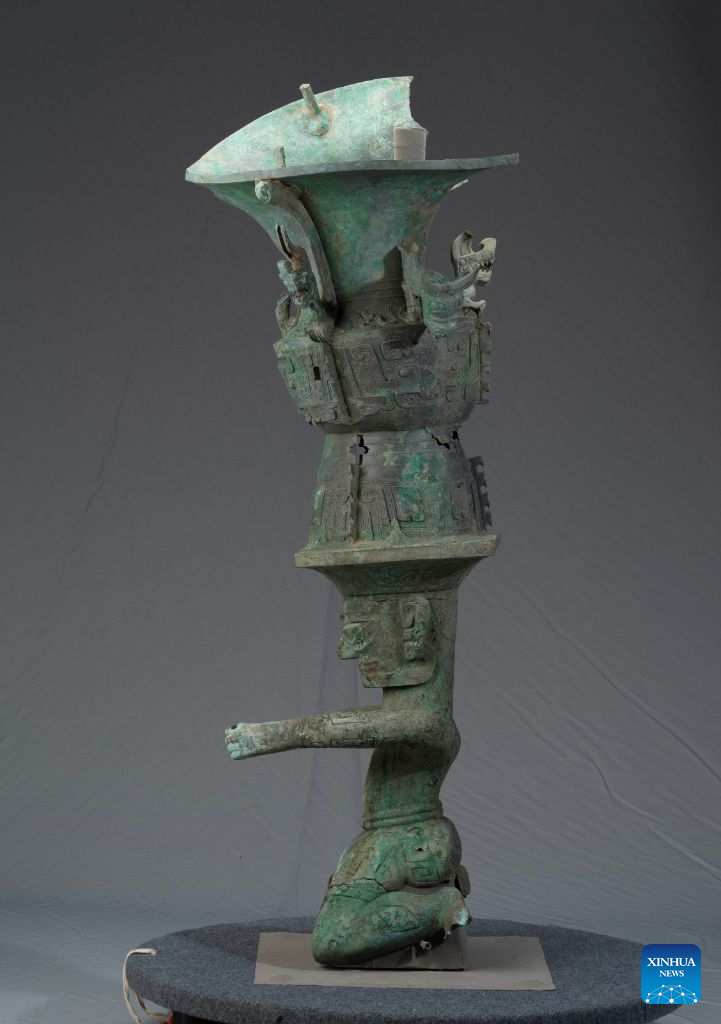
Mr. Guo said that this artifact is a vivid image of the real rituals of the ancient Shu people, and also shows the clear influence of Central Yuan culture on the Tam Tinh Doi civilization.
In 2026, archaeologists also announced more new discoveries at Sanxingdui, including artifacts made of meteorite iron and chains of marble beads, further expanding understanding of one of the most mysterious civilizations of ancient China.