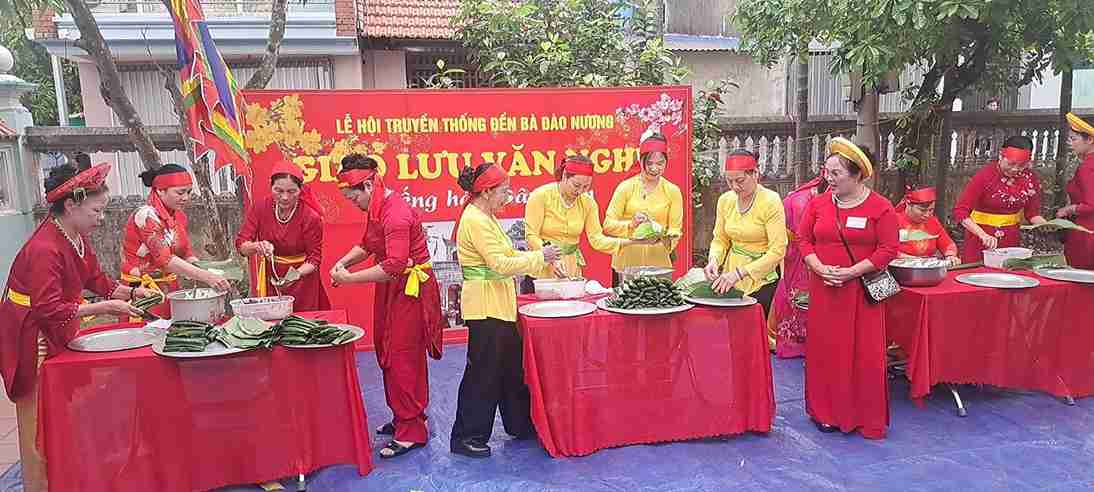
Within the framework of activities of the Dao Nuong Temple Festival 2026, on March 21, at Dao Dang residential group (Pho Hien ward, Hung Yen province), the Te cake wrapping contest (selling cake) took place sôi nổi, attracting a large number of local people to participate.
Banh te is a long-standing traditional dish of the Dao Dang people, passed down through many generations. On Lunar New Year occasions, holidays or important family and local events, people wrap banh te to offer to ancestors or treat distinguished guests. The contest is not only an opportunity to honor traditional culinary values but also contributes to preserving the unique cultural features of the locality.
With comprehensive scoring criteria on implementation time, cake quality as well as form and color, the teams showed ingenuity and sophistication in each stage. As a result, the women of Team Zone 5 excellently won the First Prize of the contest.
Previously, on March 20, Pho Hien Ward People's Committee held the opening ceremony of the Traditional Festival at Mau Dao Nuong Temple in a solemn, respectful atmosphere, imbued with national cultural identity.
Mau Dao Nuong Temple is a place to worship Dao Thi Hue - a typical historical figure who lived in the 15th century, famous for her talent and beauty, virtue and many contributions in the resistance war against the Minh army. According to legends and genealogy, she was born in 1411 in Dao Dau Trang land, now belonging to Pho Hien ward. Not only is she good at literature and martial arts, she also has patriotism, once recruited militia, helped the poor, and contributed to protecting her homeland.
After she died in 1432, the local people built a temple to commemorate her merits. Later, she was posthumously awarded the title "A Dao Tien Princess" by King Le and allowed to be worshiped for a long time. In particular, she was also honored as the Patriarch of Ca Tru art - a unique traditional art form that was recognized by UNESCO as an intangible cultural heritage in need of urgent protection in 2009.
According to relic records, the temple was started in 1433, went through many historical changes, was destroyed in 1951 and has been restored and embellished many times. On November 16, 1988, the relic was ranked by the Ministry of Culture as a national historical relic.