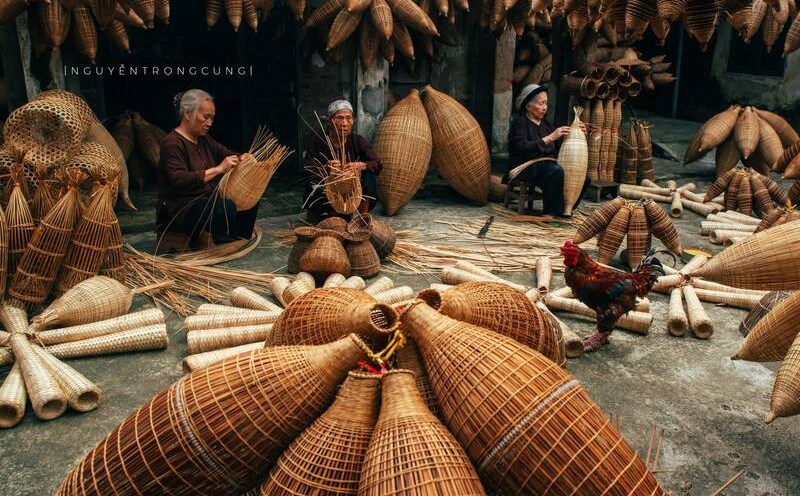
Vietnam is an agricultural country, with many craft villages and traditional craft villages with many types of manual production. Craft villages and traditional craft villages - places that preserve handicrafts skills, indigenous knowledge and community life - are not only considered places for production activities, but also tourism resources with profound cultural values for Vietnamese culture.
Developing tourism in many craft villages contributes to bringing jobs and income to people, contributing to local economic development while preserving and promoting the traditional cultural values of craft villages towards the goal of sustainable development.
Hanoi leads in developing craft village tourism
In the general picture of Vietnam, Hanoi has emerged as a locality with the largest network of craft villages in the country and has formed many models of exploiting attractive craft village destinations.
In the context of a wide international awareness and the trend of developing green tourism and creative tourism, Hanoi City identifies craft village tourism as one of the key development directions.
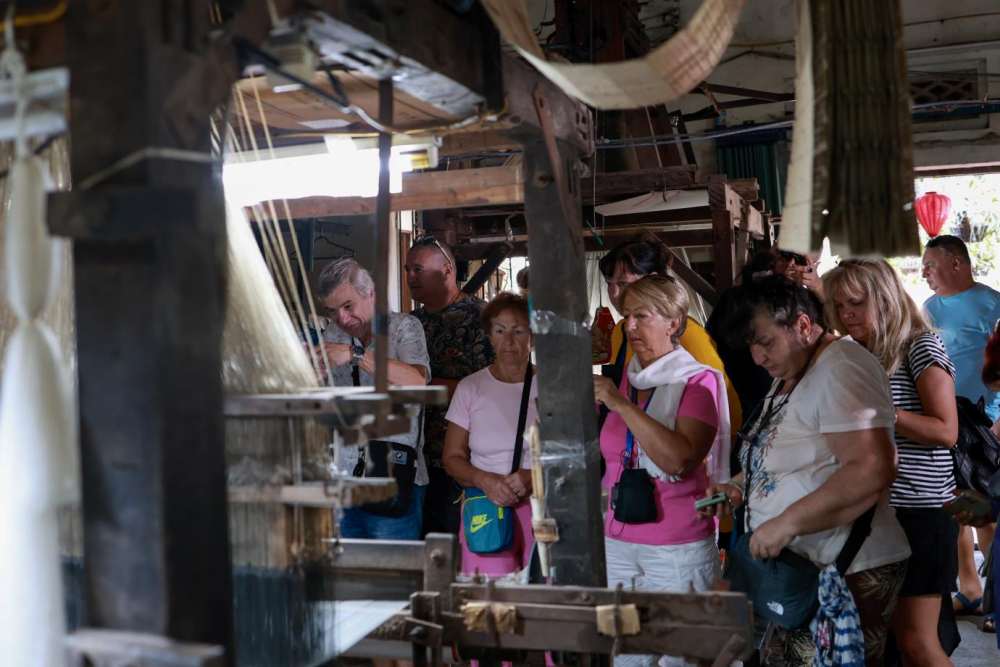
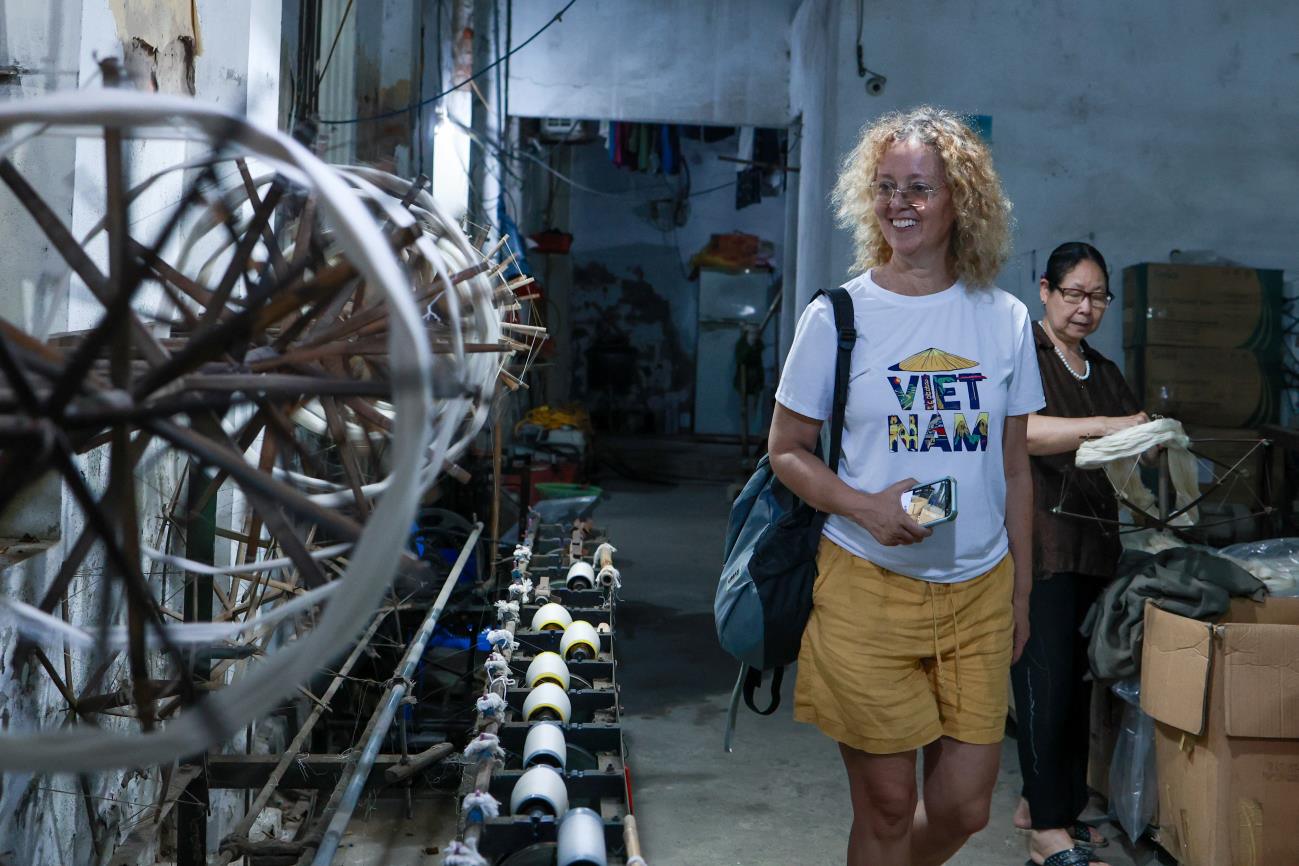
The story of Van Phuc Silk Village is one of the typical examples. Van Phuc silk village (Ha Dong, Hanoi), which has a history of more than 1,000 years, is famous for silk weaving. The village not only retains its unique silk weaving technology but also strongly develops tourism activities when welcoming up to 100,000 visitors/year in 2024, according to the National Administration of Tourism.
Craft village tourism activities attract a large number of tourists to Van Phuc silk village to visit and shop. Paula, a female tourist from Colombia, shared: "I came to Van Phuc thanks to the information online and was impressed by the brilliant beauty of silk here. I also want to see with my own eyes the production process of this famous silk line".
Like Paula, many tourists also come here to explore the story of Van Phuc silk and participate in sightseeing and experience activities at cultural works and craft shows in the village.
From Van Phuc looking at the broader picture, it can be seen that the foundation for developing Hanoi's craft village tourism is built on a system of craft villages with the largest scale in the country.
According to statistics from the Hanoi Department of Tourism, the capital owns a particularly large craft village system with 1,350 craft villages and craft villages, of which 318 villages are recognized by the City People's Committee. Hanoi accounts for about 30% of the total number of craft villages in the country. This rate reflects the leading role of the capital in developing cultural tourism and creative tourism.
Many craft village destinations in Hanoi every year have welcomed tens of thousands to millions of visitors such as: Bat Trang Hanoi pottery village welcomes 500,000-600,000 visitors/year, Hong Van ornamental craft village (Ha Noi) in 2024 welcomes 100,000 visitors/year..., according to the National Administration of Tourism. These figures show the attractiveness and stability of this type of tourism.
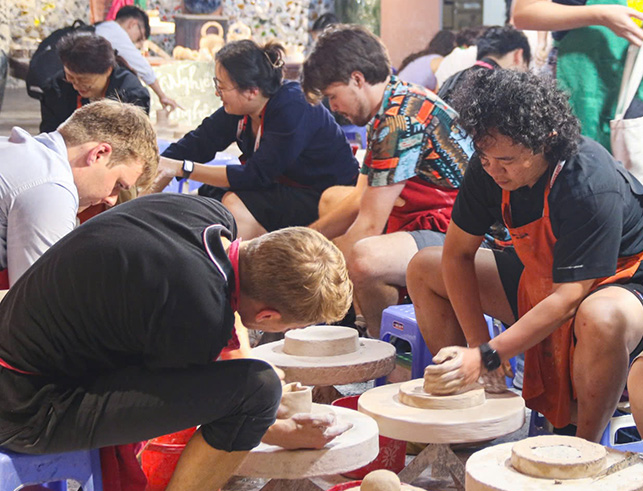
Notably, Hanoi does not only stop at opening craft villages to tourists but also develop a chain product model, connecting production - trade - services - performances - experiences, creating sustainable added value. This helps craft village tourism not only exploit the view factor but also expand to the experience, interaction and creativity factors.
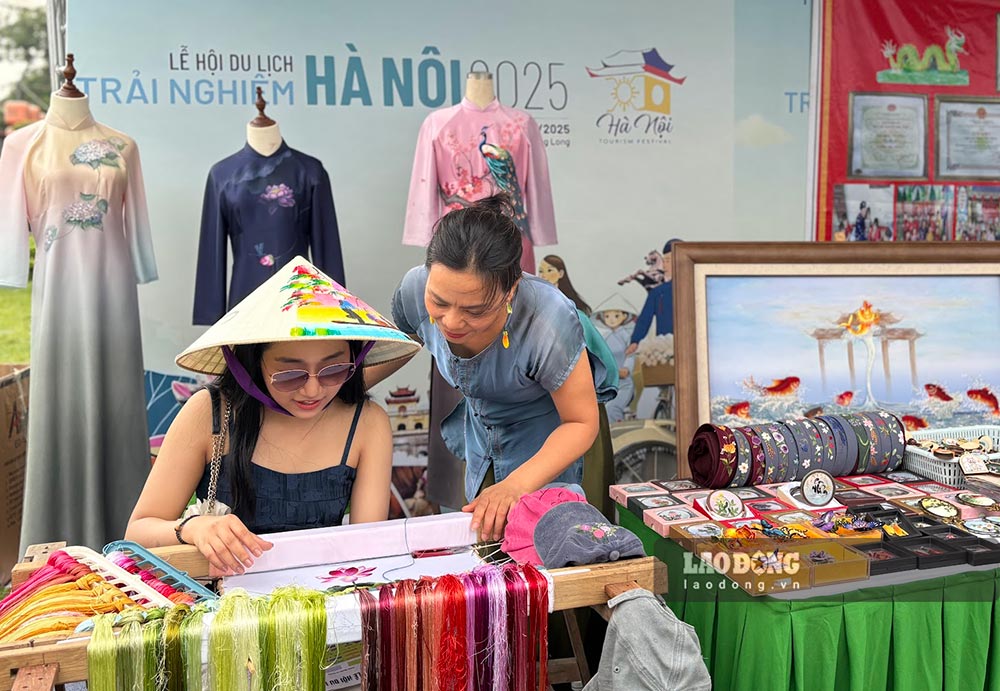
This is one of the pioneering localities in introducing intangible cultural elements into craft village tourism products through craft performances, exchanges with artisans, recreation of traditional rituals and organization of craft festivals. This approach helps Hanoi's craft village tourism go beyond a simple sightseeing model.
In tourism promotion programs, the city continuously promotes craft village products as a main highlight, meeting the increasingly large demand for sightseeing, experience, and creativity of international and domestic visitors.
Driving force to promote local cultural and economic tourism
Vietnam's tourism has recovered and grown strongly with a tourist market of about more than 100 million domestic visitors and over 20 million international visitors. Of which, international visitors have achieved impressive growth in 2025, as of the end of November 2025, Vietnam tourism has welcomed 19.2 million international visitors, the highest ever.
As the market size increases, demand is diverse, requiring high-quality and highly specialized products and services. This poses an urgent need to innovate and create craft village tourism products, changing the way of approaching the market.
Therefore, cultural tourism - especially craft village tourism - has become one of the most attractive types for international tourists thanks to its locality, heritage and ability to create creative experiences.
According to the Tourism Research Board - Vietnam Institute of Culture, Arts, Sports and Tourism (Ministry of Culture, Sports and Tourism), the country currently has more than 2,000 traditional craft villages in operation.
The distribution by region shows the cultural diversity and depth of this type: the Red River Delta has more than 886 craft villages, the North Central region has 342, the Northwest region has 247, the Northeast region has 164, the South Central region has 87, the Southeast region has 101 and the Mekong Delta has about 211 craft villages.
This is a system that creates livelihoods for hundreds of thousands of workers, contributing to completing the rural economic structure, increasing export value and promoting the country's image.
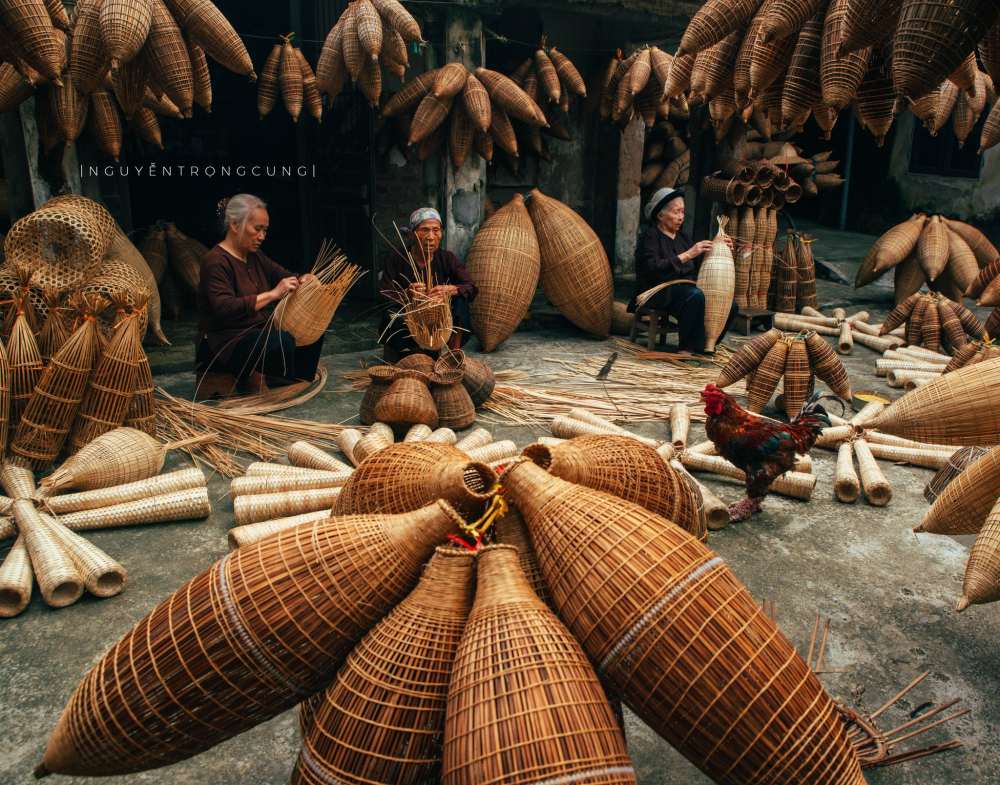
Commenting on the issue of improving quality and innovating craft village tourism at the Workshop on December 12, Mr. Ha Van Sieu - Deputy Director of the Vietnam National Administration of Tourism emphasized that the industrialization and urbanization process has strongly affected rural areas in general and craft villages in particular, many craft villages are facing the risk of losing a craft skill, environmental pollution and lack of orientation for developing professional tourism.
The consumer trend of tourism has changed a lot: strongly shifting from adventure - shopping to difference of experience - creativity - towards indigenous values, tourists not only want to learn but also directly participate in the creative process; green consumer trends; applying digital technology in tourism consumption...
This is an opportunity but also a challenge for Vietnam's craft village tourism to transform from traditional model to creative tourism, green tourism, keeping up with global trends such as sustainable development (SDGs), circular economy and Net Zero tourism, Mr. Sieu assessed.
The Vietnam Tourism Development Strategy to 2030 has set a goal of striving for tourism to truly be a spearhead economic sector and sustainable development by 2030, making Vietnam in the group of 30 countries with the world's leading tourism competitiveness, fully meeting the requirements and goals of sustainable development.
The strategy for sustainable agricultural and rural development to 2030, with a vision to 2045, has determined the orientation of diversifying the new rural construction program in accordance with regional advantages, circumstances, and development opportunities of the locality. One of the important orientations is to "develop local specialties, craft villages, develop service economy, rural tourism on the basis of preserving and promoting local culture".
Innovating craft village tourism, improving experience
Although there is great potential for development, the reality shows that current craft village - agricultural tourism tours are still poor, lacking depth of experience, and overlapping between localities. Visitors mainly stop at sightseeing - shopping, not forming a special tour chain with clear experience scenarios, specific market segments and high added value.
Issues in product standardization, human resources, planning, promotion and service quality management are still limited. This is a major bottleneck that needs to be resolved in the coming period.
From a business perspective, the representative of Vietravel travel company believes that innovation in craft village tourism needs to start with reorganizing space and designing tours according to the model of linking the area "central urban - agricultural - craft village - ecological", creating a seamless journey and promoting the strengths of each locality.
For example, Ho Chi Minh City plays the role of a center for distributing customers; Tay Ninh develops agricultural - spiritual tourism; Vinh Long and Dong Thap promote garden trays, folk cakes, ornamental flowers; while Can Tho becomes a connection point for experiences and MICE development.
In addition, the experience of tourists needs to be innovated in the direction of role-playing, multi-sensory, allowing direct participation in manual stages such as making pottery, woodwork, folk cakes, caring for ornamental flowers, growing or harvesting agricultural products.
In addition, it is necessary to orient the construction of a "green craft village", reduce waste, recycle byproducts, use environmentally friendly materials and standardize products, services, farmstay and model farm.
Digitalization is also an important pillar, including craft village database, digital maps, tour booking platforms, buying after-tour products and QR traceability, combining promotion via social networks, livestream and OCOP products...
At the same time, it is necessary to improve infrastructure and improve the quality of human resources in craft villages, from parking lots, toilets, experience spaces to training artisans, tour guides and festival organizers. Strengthening support for people and cooperatives with a mechanism for monitoring and periodic assessment of the environment, service quality and customer satisfaction is considered necessary for sustainable development.
The company emphasized the need to make tourism experience the center, create creative products and enhance the competitiveness of Vietnamese craft village tourism.