
When the State adjusts tuition policies, people expect the spending burden to decrease significantly. However, in reality, many expenses other than tuition have increased faster, even sharply.
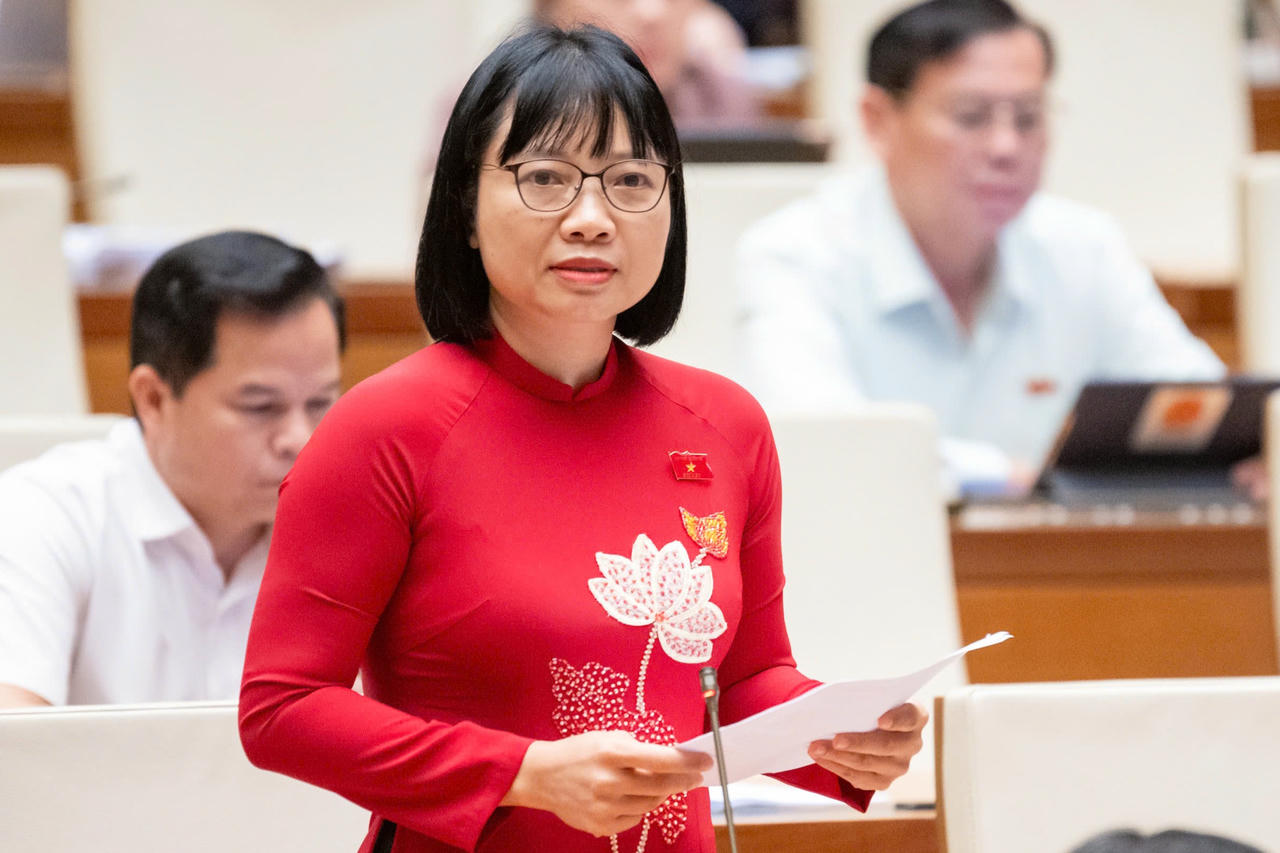
Regarding this issue, the reporter had an interview with National Assembly Delegate Nguyen Thi Viet Nga - Member of the City Party Committee, Deputy Head of the National Assembly Delegation of Hai Phong City.
According to the delegate, why are expenses other than tuition increased faster than tuition fees?
- I think there are three main groups of causes for this condition.
First, the system of service fees in schools is increasingly large and complicated. Boarding costs, 2 sessions/day study, enhanced English, experiential activities, life skills, assessment, boarding services, sanitation, electricity and water, facilities... are all essential services for many families, especially in urban areas. These are fees that are not included in tuition fees, but the additional payment is much higher than the tuition fee that has been exempted or reduced. When services expand, total costs will increase.
Second, the "social hoa hoc" mechanism has not been designed clearly enough. Some schools, especially in urban areas or areas with high demand, implement fees under the name of socialization such as: renovating classrooms, buying air conditioners, repairing auxiliary works, equipment... Although the purpose is to improve quality, if not transparent or not suitable for people's ability to pay, it can easily lead to a situation of "exemption from tuition but other fees appearing", causing parents to worry.
Third, the difference in conditions between regions creates pressure to increase costs in addition to tuition fees. Schools in rural and mountainous areas have more difficulty mobilizing social resources, so many items that should have been under the investment responsibility of the locality are "shared" with parents. At the same time, the process of financial autonomy at some educational institutions also causes service costs to increase following market price fluctuations.
In other words, tuition fees are just the tip of the iceberg, while the sinking side is service expenses, supplementary expenses, experience expenses, socialization expenses... increasing faster and accounting for a larger proportion. Therefore, if we only focus on reducing or exempting tuition fees without strictly controlling expenses other than tuition fees, the total educational cost of the family will not decrease, and there is even a trend to increase according to actual needs.
How does this affect low-income families?
- If tuition fees are exempted but a series of service expenses increase, then in essence, the financial burden still falls on parents, especially the disadvantaged group.
First of all, services such as boarding, food, pick-up and drop-off, life skills, experiences, uniforms, reference books, clubs, etc. are all expenses that cannot be eliminated for primary or secondary school students, especially in urban areas. Many families do not have the conditions to take care of their children during the day, so they are required to register for boarding despite high costs. This causes poor and near-poor households to spend an amount equivalent to or even larger than the amount of tuition fees exempted.
Second, when income is limited but the revenues increase according to the urbanization level, household budget pressure escalates very quickly. For many families in rural areas or workers in industrial parks, the monthly boarding meals alone account for the majority of their income. If they add social contributions or extracurricular expenses, they will have to cut other essential expenses of the family, even forcing their children to reduce the educational activities that they should have enjoyed.
Third, the increase in intangible fees outside of tuition creates a gap in access to quality educational services between rich and poor children. When students have the opportunity to participate in many enhancement programs, while poor children are forced to refuse because they are unable to contribute, the inequality in learning opportunities is even greater. This goes against the goal of equity in education, one of the pillars of the tuition exemption policy.
Finally, the pressure of educational costs may push some low-income families to choose to send their children to schools further away, with lower conditions, or to private schools with low costs but poor quality. All of this raises the risk of disruption of learning and decline in the quality of education for the young generation, causing a long-term impact on the country's human resources.
According to the delegate, what policies and mechanisms are needed to reduce total expenditure on educational services, not just reduce tuition fees?
- In my opinion, there are 4 groups of fundamental solutions.
First, it is necessary to perfect the mechanism for controlling revenues other than tuition fees. It is necessary to review and standardize the list of services allowed to be collected, regulate the maximum price framework, require publicity, transparency and the participation of the Parents' Representative Board in the decision. The amounts under the budget expenditure responsibility must absolutely not be "white-separated" to parents under the name of socialization.
Second, the State needs to increase investment in general education, especially investment in boarding facilities, school toilets, subject classrooms, kitchens, minimum equipment, etc. When schools meet basic conditions, the need for additional services will decrease. For disadvantaged areas, there should be a separate program to support boarding costs and other service costs for students to avoid the paradox of "free tuition but parents still have to contribute a series of other fees".
Third, we must adjust our views on the socialization of education. Socialization does not mean transferring the State's work to parents; nor is it a simultaneous mobilization, following the movement. It is necessary to clearly stipulate the limit of mobilization, the principle of voluntariness, and closely control the implementation process to ensure that socialization does not become a burden.
Fourth, increase price stability for school-related services, especially boarding and school nutrition services. This is the largest payment of millions of parents. If there is a subsidy policy, public-private orders or public bidding, boarding prices can be significantly reduced.
In other words, to reduce the financial burden on people, we need to shift from the mindset of "free tuition" to the mindset of "reducing school costs". Only when total costs, especially essential services, are effectively controlled, will students' families truly benefit from the tuition exemption policy, and the goal of equity in education will become a reality.
Sincerely thank you!


