
Consecutive detection of major violations
The situation of smuggling and trade fraud through the gateways of the Southeast is becoming increasingly complicated, with many sophisticated methods and tricks to deceive the authorities. This is an area connecting Ho Chi Minh City with neighboring provinces and the international seaport system, and is also a major cargo traffic hub, making it a key route that subjects take advantage of to transport goods of unknown origin, evade taxes and smuggle goods inland.
The violating items are very diverse, from food, cosmetics, pharmaceuticals to gasoline, electronics. Many shipments are disguised, divided into routes or transferred by warehouses, even brought to luxury apartments to avoid detection.
On November 9-13, the Ho Chi Minh City Market Management Force (QLTT) coordinated with the police to conduct inspections and discovered many large-scale incidents.
In the Long Hai area, Market Management Teams No. 22 and 23 inspected 4 transport vehicles and discovered 73,393 liters of DO oil without documents proving its origin. All goods have been temporarily detained.
Next, Market Management Team No. 1 inspected 2 warehouses in Hoa Loi and Lai Thieu, and discovered 25,459 household appliance products, food, stationery... of unknown origin, worth more than 3.2 billion VND, used for business on e-commerce platforms.
Market Management Team No. 3 discovered 18,119 boxes of smuggled functional foods and 300 expired cosmetic products at a company and a business location in Phu Dinh, An Lac, with a total value of more than 800 million VND. All were detained for handling according to regulations.
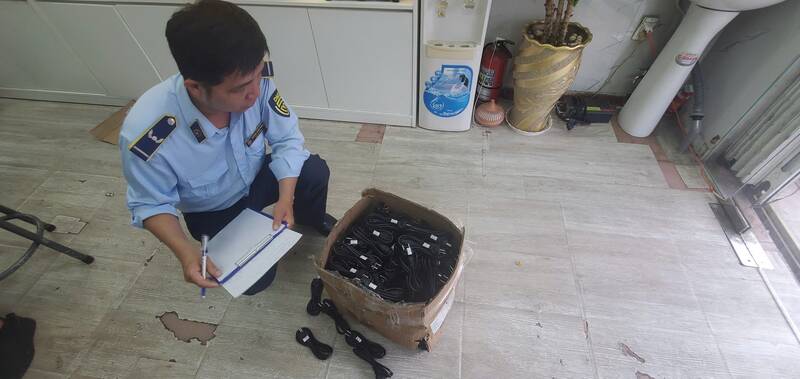
The Ho Chi Minh City Steering Committee 389 assessed that smuggling, production and trading of counterfeit goods in the city is still complicated, especially in the group of food, medicine, milk and health protection foods.
The violating goods are often transported to Ho Chi Minh City, gathered in the suburbs or luxury apartments and distributed through many intermediaries. The lines are increasingly sophisticated, operating inter-provincial, even transnational; many establishments mixing real and fake goods in industrial parks to deceive authorities.
Tighten inspection of essential goods
Mr. Nguyen Quang Huy - Deputy Head of the Ho Chi Minh City Market Management Department, said that the Market Management force is implementing a peak period of market inspection at the end of the year. Market Management Teams are required to strengthen control, promptly detect and strictly handle common violations related to counterfeit goods, poor quality goods and goods of unknown origin.
The focus of the inspection is on essential goods such as gasoline, fertilizers, food - beverages, cigarettes (especially new generation cigarettes), functional foods, medicine, cosmetics, fashion and electronics.
At the same time, the Market Management force will continue to implement a plan to inspect the e-commerce sector in the last three months of 2025, including controlling goods on e-commerce platforms, websites and social networking platforms such as Facebook, TikTok, Zalo; at the same time, checking compliance with technical standards, goods quality and food safety.
Ms. Nguyen Thi Kim Ngoc - Deputy Director of the Department of Industry and Trade of Ho Chi Minh City commented that the rapid development of e-commerce is putting great pressure on management work. Cross-border transactions are where counterfeit and counterfeit goods are most easily mixed, so the Department has directed the Market Management force to strengthen the inspection of business activities in the digital environment, coordinate with social networking platforms to track supply sources and warehouses.
Ms. Ngoc emphasized that Ho Chi Minh City and neighboring provinces currently have a large number of warehouses serving online sales. Therefore, inter-provincial coordination needs to be further promoted to promptly inspect and handle violations, contributing to building a transparent and healthy business environment.


