
Durian died en masse after floods
Prolonged heavy rain caused hundreds of hectares of durian in Lam Dong to be flooded for 2 - 5 days, causing heavy damage to farmers.
Immediately after the water receded, the provincial Agricultural Extension Center went to the garden to instruct on drainage techniques, treat diseases, restore roots and support materials to help people quickly save and restore the affected durian area.
The agricultural sector of Lam Dong province has also instructed people to focus on clearing ditches, cutting down broken branches, clearing plant remnants, and breaking up soil to make the roots clear. At the same time, closely monitor diseases of rotten roots, pink fungi, spots of foreign fruits, and eczema... that have broken out strongly after the trees are damaged.
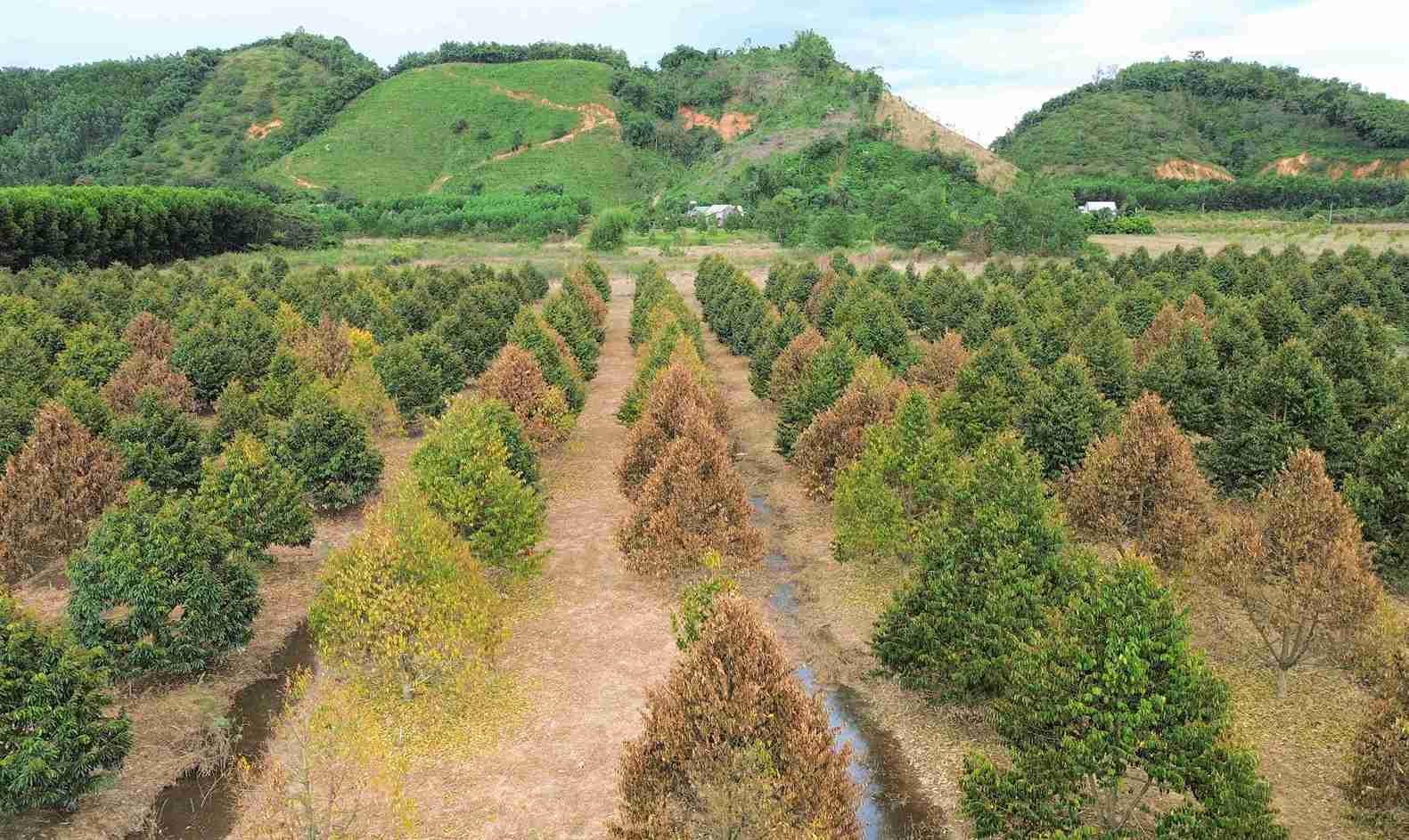
The first days of December when the weather starts to get warm and sunny are also the time when the desolate scene is clearly visible in each durian garden.
It is noted that most durian gardens that were flooded before have experienced yellow leaf drought. Durian trees had their trunks cracked and their roots black due to prolonged waterlogging.
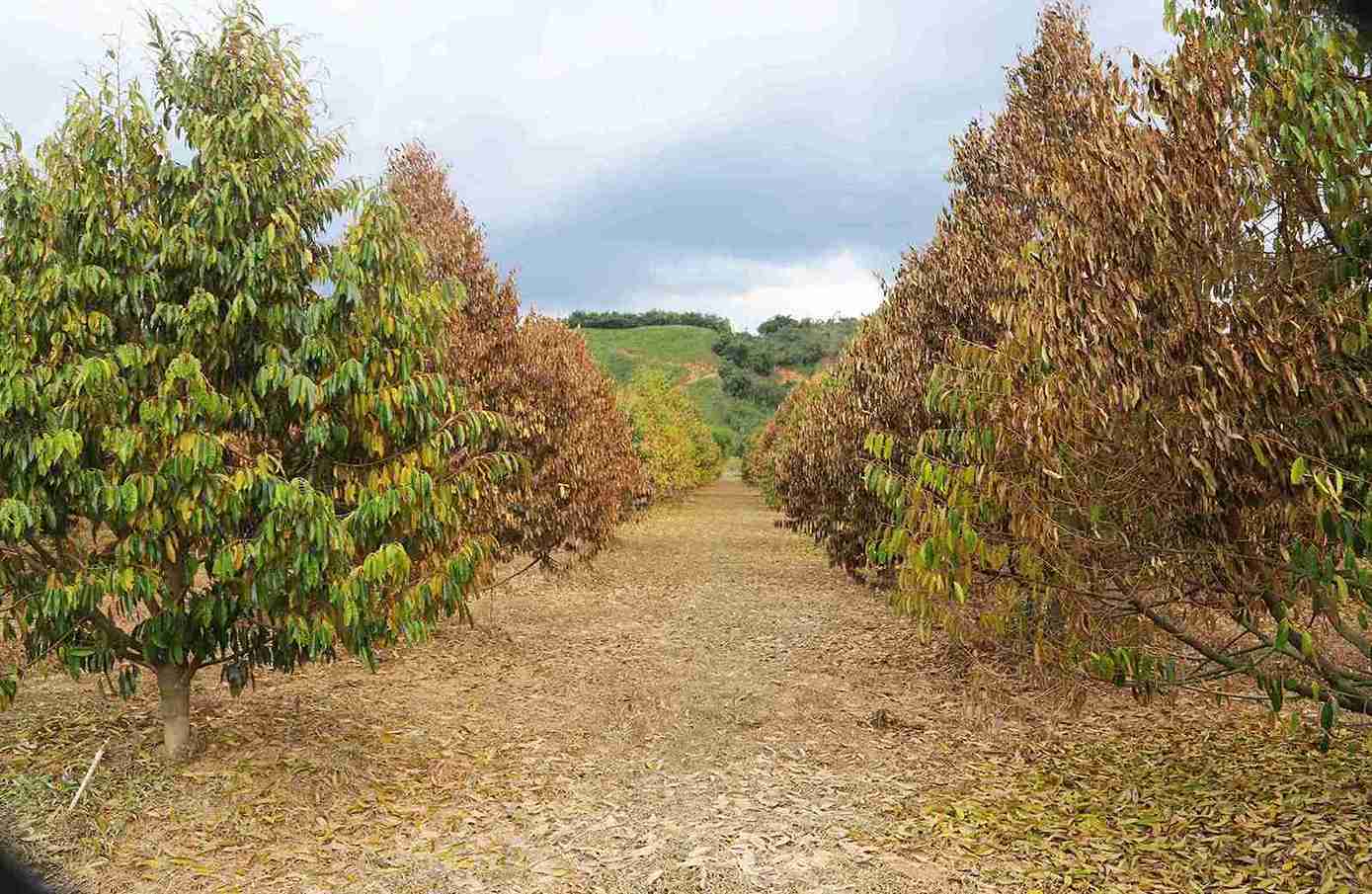
According to statistics from Cat Tien commune, of the more than 200 hectares of durian that have been flooded in the past, more than 40 hectares have now completely died, causing great damage to farmers.
Similarly, in Cat Tien 2 commune, the situation of durian deaths is less serious, but also occurs in most gardens that are deeply flooded, estimated at about 15 hectares.
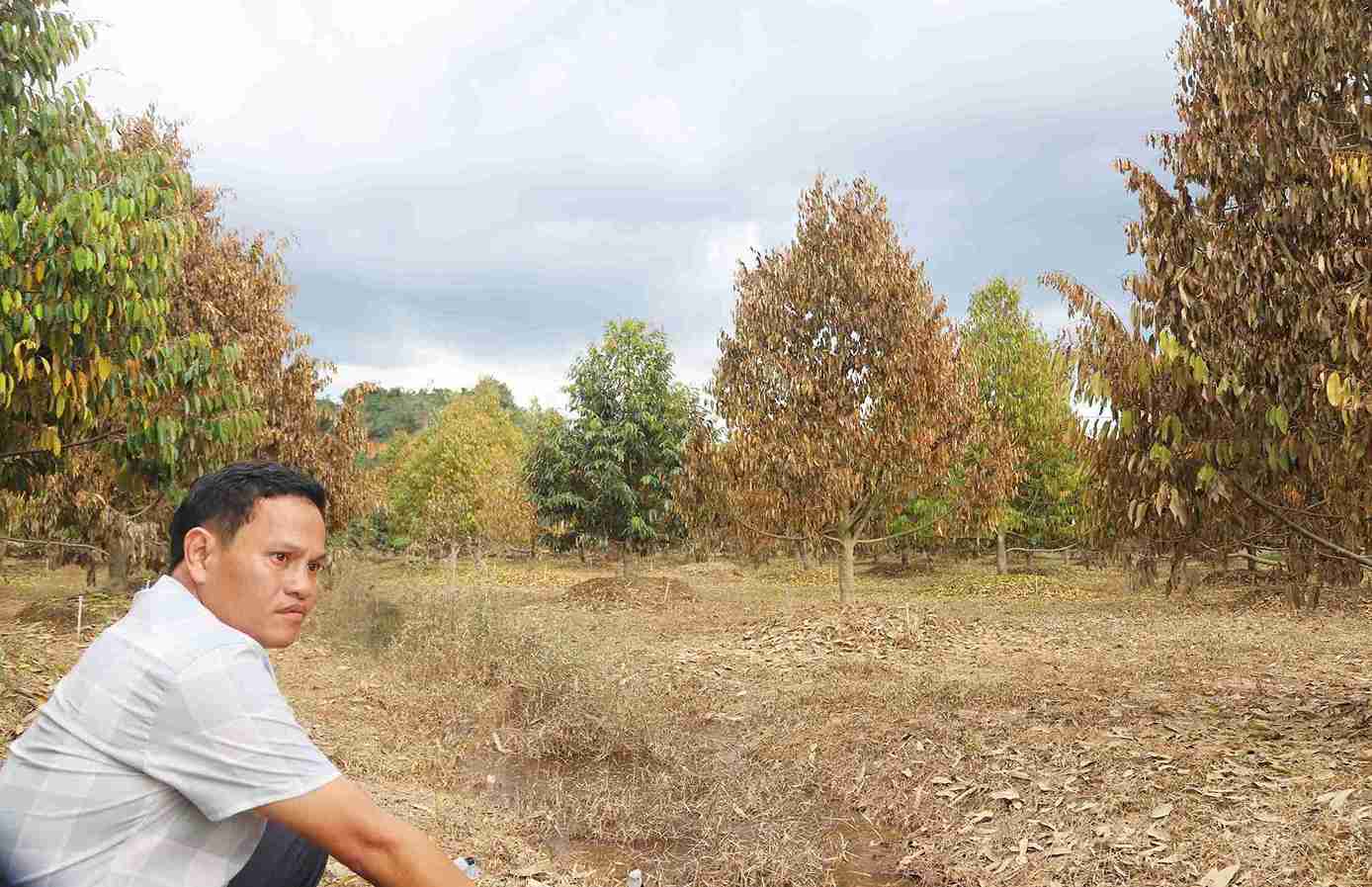
Speaking to Lao Dong Newspaper reporter, Mr. Nguyen Phuoc Thuan, Vice Chairman of Cat Tien Commune People's Committee, said: "S upper- soluble is a crop that brings high economic efficiency but is less prone to waterlogging. As long as the water is at the root for more than 2 days or more, the tree is at risk of dying if there are no timely measures to handle it."
Many households have lost billions
According to statistics from Cat Tien commune, after the recent historic flood, dozens of durian growing households in the commune suffered damage. Among them, many households lost billions of dong in durian gardens and died.
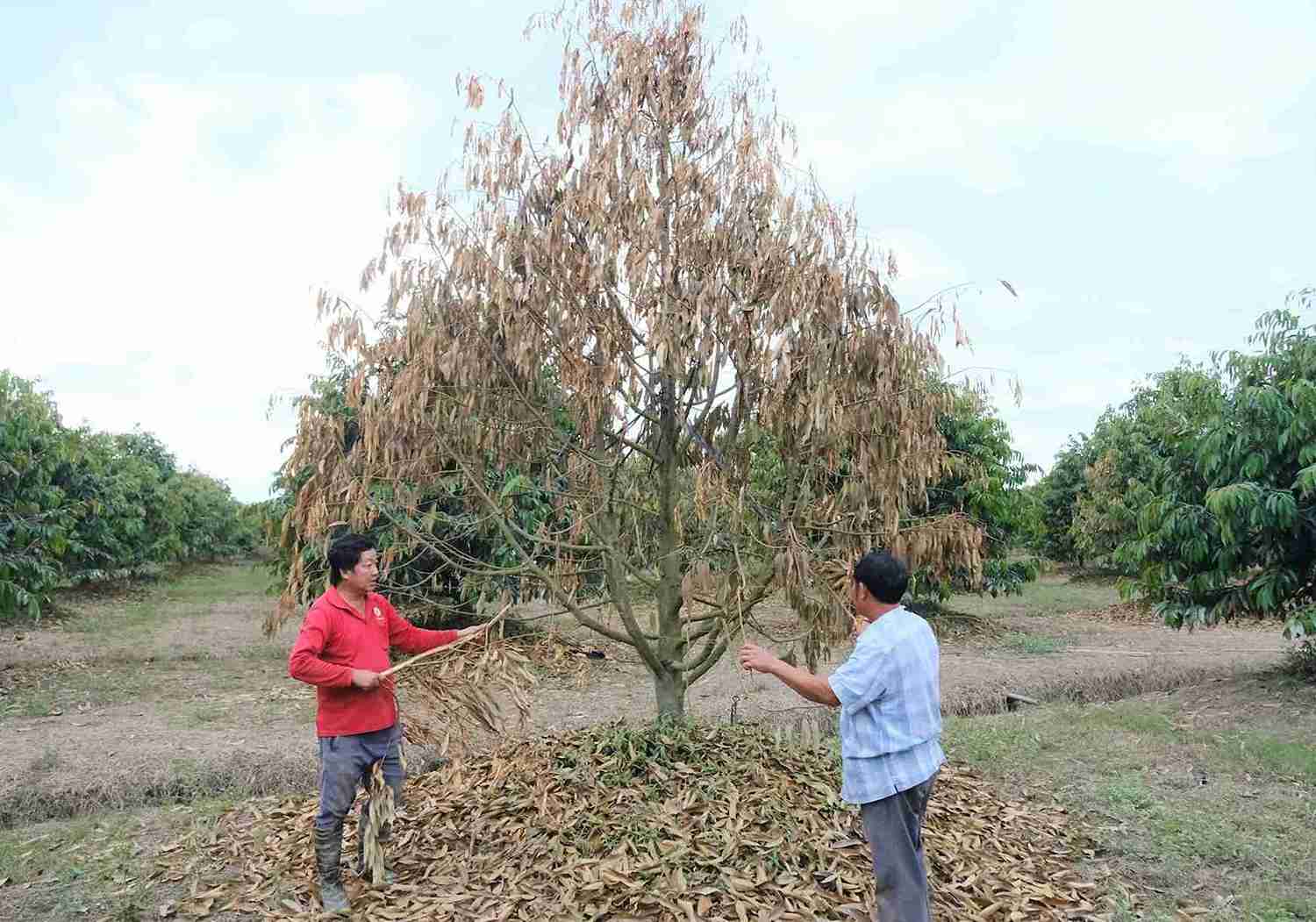
Mr. Nguyen Van Lam, residing in Quang Ngai 1 village, was the household that suffered the most damage. The durian garden of more than 2 hectares, with 350 4-year-old durian trees, is about to enter the rapidly depleted flowering and fruit farming stage.
The flood caused his family's durian garden to be submerged more than 1 meter deep and lasted for many consecutive days. To date, 112 trees have died and the number of trees with fallen leaves is more than 150. The number of trees with the potential to survive is 87.
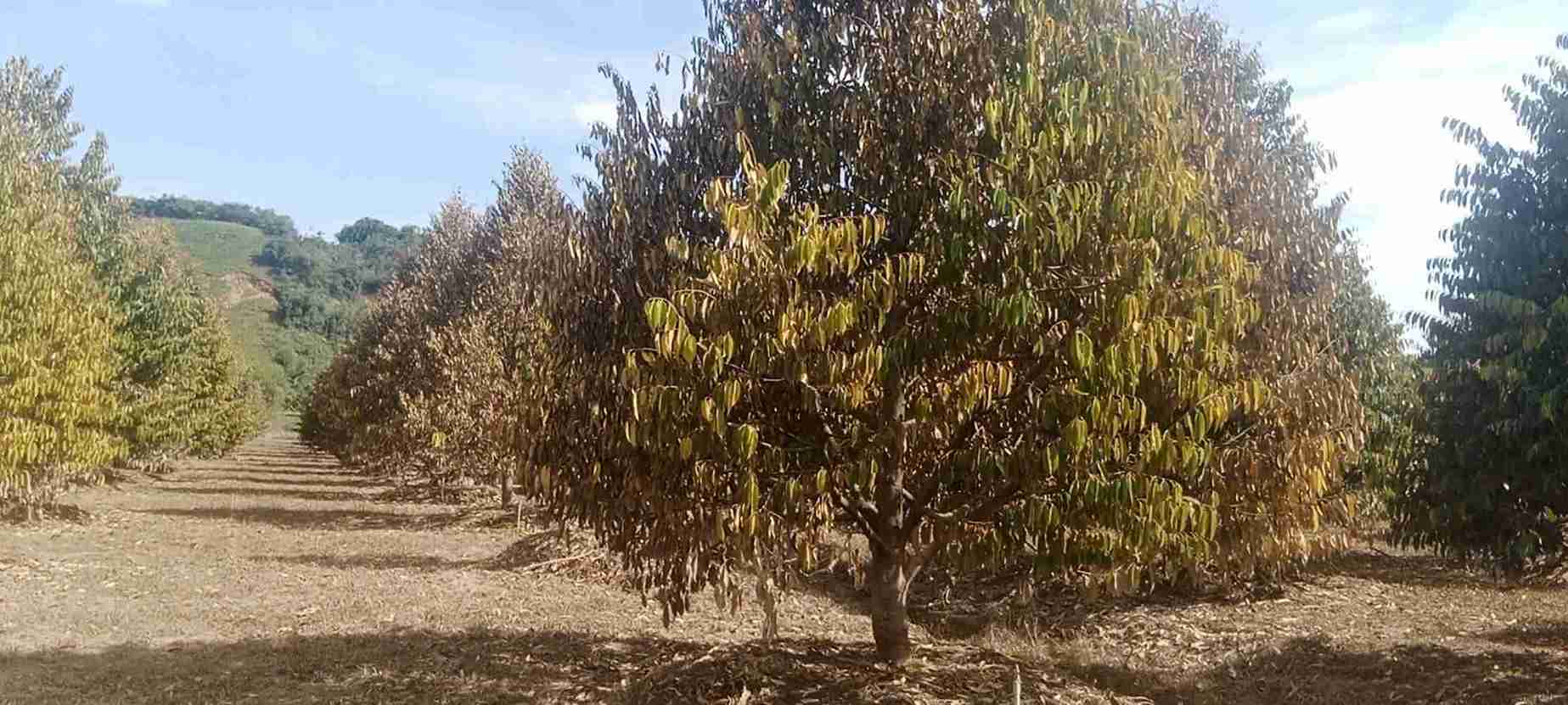
"After 4 years, my family has invested in a durian garden of at least more than 3 billion VND. This year, hopefully there will be a source of income to repay debts and fertilizer costs, but floods have taken everything away. Seeing the durian garden slowly dying makes my husband and I feel like sitting on a pile of fire, not knowing what to do," Mr. Lam said sadly.
Similar to Mr. Huynh Tan Chien's case, when more than 1.5 hectares of durian in his family were experiencing a situation of full-rooted and gradually dead leaves.

"After being flooded for a long time, durian has rotten roots and many types of dangerous pests and diseases appear. Therefore, when the sun rises, the trees will no longer have the strength to resist and will die. My family bought many types of fertilizers and pesticides to save the garden, but it seemed ineffective, Mr. Chien explained.
Regarding the situation of durian dying en masse after floods, Mr. Nguyen Phuoc Thuan, Vice Chairman of Cat Tien Commune People's Committee, added that most of the damaged area was in low-lying areas along the Dong Nai River. The above areas are all grown spontaneously by local people, not included in the local durian development plan.

Mr. Thuan said: "Currently, the locality is focusing on statistics on damage to support and propose that Lam Dong province have a support plan to help people reduce damage. In the future, the locality will also organize a workshop to orient people to convert the crop structure appropriately, ensuring the economic development of local people".


