
The trekking route is located in the Ta Xua special-use forest, considered a "nature museum" in the Northwest, where the provinceiness, diverse ecosystems and the ability to hunt clouds all year round make Sa Mu increasingly attractive to young people to explore.
The " triangle" route attracts visitors in early winter
In the early winter, Sa Mu peak - also known as U Bo peak, located in Ta Xua special-use forest, bordering Xim Vang commune, Son La province and Hanh Phuc commune, Lao Cai province, was continuously chosen by trekking groups. On weekends, Xim Vang and Chong Tra villages become bustling as hundreds of tourists flock to conquer the mountain top, known as one of the three dangerous spots of the "three Devils".
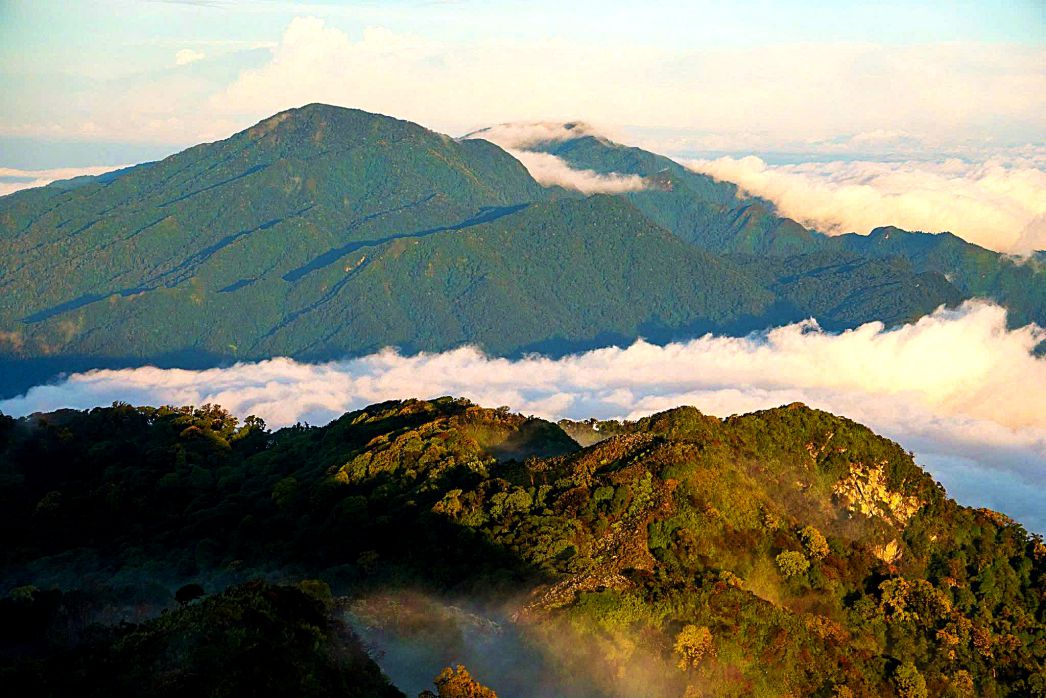
Sa Mu is nearly 2,890m high, belonging to the Hoang Lien Son range extending to the South. From the center of Bac Yen commune, visitors must travel more than 70km to get to Xim Vang or Chong Tra village, where they start their journey to climb more than 10km to the top. Early winter is the most beautiful time: little rain, good view, sunshine through the primeval forest canopy creates impressive light and dark layers, while dense sea of clouds often appear at the foot of the mountain.

Porter Giang A Dong, who has been leading climbing groups for more than 5 years, said that the number of visitors has increased sharply since October: "Every weekend we lead groups of 10 - 30 people to climb Sa Mu. Sa Mu Palace is steep but not too difficult, beginners can also participate. This season the forest is very beautiful, sometimes it is in the misty clouds, sometimes it is sunny. Customers like the cool bean forest, wild peach blossoms and the sea of clouds in the early morning".
At an altitude of 2,000m, the vegetation is constantly changing: Below are wild grass, mulberry, and monk fruit; followed by ancient trees that have been held by a few people, and forest sweet soup hundreds of years old covered in moss. When it is higher, the wonnow grows into carpets, the rope is tangled, and the maple leaves are bright red at the end of the season. Over 2,700m, the "specialty" of Ta Xua, the do mai forest has begun to appear, where the roots of the ruoi cay are still blooming despite the temperature dropping below 5°C.
Mr. Nguyen Xuan Bac - Chairman of the People's Committee of Xim Vang commune, said: "Every weekend the commune welcomes a few hundred tourists trekking. We have increased propaganda to groups about mountain climbing safety and environmental protection. Sa Mu Cave has great ecological value, so visitors are required not to dump garbage or light incense.
The journey to reach the top of Sa Mu
From Xim Vang village, the groups usually depart at 6am. The red dirt slope nearly 1km long is the gateway to Sa Mu forest. Just a few dozen meters later, the forest canopy was closed, the slope increased rapidly; many sections of the front man's heels were at the same level as the back man's.
Seeing the village submerged in fog and sunlight through the sea of clouds, everyone had to stop and take photos, said port A Dong.
Mr. Nguyen Duc Toan (Hanoi), trekking Sa Mu for the first time, shared: "I have climbed many northern mountain peaks, but Sa Mu forest has a very special feel. moss covers the trunks of trees, light squeees down the moist forest, creating the feeling of lost in the fairy tale forest.
The journey takes visitors through many small streams, the sound of tearing water blends with the wind. The ancient trees with strange shapes, the old Sam mu trunks, the red, fruit-laden kimchi trees, forest mushrooms... create a primitive picture that few places still have.
At an altitude of 2,200m, the forest is clearly layered: layers of green moss, yellow, gray; on top are the once-in-a-lifetime duong vat and the parasitic climbing rope. This place is also a familiar lunch break destination for most groups. Visitors can enjoy typical dishes such as wild vegetables, ancient sweet soup and cooked chicken soup with a type of grass growing along the stream - a dish that H'Mong porters often introduce as "energy for the last half".
The closer to the top, the darker the forest becomes when the fog is thick. In the area around Sa Mu peak, visitors may be lucky to see the remains of the metal from the plane that crashed more than 60 years ago.
The elderly call this the "devil triangle" because in the past, the clouds were thick, and there were airplanes crashing into the mountain. Now there are only a few pieces of metal left, the rest are brought back by the people to be used as agricultural tools, said A Dong.
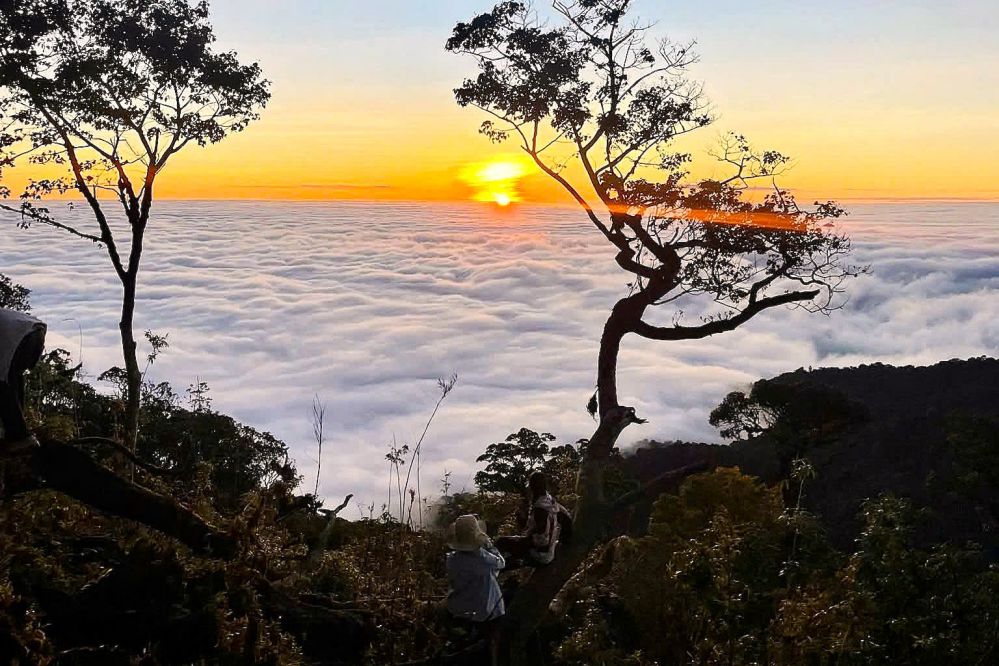
If the weather is favorable, around 4pm is the best time to watch the sunset. The sea of clouds rolls at the foot of the mountain, the sunlight at the end of the day covers the entire Ta Xua special-use forest, making the scenery majestic. Many groups set up tents overnight in a hut 1km from the top to wait to hunt for clouds at dawn - the most beautiful time of the day in Sa Mu when the clouds are thick, soft and embrace the mountain slopes.
Potential eco-tourism associated with Ta Xua special-use forest conservation
Thanks to its pristine beauty, Sa Mu Palace is becoming a new choice for the trekking community. From October to February is the time when cloud hunting is easiest; early spring is the blooming bean and bean forest season. Many groups combine Sa Mu Palace with familiar experiences in Ta Xua such as khungature spine, wind spear, lonely trees or Ta Xua grassland.
The government of Xim Vang commune is coordinating with forest rangers and communities to build a model of controlled eco-tourism. Mr. Nguyen Xuan Bac informed: The groups must register, have portals, bring safety equipment and sign a commitment not to dump waste or take plant samples. The goal is to develop tourism while still protecting the precious ecosystem".
Tourist Nguyen Duc Toan (Son La) said: "Sa Mu is so beautiful. If there are additional signs, more rest stops and support forces, the number of visitors will certainly increase."
Porter Giang A Dong also hopes that the tour guide will be more properly trained: "If the forest is beautiful, visitors will come. People hope to keep the forest for long-term tourism.
The experience on the top of Sa Mu gives visitors a feeling of conquering and settling down in the vastness of the past. Many groups left the mountain in the misty afternoon and were scheduled to return to explore the hidden corners of the forest and witness Sa Mu changing color with each season.


