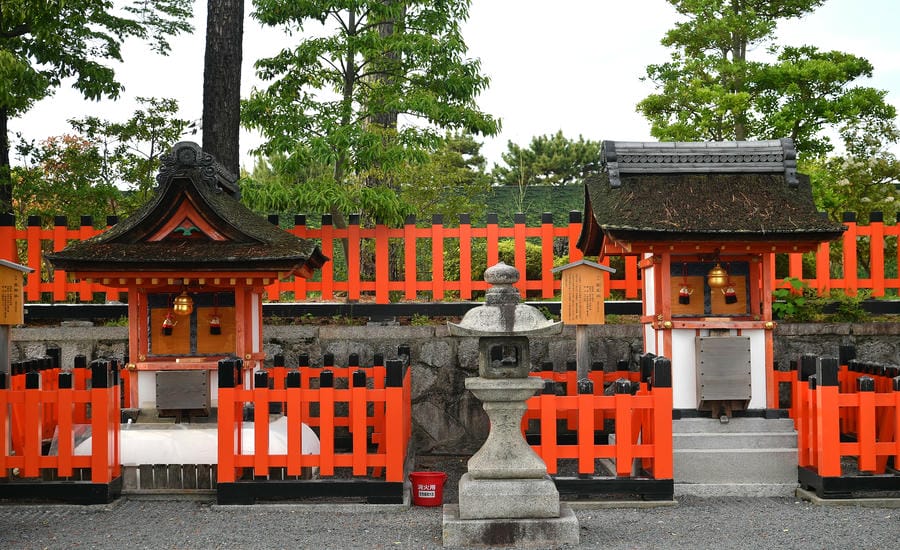
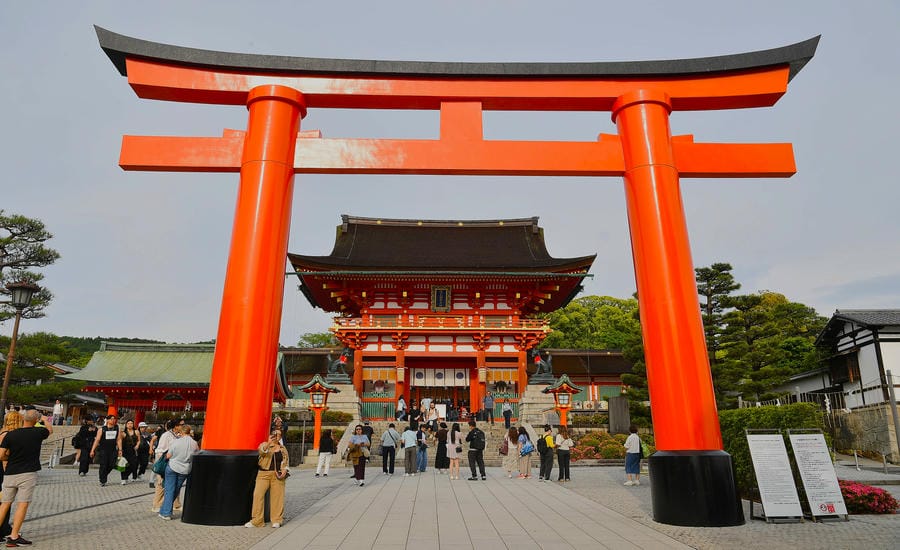
The sacred red color of torii (traditional gate of Shinto Shinto shrines in Japan) in front of the main hall shines under the sun, as if the shrine is not standing still but is shining from within. Those red patches appear everywhere, on wooden pillars, porches, stone lamps, corridors and seem to be in the eyes of visitors who enter the ancient Shinto world of Japan for the first time.
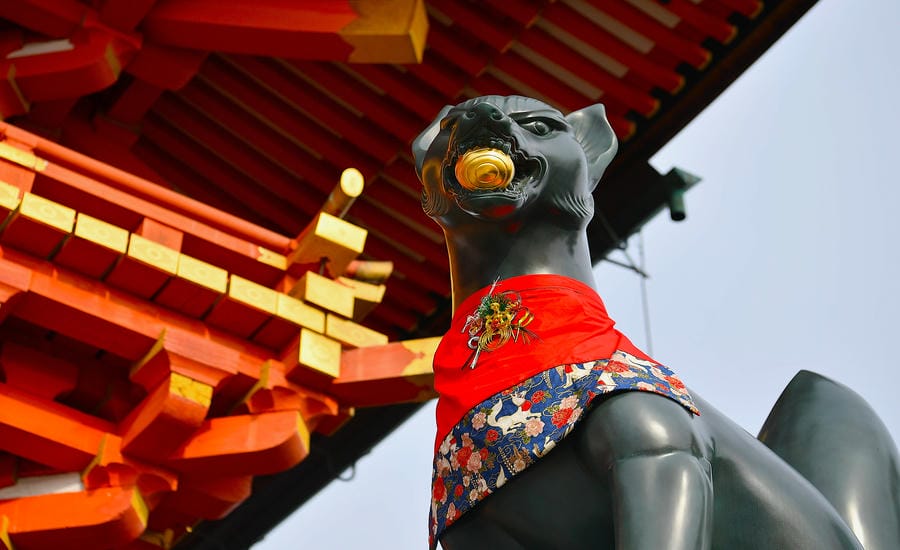
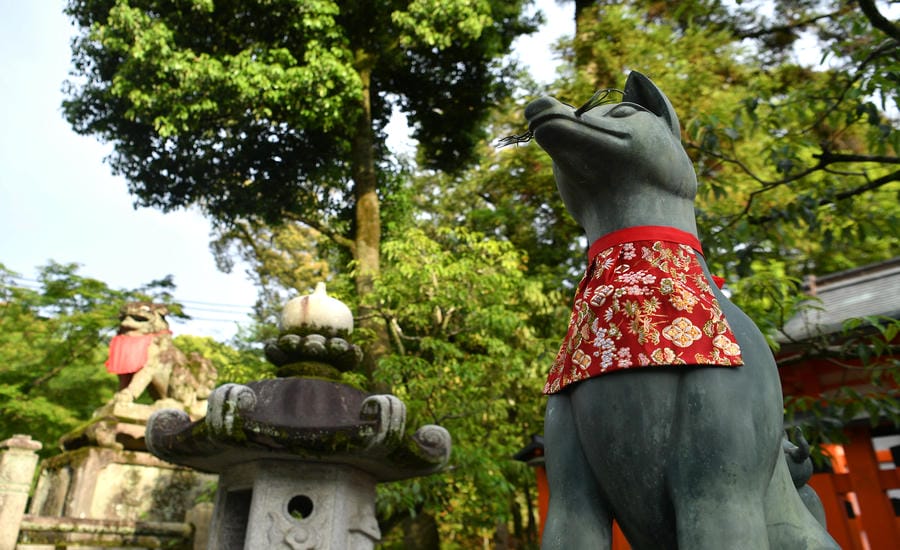
Japanese people believe that the god Inari is the god of harvests, business and prosperity. Therefore, the symbol of the temple is the stone foxes, messengers of the gods, often holding rice warehouse keys or rolls of paper in their mouths. Amidst the bright red color of the architecture, the shiny black foxes have a sacred and mysterious appearance, as if quietly observing the flow of people passing through for hundreds of years.
But what makes Fushimi Inari a symbol of Kyoto lies behind the main hall - "Senbon Torii", the tunnel created from thousands of torii gates connecting each other up the mountain. Walking under those gates feels like stepping into a stream of time. Light is compressed into small streaks. Wind on the mountain passes through the gap between the red columns. People's voices gradually thin out, leaving only the sound of shoes touching the ground and the sound of cameras gently pressing.
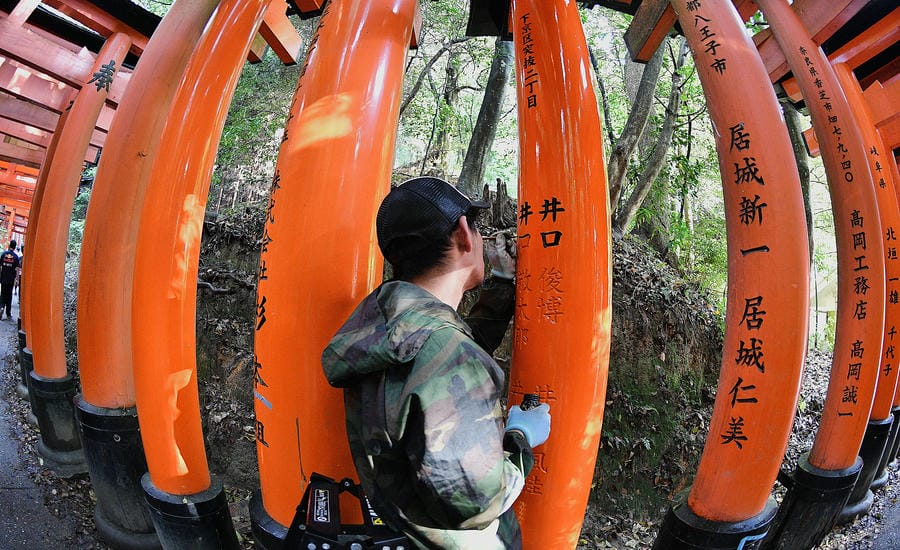
Each torii is donated by an individual or business to pray for good luck and prosperity. The gifter's name is written in black ink along the column body. Thousands of those names are arranged in a "wooden chronicle", where people's beliefs are built into architecture.
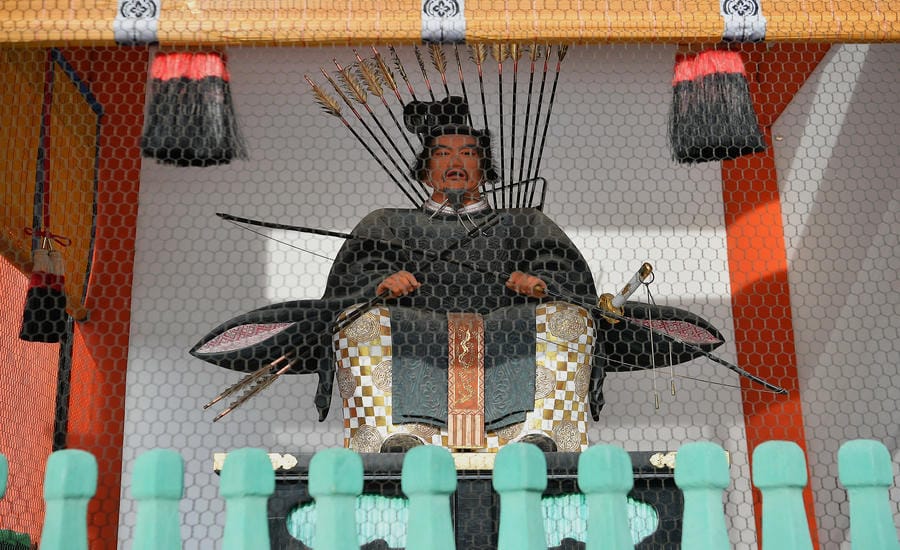
Perhaps that's why Fushimi Inari is not just a tourist destination. It's like a walk through Japanese consciousness: respecting nature, believing in the connection between humans and gods, and patiently preserving beauty through centuries.
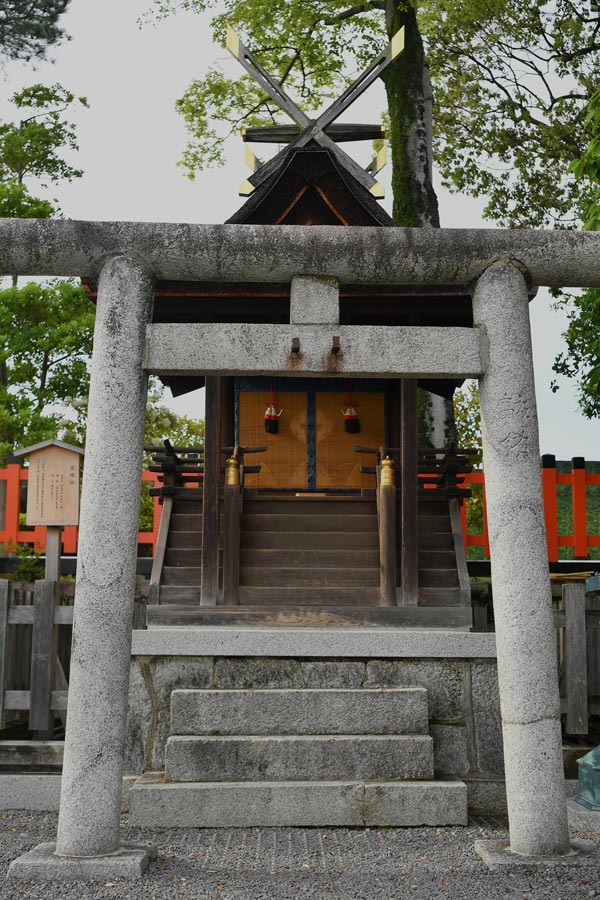
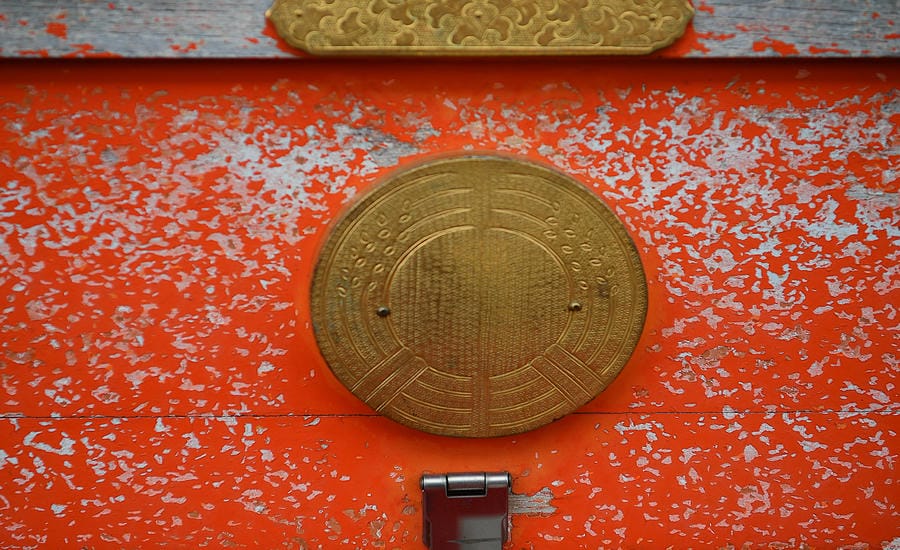
The higher you go, the thinner the crowd becomes. The torii sections begin to age, the red paint slightly peels off, revealing traces of time. A few gates are being hand-painted by artisans. Amidst the world-famous forest of red pillars, that moment makes the temple closer: Heritage is not something immobile to admire, but something that always needs people to continue to preserve.
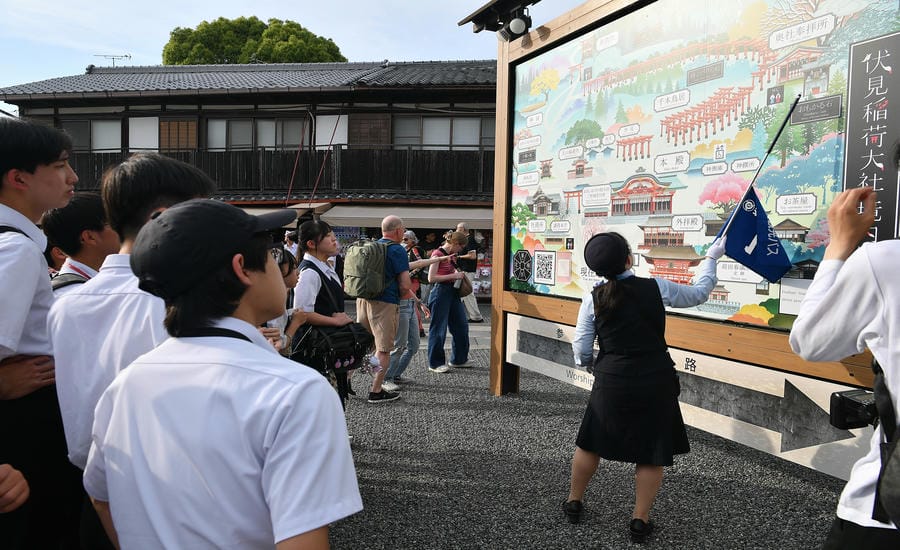
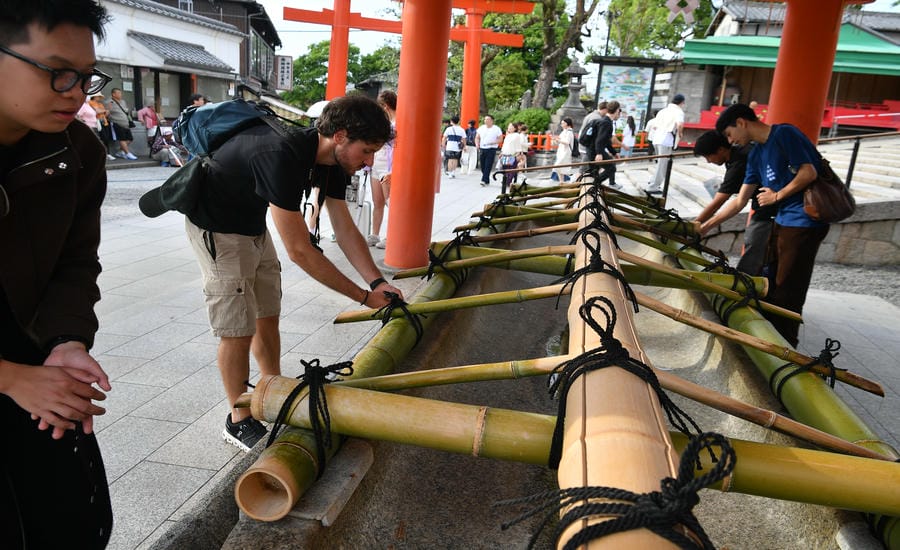
Looking down from the mountainside, Kyoto appears far away in the evening mist. The ancient city of Japan is still moving out there with trams, street lights and endless tourist flows. But inside those red torii tunnels, time seems to flow in a different way, slower, deeper and quieter. Perhaps that's why people remember Fushimi Inari not only with images. People remember it with the feeling of stepping through a place where beliefs, history and visual beauty blend together.