Evidence of a prosperous countryside
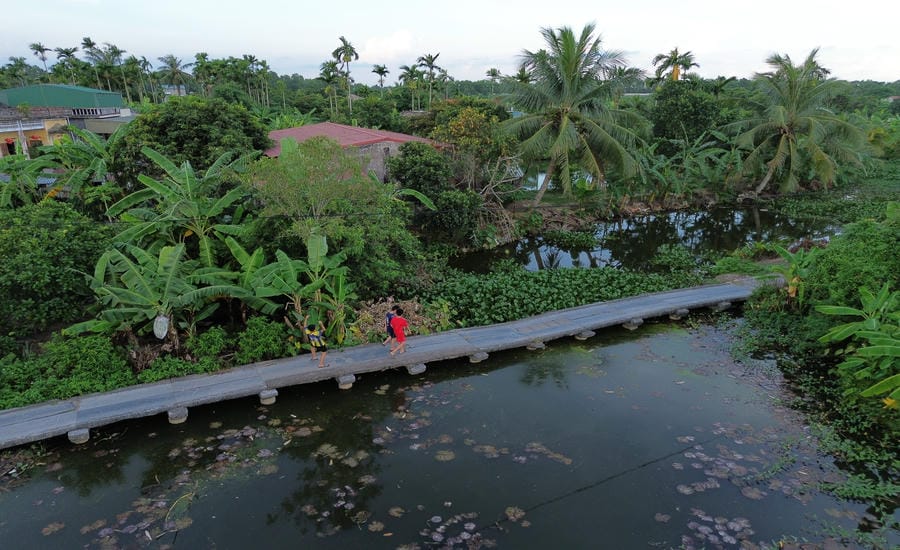
Not as massive as modern bridges, nor sophisticated, the ancient stone bridges located quietly in the countryside of Xu Dong contain many special values. Over hundreds of years, those bridge spans still silently connect the two banks, while preserving memories of a land once closely associated with rivers and waters.
Chi Minh, Tu Ky, Tan Ky, Dai Son, Lac Phuong, Nguyen Giap communes still preserve 17 ancient stone bridges. Although many bridges no longer have the original number of spans, they are still precious relics of the prosperity of this land.
Previously, this area was a low-lying area, with a dense system of rivers, ponds, lakes, and canals, dividing villages. For convenience of travel, trade and production, people initially built bamboo bridges and wooden bridges. Later, when life became better, the villages joined hands to contribute money and effort to build solid and sustainable stone bridges.
In Chi Minh commune, the stone bridge connecting Hien Sy village with Lang Vuc village is still preserved by people as part of a village memory. The bridge is more than 10m long, about 1.2m wide, and is completely made of natural blue stone. Over time, the stone surface has become worn by the footprints of passersby, but the structure is still solid.
Mr. Nguyen Dinh Thua, a resident of Hien Sy village, said that he has been attached to the bridge since childhood. In his memory, the bridge is not only a walkway but also a place associated with many daily activities of the villagers.
In the past, children went to school across the bridge, adults carried rice and vegetables across the bridge, and in the afternoon, people sat by the bridge to chat. The bridge is like a part of the life of the whole village. Now there is a new concrete bridge, but this stone bridge is still kept so that children and grandchildren know about the efforts of their ancestors" - Mr. Thua shared.
According to the stele still preserved at the Boi Lang Lady Relic Site (Dai Son commune, Hai Phong city), most of the stone bridges in the area were built from the merits of Mrs. Nguyen Thi Tri (ie, Mrs. Boi Lang) - a wealthy and famous businesswoman during the reign of Lord Trinh Sam, who was once awarded the title "Family rival".
With a heart towards her homeland, she has spent money to build many stone bridges, contributing to creating favorable conditions for travel and trade of local people. To this day, along with her tomb area in Dai Son commune, those stone bridges are still precious historical traces, marking the merits and virtues of a woman respected and passed down by posterity.
Preserving the mark of ancient hands
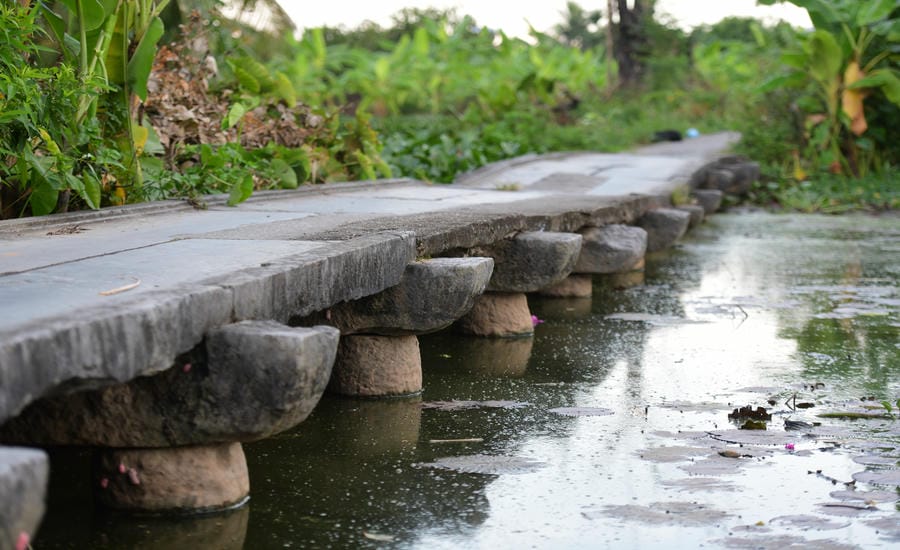
One of the typical bridges that is still quite intact is the stone bridge in Thai An village, Tu Ky commune. The bridge is 11.5m long, 1.2m wide, entirely assembled from solid green stone blocks stacked tightly together without using adhesive. Looking at the large stone slabs being accurately supported and balanced over time, they are still durable, many people cannot help but admire the construction techniques of the ancients.
According to local people, building a stone bridge is a laborious process. Stone is usually bought from Kinh Mon region or as far as Thanh Hoa, then transported by boat by river to the village. Here, artisans proceed to carve and assemble each stone slab.
Some patterns on the bridge body are carved right at the exploitation site, the rest is completed by artisans in the area. That meticulousness has created works that are not only solid but also have unique aesthetic values.
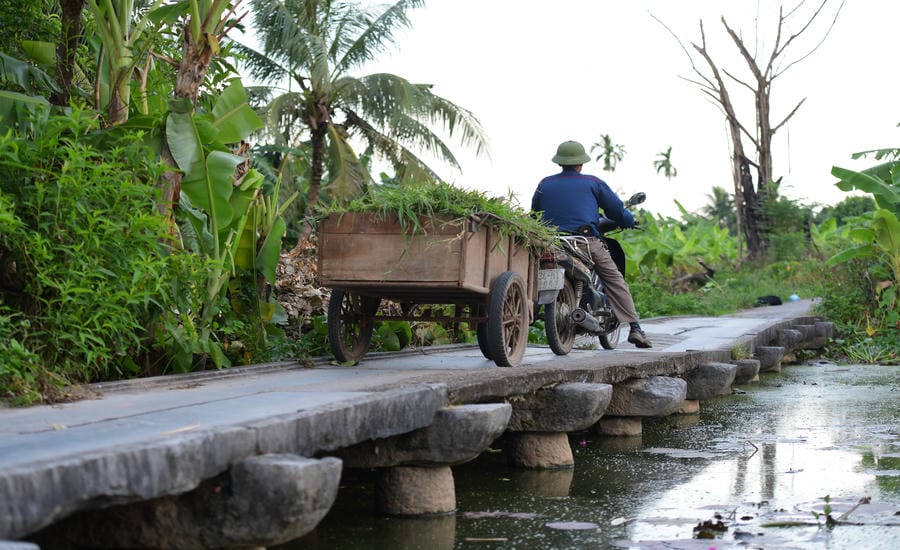
Today, besides many ancient stone bridges, new concrete bridges have been built to serve people's travel needs. However, the old stone bridge spans are still preserved as a way to cherish the past.
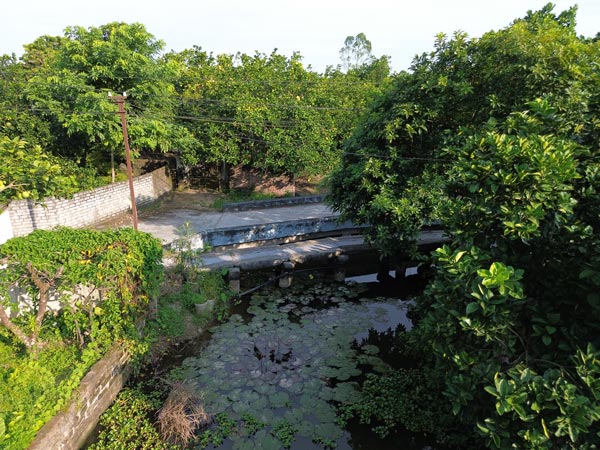
Not only are they traffic projects, the ancient stone bridges are also places to preserve the soul of the countryside, reflecting a period of prosperous development, when the community joined hands to create sustainable projects for future generations.
Amidst the modern pace of life, those stone bridges still quietly exist, as persistent witnesses of history. Each stone slab, each bridge span tells the story of the talented hands of the ancients, of the spirit of community and of a riverine countryside rich in identity that needs to be preserved and cherished.