When the fruit tree blooms
Every dreamy morning, the women and the street vendors are busy bringing their luxurious goods, with the sides being covered with green vegetables of water spinach, mustard greens... and even green papaya with white plastic.
This fruit is often used in cuisine, most especially in Dinh Bang (Bac Ninh), ground into strands, mixed with sticky rice flour and other ingredients to make a famous Banh Te famous with a clear crust, golden as the autumn sun.
In Hanoi, in the traditional art of wind-scraping flowers, green papaya is also a material to create its own cultural features, expressing the sophistication, ingenuity, and creativity of the Hanoi people. Up to now, when the pace of life has changed, more hurriedly and hastily, green fruits are still carried all over the streets, but the art of papaya flowers with split wings has few people pursuing and preserving, including Ms. Thu.
Recalling her early days of being involved in the art of flower arranging, Ms. Thu said that those were the days nearly 40 years ago when her mother sent her to study at the Women's Union of Tinh Hoa in Ba Trieu Street. Around the 80s, in Hanoi, in weddings, birthdays, holidays, and Tet, almost every family had enough papaya flowers to display. I remember the first day of school at the Women's Union of Tinh Hoa, seeing the sunlight shining on each flower from papaya, the softness, simplicity and brilliance made me fascinated."
The green fruit seems rustic and familiar, but it flourishes into flowers and brings a traditional beauty that captivates the hearts of those who admire it. So far, even though pruning and arranging flowers from other materials such as watermelon, carrots, white radishes, etc., green papaya is still a special material that makes her passionate and preserved until now. According to Ms. Thu, for green papaya to "flower" into flowers, simple materials only have green papaya, areca nut and scissors. However, it will take many elaborate and meticulous stages.
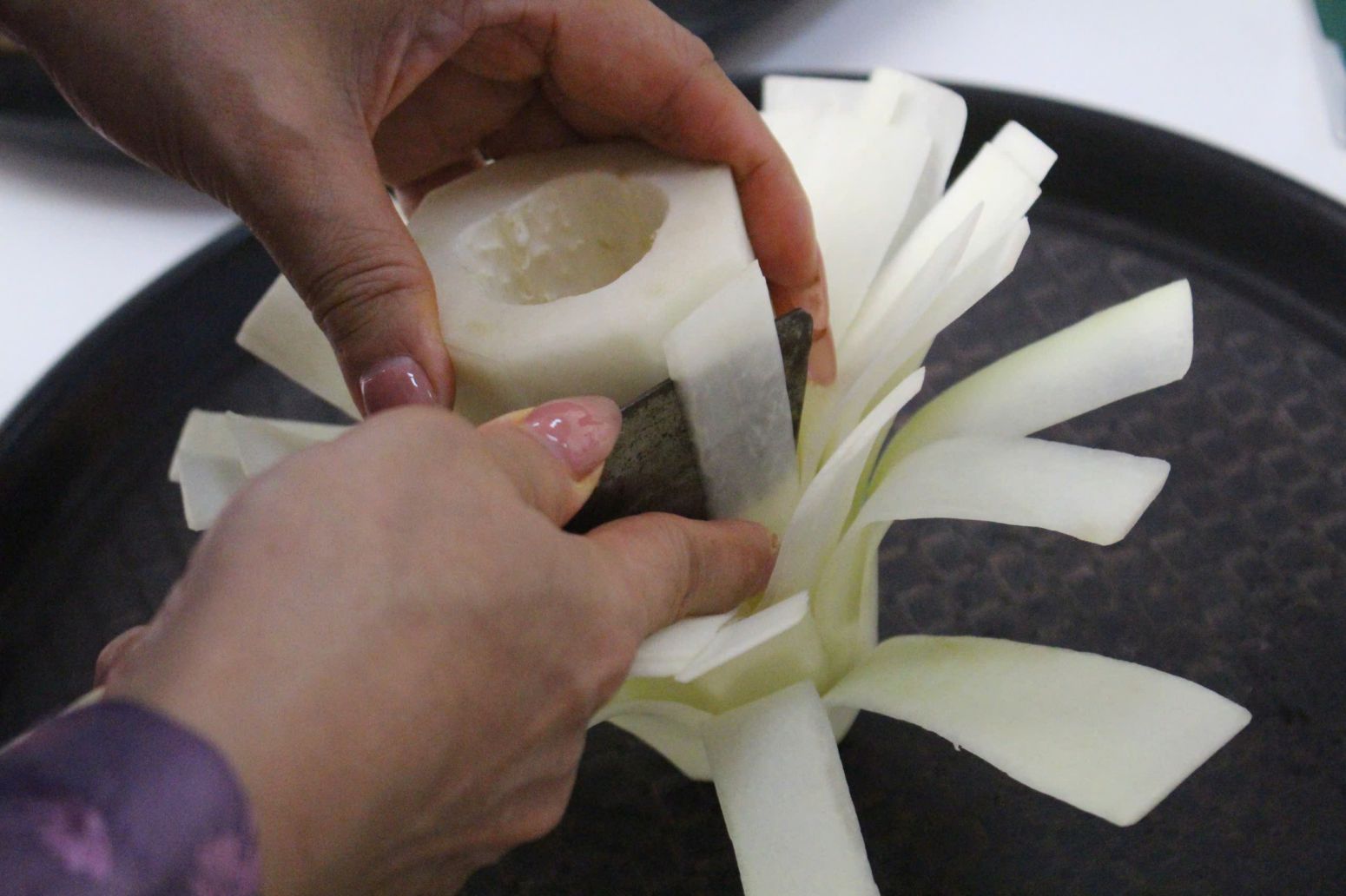
Green papaya chooses long, dark green fruits that are not fully rounded because they are empty, the fruit is thin and easily broken when split. Use a skillful areca nut knife to split each wing, depending on the type of flower, you can split the petals or spread the petals. The stage of splitting and pruning the flower petals appropriately will depend on each type of flower, such as the chrysanthemum needs to split the petals small, the lotus or lychee will split the petals larger. After slicing, soak the papaya in water to make it easy to bend the wings.
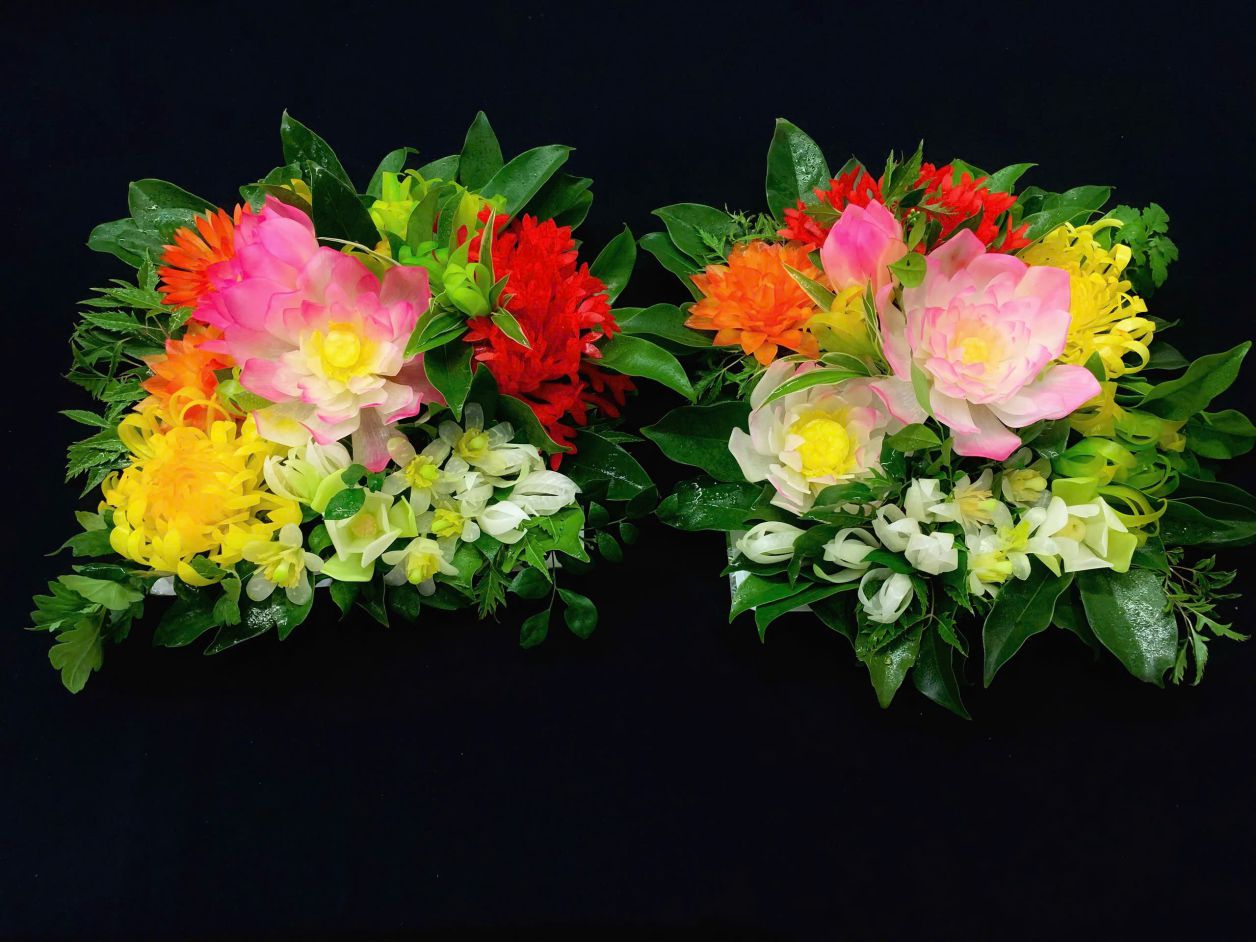
"The most difficult step when making papaya flowers is to bend the wings. Because this is the decisive step for flowers to be beautiful and have soul". According to Ms. Thu, first of all, to make flowers beautiful, workers need to have basic knowledge about the flowers they want to make, such as chrysanthemums with wings, quynh canh kh kh kh kh kh khua... The shape of the flowers sometimes blooms brilliantly, sometimes crawling, shrimp. Green papaya can be turned into chrysanthemum, lily, lotus, quynh flower... that is why.
When the flower has taken shape, the curler makes the softenest, most natural way to create the "soul" of the flowers. Because each flower has its own beauty, has gentle, plump flowers, has brilliant, attractive flowers. Many types of flowers have a beauty that represents the soul of man. The "soul" of flowers according to Ms. Thu is partly due to the soul of the person who craves, from the love of flowers, cherishing beauty.
When the wing is done, the creator chooses the right color, cleverly painting the flowers to create a beautiful glowing, as well as a thick, bland color. "The time to complete the product depends on the type of flower. Quynh flowers need about 20 minutes, while chamomile flowers need an hour. Especially the ancient chrysanthemum, to create a layer of soft curved canopy requires a lot of patience, said Ms. Thu.
The woman who keeps the traditional fire
In modern life, on holidays and Tet, in addition to fresh flowers, people often see more flowers made from other materials with bright colors. Handcrafted male freckles from green papaya have been absent for a while, as well as very few people know them because they require sophistication and meticulousness in each stage.
However, with a passion for traditional art, from simple fruit in the garden, to the areca nut knives or the betel shovels of the grandmothers and mothers, after a long time of studying and exploring, Ms. Thu continues to persevere and create many eye-catching flower models.
In particular, in 2014, with a love for the traditional art of flower arranging and a desire to spread the cultural value to everyone, Ms. Thu opened a papaya flower arranging class right at home. This is a place where she shares the beauty of ancient culture and is a place to research many new flower models.
Her small class has now had a certain number of students, with all ages, from teachers to children. The traditional art of flower arranging has gradually become more popular, raising its level to art when many students in Ms. Thu's class not only learn but also pursue this art.
Handcrafted male flower arranges have now been applied more in practice because of their true diversity and beauty: altar tents; event tables; decoration of food... Most recently, at the First World Cultural Festival in Hanoi, the male flower arranging space from papaya by Ms. Thu, along with other traditional cultural spaces of Vietnam and international friends, attracted a large number of domestic and foreign tourists to admire.
Ms. Do Thi Bich Thuy - a student in Ms. Thu's class said that she still remembers her joy when she successfully picked the first lotus flower from the green papaya. Studying traditional flower arranging art, I not only have the opportunity to learn more deeply about the ancient cultural beauty of Hanoi, but also practice patience and meticulousness in each product I make. When I focus on splitting the petals, I feel my soul is lighter.
Ms. Thu's classes as well as her endless creativity have brought a new scent and color to the traditional art of ripping flowers from the past. From green papaya, the folk areca nut knife, the male flowers only appear in the warm space of each family, now they have spread to many places, as well as being welcomed by tourists from all over the world for their sophisticated and elaborate beauty, expressing the cultural richness of aesthetic value, the spirit of traditional art of the Hanoi people.