
Returning home after a memorable trip with friends in Japan, Ms. Thanh Binh, a bank employee in Hanoi, is still emotional when mentioning the trip.
This is not the first time I have traveled abroad, but it is still an interesting trip because it is planned very quickly and somewhat rushed. Unlike previous trips, I had to spend 1-2 weeks to find out the location and plan to go out, this time I tried using ChatGPT and it makes this preparation much less complicated," Ms. Thanh Binh shared with Lao Dong Newspaper.
Artificial intelligence, with its rapid development, is deeply penetrating into the lives of modern people. They not only help tourism businesses optimize operations but also bring a more flexible experience to users. The emergence of AI virtual assistants makes exploring the world more free. Tourists are now no longer too dependent on tour guides or fixed tours but can build their own journeys according to personal preferences. Technology is turning each trip into a smart experience, where AI plays the role of a silent but effective companion.
Traveling is becoming easier and easier
According to Ms. Thanh Binh, one of the most obvious changes that AI brings to the tourism industry lies in its ability to support planning and exploring destinations. Instead of spending hours searching on the Internet when seeing a beautiful photo, Ms. Binh has been able to upload images of a beach, a mountain range or a favorite street corner for the AI system to analyze and propose similar locations. This visual approach helps find tourism inspiration faster and closer.
Along with that, AI application platforms are also increasingly personalizing user experiences. When analyzing photos of food, landscapes or activities that tourists have stored, the system can suggest restaurants, hotels, experience tours or destinations that suit each person's own taste. This makes exploration more natural instead of completely relying on mass suggestion lists.
During the trip to Japan, AI continued to play the role of a pocket assistant always accompanying Ms. Thanh Binh. Image recognition technology allows the phone to directly translate signs, menus or foreign documents just by placing the camera to scan. Language barriers that once made many people hesitant when traveling abroad are gradually narrowing. "Even though I don't know Japanese, I can still easily find a restaurant and order food with my mobile phone," Ms. Binh said.
Promising future with AI
In the future, AI is expected to continue to dramatically change the experience at train stations, airports and major tourist destinations. Image recognition systems can monitor crowd density in real time to regulate passenger flows and limit congestion in crowded areas.
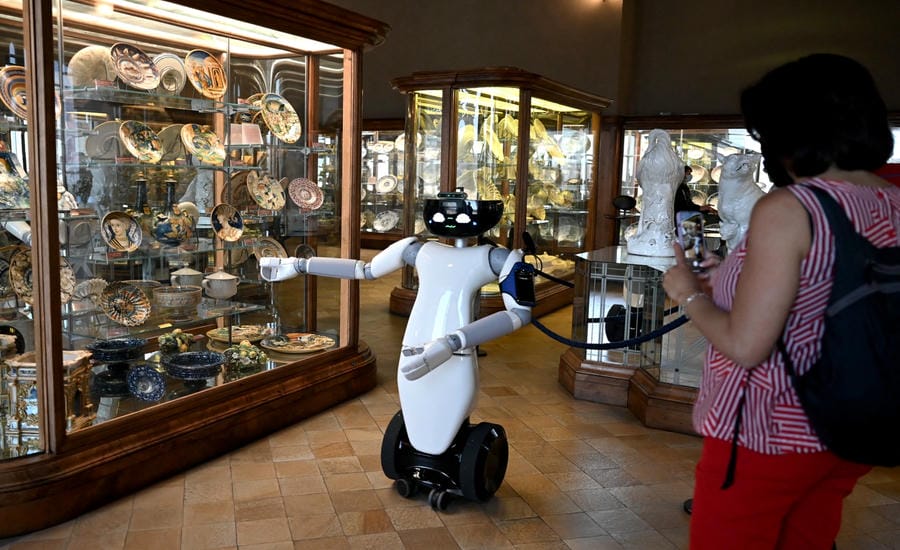
Many attractions are also aiming for enhanced reality experiences combined with AI. Visitors only need to point their phone cameras at architectural works or works of art to receive historical and cultural information and guided tours immediately. This opens up a more interactive form of exploration instead of traditional billboards.
At airports and hotels, automation processes can be further expanded thanks to AI. Facial recognition, baggage management and customer support with virtual assistants will help reduce the burden on operating staff, while shortening processing time for passengers.
AI systems are also expected to bring deeper personalized travel experiences. Based on image history and travel habits, the travel platform can give appropriate suggestions on dining locations, schedules or entertainment activities at different times of the day.
Many countries have applied AI technology in promoting tourism such as Thailand, Indonesia... In 2025, Indonesian Minister of Tourism, Mr. Widiyanti Putri Wardhana, officially launched Indonesia's Tinh tế Artificial Intelligence platform, called MaiA, which can be used as a chatbot on Indonesia's official tourism website, expected to become a companion for tourists and those planning upcoming trips to Bali.
Not only supporting operation, AI also changes the way tourists store memories. Smart applications today can automatically classify photos by location, activity or famous buildings, then create a journey summary video without manual editing. Image recognition technology makes sharing experiences on social networks more convenient and lively.


