
Pressure from subjective consciousness
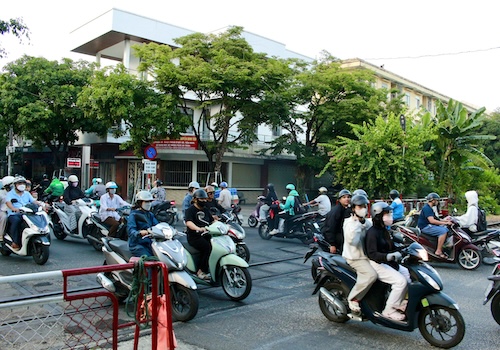
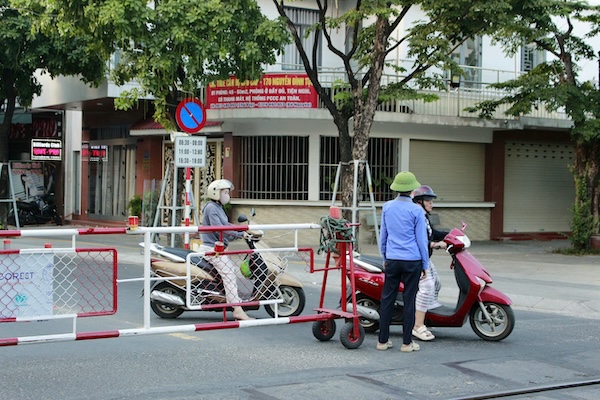
At a railway barrier in Da Nang City, every time a train passes, Ms. Nga (name of the character has been changed) quickly performs safety operations such as checking signals, pulling barriers, and observing the flow of vehicles on both sides of the road.
The work seems to be repeated every day, but she never feels out of pressure. What worries her the most is not the trains rushing through in front of her eyes, but the subjectivity of a part of traffic participants.
“Firstly, I always put the issue of human life first. So when facing the safety of each passerby when a train is coming, it is extremely stressful,” Ms. Nga shared.
Some motorcyclists use their phones and headphones while traveling across the railway tracks. "Although warning signals have been issued, and people are constantly shouting with flags and red lights, there are still people who deliberately overtake," Ms. Nga said.
Ms. Dang Thi Huyen Trang, a barrier guard at Hoa My station, said that before each train trip, the guards must closely monitor the traffic situation to promptly warn and clear the safety corridor.
In residential areas adjacent to the railway, we have to regularly blow horns, give hand signals or use lights at night to remind people to stop in time," Ms. Trang said.
During peak hours, traffic volume is quite large. Although the warning signal has been activated and the barrier is gradually closing, there are still people taking advantage of the remaining space to weave through.
Sometimes one side of the barrier has been closed, but people still try to overtake. In those situations, we have to handle it very quickly to ensure that the railway tracks are always clear for trains to pass through," Ms. Trang shared.
According to level crossing guards, just a moment of impatience can lead to serious consequences. With a large load and a long braking distance, trains are almost very difficult to handle when unexpected situations occur at intersections.
Need to raise awareness to protect lives
Not only barrier guards, many people who regularly pass through the railway area also expressed concern about the situation of trying to overtake barriers when trains are about to arrive.
Ms. Huynh Thi Hong Dieu, a resident living near the railway track area, said that the psychology of being in a hurry makes many people subjective when participating in traffic. "It's not always like blocks are closed and trains pass right away, so many people think there's still time to cross," Ms. Dieu said.
According to Ms. Dieu, most traffic participants travel by motorbike, so it is quite easy to weave through, while each guard post usually has only one to two officers on duty, making it difficult to fully control.
They have not really imagined the consequences of railway accidents, so they are still too subjective about their lives. Just taking advantage of speeding for a few seconds does not solve anything, while the risk of unfortunate consequences is very high," Ms. Nga added.
In addition to ensuring safety at intersections, propaganda also plays an important role in raising people's compliance awareness.
When unsafe incidents occur, railway industry units and press agencies also strengthen propaganda to help people better understand the risks that may be encountered when violating regulations. From there, people's awareness of compliance will gradually be raised," Ms. Trang shared.


