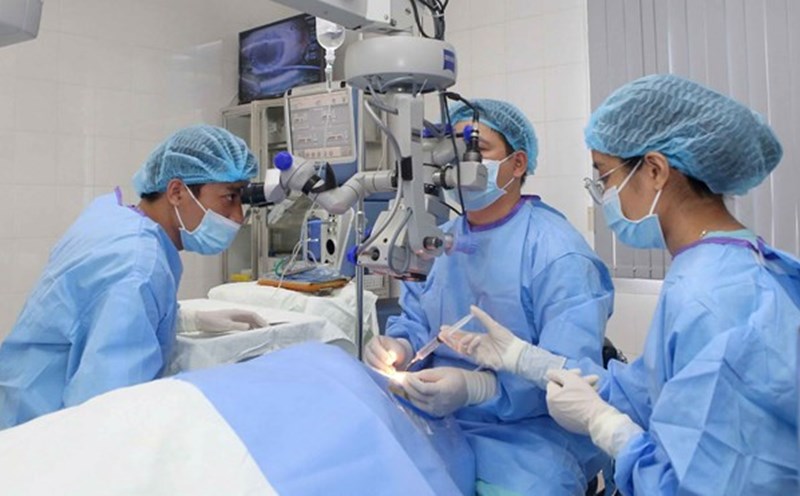
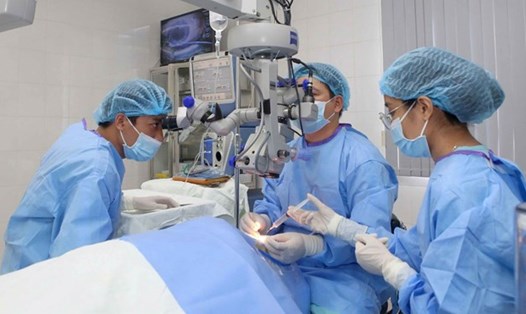
Accordingly, after receiving the cornea, the hospital quickly organized a consultation, selected and performed cornea transplants for 12 patients with severe damage and prolonged vision loss. These are cases that have been on the hospital's waiting list for transplants in the past.
Right on the night of admission, the team of cornea specialists assessed tissue standards, analyzed the extent of damage, predicted vision recovery and conducted consultations according to strict procedures. Of the more than 30 patients considered, 12 cases eligible for priority pre-transplantation were mostly severe endothelial damages, scars of the entire cornea or single eye that seriously affected daily activities.
According to Dr. Lam Minh Vinh - Head of the Dental Department, Ho Chi Minh City Eye Hospital, the choice of technique depends on the characteristics of the lesion and the ability to restore vision. During this period, the hospital performed 5 DSAEK endothelial transplants and 7 transplants (PK).
Dr. Lam Minh Vinh said that DSAEK endoscopic transplant has the advantage of quick recovery, less astigmatism, no stitching so complications are limited. However, the technique requires high skills and is not suitable for full-term cornea damage. For severe scars, the hospital applies traditional transplants, but requires longer recovery time and a higher risk of transplant discharge.
In these transplant cases, it is noteworthy that patient V.N.B.Tr. (1986, Ho Chi Minh City). The patient has spongy cornea nutrition disorder, has been waiting for a transplant since 2009 and has undergone intermittent transplants but has not adapted. This time, the patient was prescribed a second DSAEK endothelial transplant for the right eye.
From November 28 to December 2, 12 transplants were successfully performed. A report from the Department of Peridology shows that inwardly, vision is starting to improve. Patients can be discharged after 3-5 days of monitoring.
I am very happy to have this transplant. After 5 days, my eyes have less fatigue and I have received very dedicated care from the medical team, patient B.Tr shared.
For many years, Ho Chi Minh City Eye Hospital has maintained cooperation with international organizations such as Eversight Bank, CorneaGen (USA) and Nepal Eye Bank to access donated tissue and receive technical support. Thanks to that, the hospital has performed more than 400 cornea transplants in 12 years, helping hundreds of patients improve their eyesight, of which more than 90% are unskilled workers.
Patients do not have to pay for corneal tissue, helping to reduce the financial burden that is a major barrier in many cases.
Faced with limited tissue sources compared to increasing demand, Ho Chi Minh City Eye Hospital has proposed to establish an Eye Bank according to the Institute - School model, strengthen international cooperation and optimize the tissue receipt process. This is expected to help the hospital be more proactive in cornea sources, promptly meeting transplant needs, contributing to reducing the blindness rate due to corneal diseases.