
Elderly people and children increase the risk of respiratory diseases
In recent days, Hanoi has been continuously submerged in a thick layer of fog accompanied by fine dust, causing air quality to be at the worst to the worst level. According to monitoring stations, the AQI index often exceeds the safety threshold, posing a great risk to public health, especially for outdoor workers, environmental sanitation workers, the elderly and children.
From 2018 to 2024, Hanoi has continuously been in the top 20 most polluted cities in the world. On major streets such as Giai Phong, Nguyen Trai, Truong Chinh..., the image of environmental sanitation workers still tirelessly sweeping garbage from the matches. Dust-proof scarves and shirts are "isolated items", but it is also difficult to completely prevent PM2.5 fine dust - the most dangerous factor in air pollution.
Ms. L.T.H, an environmental worker in Cau Giay ward, shared: "On days like this, the air is foggy, making my chest feel tight and making it very difficult to breathe. When I got home, I coughed continuously, my throat burst. But work on the street cannot be stopped.
Not only environmental workers, delivery people, street vendors, security guards, car reporters... are also directly affected. Many people said they often have headaches, spicy eyes, difficulty breathing, and fatigue when working in conditions with prolonged smoke and dust.
In residential areas, many parents are worried when their children have to go to school in polluted air. Children and the elderly - the group with weak resistance - are identified as the most vulnerable groups.
According to many hospitals in Hanoi, the number of hospitalizations related to respiratory diseases tends to increase, especially in the elderly and children. Common diseases include bronchitis, pneumonia, asthma, allergic rhinitis...
At the National Children's Hospital, although there are no specific figures for the number of respiratory cases due to air pollution, the hospital has issued a warning: Recently, the air pollution situation in Hanoi is recording a warning level of pollution that can directly affect public health. According to the WHO, frequent exposure to pollutants in the air significantly increases the risk of serious diseases such as acute respiratory infections, chronic obstructive pulmonary disease (COPD), asthma, as well as cardiovascular diseases, strokes, etc. In addition, air pollution also causes skin damage, eye diseases, and can have a negative impact on the nervous system, immune system and mental health.
Children are a particularly vulnerable group to environmental change. To minimize the impact of air pollution on children's health, parents need to pay attention to implementing preventive measures according to the recommendations of the Ministry of Health".
Medical experts warn of prolonged risk
Associate Professor, Dr. Vu Van Giap - Deputy Director of Bach Mai Hospital - said: Air pollution in Hanoi will affect the health of people in general, especially those who are susceptible, including the elderly, pregnant women, children and those with respiratory and cardiovascular diseases...
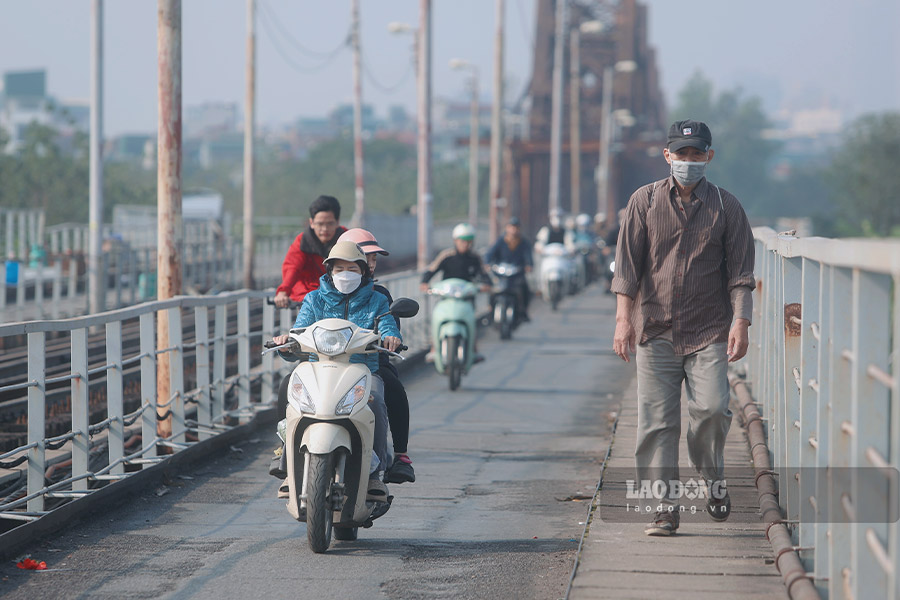
Dust, especially PM2.5 super fine dust, is the most dangerous factor in air pollution because it can enter the bloodstream, causing inflammation and disease in many organs. According to the WHO, about 30% of deaths are due to lung cancer, 25% are due to cardiovascular disease, stroke and 43% are due to respiratory diseases related to air pollution, directly threatening current and future health.
"Polluted air makes people with respiratory diseases difficult to breathe, cough, chest tightness, increases the risk of hospitalization due to respiratory and cardiovascular diseases, so it is necessary to limit going out when there is severe pollution. Patients with asthma and COPD must take medication regularly, increase the bronchial dilation dose when symptoms appear and immediately contact a medical facility if they cannot control themselves," said Associate Professor, Dr. Vu Van Giap.
People with respiratory diseases need to wear masks that can filter fine dust to avoid smoke, dust and black smell that can cause acute acne. Everyone needs to join hands to keep the environment clean.


