Patient P.T. L (born in 1990) while picking pepper and moving on an iron ladder, unfortunately got caught in an electric wire, was electrocuted for about 5 - 10 seconds and lost consciousness for about 5 minutes. After being given first aid locally, the patient was transferred to Military Hospital 175 for treatment.
At the Burn - Plastic Surgery Department, the patient was diagnosed with electric burns of 6% of body area, degrees II, III and IV (1%), damage to the palm area, genitals, right thigh and calves on both sides. Although the burn area was not large, the high-voltage current caused deep damage, seriously destroying the structures of the genital area. During treatment, the patient was given bandages, wound care, thin skin grafts and underwent about 3-4 necrotic tissue removal surgeries. After many necrotic tissue removal surgeries, the entire penis body from root to head was no longer preserved, leaving only the scrotum.
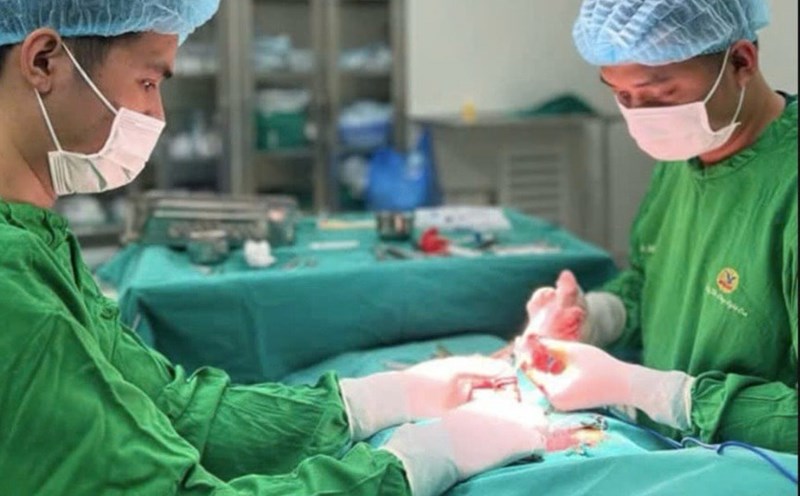
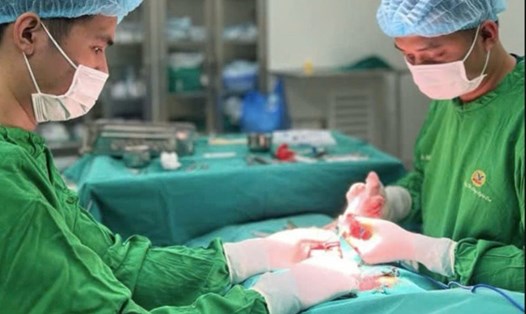
After burn treatment, the patient wishes to have the penis reconstructed. The Burn - Plastic Surgery Department in coordination with the Urology Department of Military Hospital 175 comprehensively assessed the patient's condition, thereby developing a treatment plan and performing penis plastic surgery with a free microsurgery strip.
The surgical team transferred a free microsurgery patch from the outer forearm area to the genital area. Under the surgical microscope, doctors performed blood and nerve connections in the penis area to create conditions for sensory recovery later. The "tube in tube" wrap method was applied, helping the reconstructed penis to have a relatively complete shape.
According to BSCKII Than Van Hung, Deputy Head of the Burns - Plastic Surgery Department, Military Hospital 175, the team has proactively marked and preserved blood vessel and nerve positions right from the initial injury treatment stage to serve reconstruction surgery later. Thanks to that, the identification of the receiving vessel and receiving nerve during surgery is carried out quickly and conveniently.
This is considered one of the most complex techniques in the microsurgery and plastic surgery specialty, even belonging to the group of very difficult techniques in Vietnam today. The success of the surgery is the result of careful preparation, high professional qualifications of the team of doctors and the modern equipment system of the hospital," BSCKII Than Van Hung shared.
After 7 days of free patch relocation surgery, examination results showed that the skin patch was completely living, warm pink, and the reconstructed penis body reached a shape of nearly 80-90% compared to the original shape. The patient developed feelings of heat, cold, and touch sensation in the reconstructed area. Thanks to nerve connection during surgery, sensory function is expected to continue to gradually recover in the next 3 to 6 months.