
Project to mobilize people to participate in widespread cervical cancer screening
According to Assoc. Prof. Dr. Tang Chi Thuong, Director of Ho Chi Minh City Department of Health, the city's health sector is continuing to propose expanding community health screening programs, in addition to the ongoing universal health check-up activities.
He said that periodic health check-ups have the meaning of classifying initial health conditions, helping people determine the level of risk and proactively monitor. Meanwhile, disease screening plays a more important role in early detection of potential diseases, especially cancer.
Health check-ups help classify, while screening helps detect diseases early, which is a key factor in reducing the burden of disease in the community. This is a highly humane model, especially for women at risk in the community, helping to detect diseases early and reduce mortality," Assoc. Prof. Dr. Thuong said.
Regarding screening techniques, leaders of the Ho Chi Minh City health sector said that currently testing prices between medical facilities are basically agreed upon according to regulations. However, the actual cost may vary depending on whether the units receive support from socialized sources or funding for testing equipment and chemicals.
This leads to service cost differences between facilities, but not due to differences in listed prices, but mainly due to input cost supporting factors.
According to Assoc. Prof. Dr. Nguyen Anh Dung, Deputy Director of Ho Chi Minh City Department of Health, the city's health sector is orienting the development of a list of cancer groups that need to be prioritized for screening in the community, in order to proactively detect early and reduce the burden of treatment.
He said that in the immediate future, there are 5 cancer groups identified that need to be focused on screening, including: cervical cancer, breast cancer, colorectal cancer, liver cancer and thyroid cancer.
Regarding cervical cancer, he emphasized that this is a particularly important group of diseases in women, which can be effectively prevented if combining HPV vaccination and periodic screening.
Regarding implementation, the Ho Chi Minh City health sector is developing a large-scale screening plan in the coming period, based on the city's approved budget resources. However, due to the large population size, estimated millions of people in the at-risk age group, implementation needs an appropriate roadmap.
He cited an example, if screening for all women aged 25 to 65 is implemented, the cost could be up to hundreds of billions of VND. Therefore, the health sector is calculating a priority grouping plan by age and risk factors, such as the 30-49 age group or cases with family history of the disease. For breast cancer, the screening target group is mainly identified from 40 to 70 years old, with a scale of millions of people.
Prioritizing cervical cancer screening in community screening campaign
According to Assoc. Prof. Dr. Hoang Thi Diem Tuyet, Director of Hung Vuong Hospital, the difference between people proactively going for examination and implementing a community-scale screening campaign lies in the goal of coverage: instead of small numbers, the program needs to aim for a large and systematic number of people being screened.
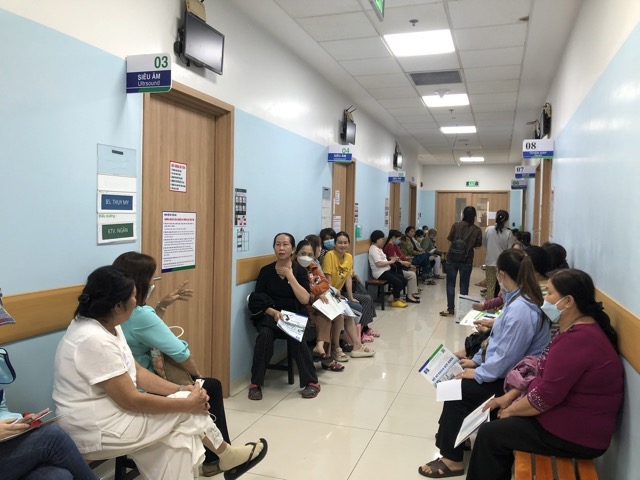
She said that among the common cancers in women, cervical cancer and breast cancer are currently the two types with the highest mortality rates in the world as well as in Vietnam. However, in the pilot phase of the cancer screening program in Ho Chi Minh City, Hung Vuong Hospital proposed prioritizing cervical cancer screening first.
The reason given is that cervical cancer belongs to the group of diseases that can be effectively prevented and detected early. Prevention includes two levels: primary prevention by HPV vaccination for adolescents; and secondary prevention through early detection of precancerous lesions for timely treatment, thereby reducing the risk of cancer progression and reducing mortality rates.
Regarding screening methods, there are currently many techniques being applied such as Pap smear testing, HPV testing or the application of artificial intelligence (AI) in screening. In the pilot phase, Hung Vuong Hospital proposed to choose the AI screening method.
According to Assoc. Prof. Tuyet, this method has been included in the technical list by the Ministry of Health, has a lower cost compared to many other methods and especially gives fast results. After only about 2 minutes of analyzing images from cameras and AI systems, an initial conclusion can be drawn, helping doctors immediately orient treatment for patients.
With advantages in speed, cost and wide deployment, AI cervical cancer screening is a suitable solution in the early stages of the campaign," she emphasized.


