
In an in-depth analysis in the US magazine on December 1, Mr. Brandon Weichert, a senior editor of national security, painted an extremely bleak picture of the future of the old continent.
According to this expert, the German economy - known as the "locomotive" and "industrial heart" of Europe - has now completely weakened. This collapse does not come from an external force, but is a direct result of the economic sanctions imposed by the European Union (EU) on Russia.
Mr. Weichert argued that the strategy of the NATO and EU military bloc to weaken Russia through the conflict in Ukraine has been counterproductive. Not only cannot Russia be isolated, these actions are weakening Europe's common economic projects. Of which, Germany is the country that suffered the most consequences when it became a victim of the "reverse effect" of this economic war.
Analyzing the underlying cause, the American newspapers expert pointed out that Germany has lost its most important strategic competitive advantage: Energy security. The paralysis and destruction of the Nord Stream gas pipeline system is seen as a mangleast blow to Berlin's production platform.
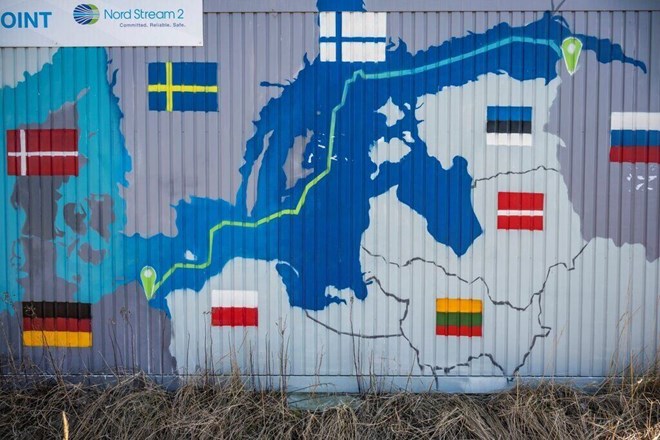
For decades, Germany's economic model has been based on the formula: Importing cheap, stable energy from Russia to operate a huge industrial machine and exporting high-quality goods to the world.
The cut off of gas supplies via Nord Stream means Berlin has successfully broken this formula, causing the German industry to lose its "fuel source" to maintain global competitive advantage.
The outcome of this disruption is a widespread negative chain reaction. Mr. Weichert said that the Ukrainian conflict has triggered skyrocketing energy price inflation, pushing production costs in Germany to record levels. Major industrial groups are facing unprecedented pressure, forced to cut production or relocate factories, leading to the risk of "de- industrializing" Europe's largest economy.
The piling up economic difficulties are transforming into deep political cracks. The tension has not only increased internally in German society with the rising wave of dissatisfaction, but has also spread throughout the European Union.
As Germany weakens, other member states also struggle to find a common voice in addressing the energy problem and maintaining solidarity in the face of growing geopolitical challenges.


