
On June 9, the Department of Crop Production and Plant Protection in coordination with the Institute of Vegetable and Fruit Research organized a workshop to contribute opinions on the Draft National Standard on "Process of production and preliminary processing of vegetables to ensure food safety".
After more than 15 years of implementation, VietGAP has created an important foundation for safe agricultural production, quality management and traceability. However, the level of application in practice is still low. This reality shows that it is necessary to strongly innovate the approach in building and applying standards.
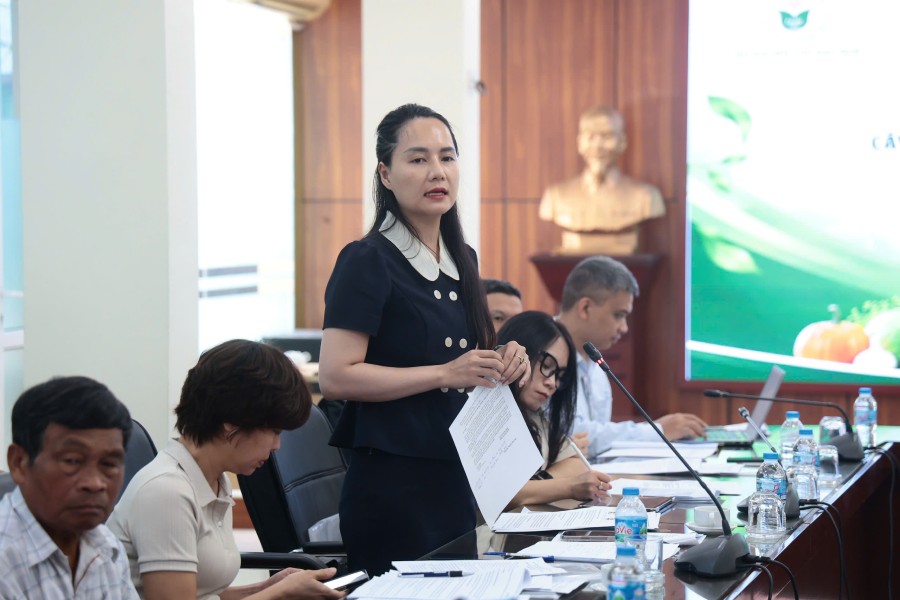
At the workshop, Mr. Nguyen Quy Duong - Deputy Director of the Department of Crop Production and Plant Protection - emphasized the need to clarify the scope of application and objectives of the standard. According to him, currently small-scale production households mainly apply the form of food safety commitments according to the provisions of the Food Safety Law. This is consistent with the practice of distributed production, but also raises the requirement to have more effective management tools.
In that context, building a "simpler, more feasible" standard is necessary, in order to create conditions for many small-scale production entities to participate in the safe production chain. Mr. Nguyen Quy Duong also proposed clarifying whether the standard is used for practical or certification purposes, because each goal will have different technical designs.
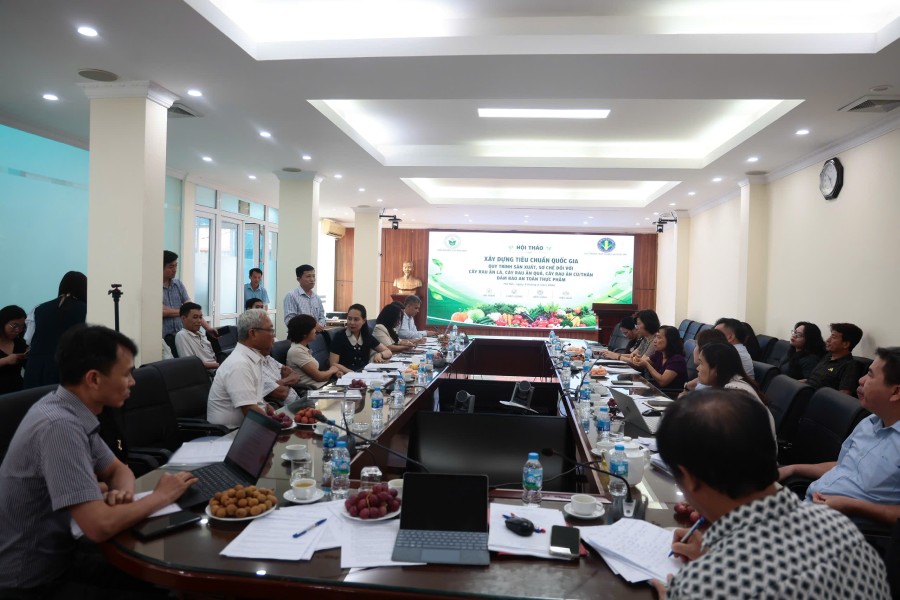
The key objective of the draft is to build a production and preliminary processing process for vegetables in a practical, easy-to-apply, transparent and more practical direction. Simplifying the process and simplifying procedures does not reduce safety requirements, but aims to turn technical requirements into clear and easy-to-understand practical guidelines.
The new standard also aims to reduce compliance costs, evaluation costs, certification and maintenance of compliance for businesses, cooperatives, and production facilities; and at the same time provide farmers and producers with easy-to-understand, easy-to-record, and easy-to-implement processes and forms.
At the workshop, opinions focused on perfecting technical content, implementation methods, inspection and supervision mechanisms and support tools applied in practice. Many guests said that the standards need to be clear, easy to understand, and suitable for many types of production, from farm households, cooperative groups, cooperatives to large-scale enterprises.
Delegates also emphasized the requirement to link standards with implementation guidelines such as technical handbooks, production diary templates, compliance assessment tables and traceability instructions. This is an important condition for standards after promulgation to be put into practice, not just stopping at technical requirements in documents.
Based on the opinions at the workshop, the Drafting Committee will receive, revise and complete the draft National Standard to submit to competent authorities for consideration, appraisal and publication in 2026.


