
The sacred responsibility of the entire political system
Through more than half a century of fighting for national independence, protecting the Fatherland and performing international duties, over 1.2 million cadres, soldiers and compatriots have heroically sacrificed for the independence and freedom of the nation, for the happiness of the people.
The search, collection and identification of martyrs' remains is an expression of gratitude and remembrance of the merits of heroic martyrs; one of the contents and key tasks of post-war policy work, contributing importantly to building people's trust in the Party and State, building the army, army infrastructure, and stabilizing the socio-political situation in localities and throughout the country.
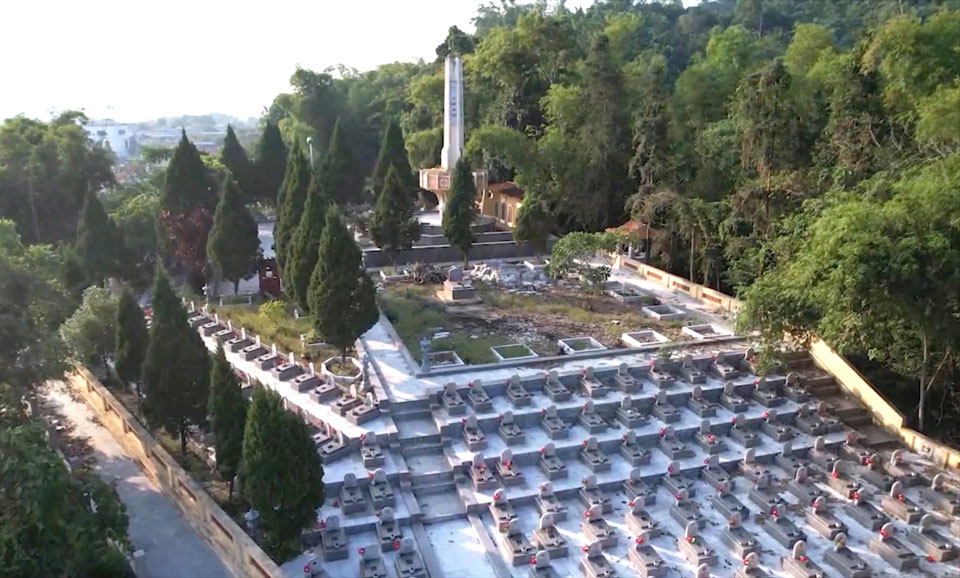
Over the years, our Party and State have paid special attention, with many policies and measures directing the work of searching for and repatriating (TKQT) and identifying martyrs' remains; building martyrs' cemeteries, steles bearing names, and monuments to heroic martyrs.
Levels, sectors, localities, and units have strengthened leadership and direction to focus efforts on performing this particularly important task; the system of directing documents has been issued, constantly supplemented and completed; implementation plans are increasingly specific and practical; attention has been paid to investment in equipment, facilities, and funding, creating favorable conditions for TKQT work and identifying martyrs' remains. To date, over 1,075,000 graves (remains) of martyrs have been TKQT.
Martyrs' cemeteries (NTLS), monuments, and steles bearing the names of martyrs are built solemnly, in the center of each locality, convenient for people's travel and visits.
However, the work of TKQT and identifying martyrs' remains still faces many difficulties and complexities.
Currently, the number of martyrs' remains that need to be continued TKQT is still about more than 175,000 and nearly 300,000 martyrs' graves are buried in cemeteries with unidentified information, while the war is fierce and prolonged; the circumstances of sacrifice are very diverse, witnesses knowing about information are increasingly few, many units and localities are dissolved, merged, separated or converted to different types of organizations and tasks; the management, registration, and handover of martyr list dossiers, memorial diagrams, and gathering dossiers are not strict enough; terrain and terrain change; urbanization process, construction of industrial parks, many places still have bombs, mines, and explosives left behind.
Relatives of martyrs are old, in poor health, many martyrs have no relatives left; natural factors affect and decompose strongly on martyrs' remains. The capacity of storage, preservation, and testing of domestic DNA testing units is still limited.
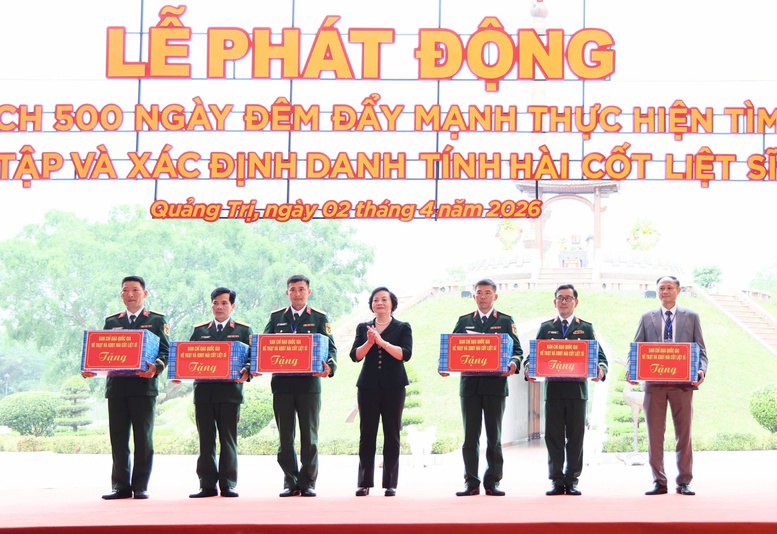
From the above difficulties and obstacles; stemming from the tradition and morality of "Drinking water, remembering the source", "Gratitude" of the nation; from the wishes of relatives of martyrs and the People; practically towards the 80th anniversary of War Invalids and Martyrs' Day (July 27, 1947 - July 27, 2027), on April 2, 2026, at the historical relic of Quang Tri Citadel, a sacred and heroic land, the National Steering Committee launched the "500-day and night campaign to promote the search, gathering and identification of martyrs' remains".
The campaign has profound political and humanitarian significance; it is the concretization of the direction of Party and State leaders, led by General Secretary and President To Lam, on the implementation of regimes and policies for people with meritorious services to the revolution.
This is not only an important political task, but also a move from the heart, a sacred responsibility of the entire political system, of the entire people to those who sacrificed for the country; at the same time, it is an opportunity to educate patriotism, national pride for today's and future generations.
The goal is to search for and repatriate about 7,000 sets of martyrs' remains.
The 500-day and night campaign promotes the search, gathering and identification of martyrs' remains", towards the 80th anniversary of War Invalids and Martyrs' Day (July 27, 1947 - July 27, 2027) taking place from March 15, 2026 to July 27, 2027; preliminary review in week 4 of November 2026; summary in week 4 of July 2027.
Campaign objectives aimed at:
Searching and collecting about 7,000 sets of martyrs' remains.
Complete the sampling of martyrs' remains for about 230,000 martyrs whose identities have not been identified in martyrs' cemeteries and the remains found and collected.
DNA testing of about 18,000 martyr remains samples.
Build, complete, and put into operation a gene database of relatives of martyrs who have not identified information to serve the work of comparing and identifying martyrs' remains.
Promote and complete the work of clearing bombs and mines, explosives to serve the search and repatriation of martyrs' remains; focus on key areas and core areas such as Tuyen Quang province (Vi Xuyen), Lao Cai province, Lang Son province and areas with information about martyrs' graves.


