
Need to immediately exempt hospital fees for cancer patients and those with serious illnesses
On the morning of December 2, continuing the 10th Session, the National Assembly discussed in the hall the Draft Resolution of the National Assembly on a number of breakthrough mechanisms and policies for the work of protecting, caring for and improving people's health; Investment policy for the National Target Program on health care, population and development for the period 2026 - 2035.
Contributing opinions to the Draft Resolution of the National Assembly on a number of breakthrough mechanisms and policies for the protection, care and improvement of people's health, delegate Nguyen Anh Tri (Hanoi Delegation) said that the policy of hospital fees exemption is a good condition to create a breakthrough in medical examination and treatment (stipulated in Article 2).
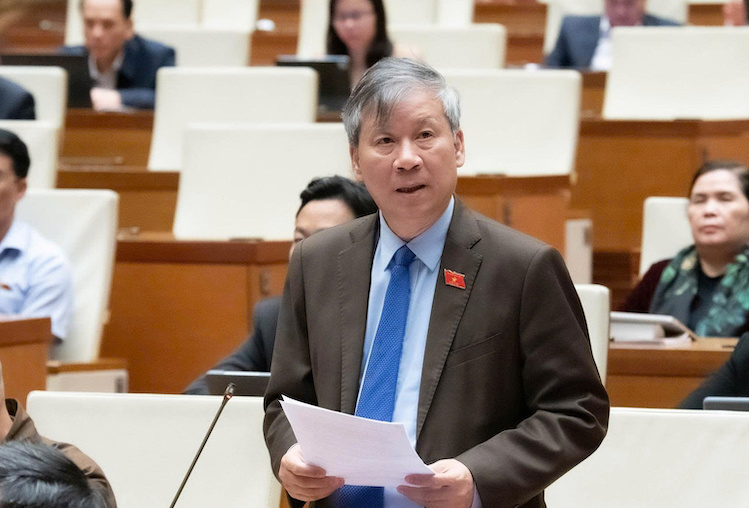
However, he said that it is necessary to re-compile Article 2 to clearly express this spirit, in 4 contents:
First, it is necessary to improve the quality of medical examination and treatment with good drugs, standard and updated diagnostic and treatment regimens.
Second, it is necessary to facilitate and proactively examine and treat patients in the nearest and most convenient place, implement substantial border clearance, not be dependent, and eliminate the ceiling for health payments.
Third, equality in benefits, in which, basic care must be arranged closely with the people, and there must be enough medicine to treat the people.
Fourth, it must be feasible and effective.
Emphasizing the need for a reasonable roadmap for hospital fees exemption, the delegate recommended that early hospital fees should be exempted for people who are being treated for difficult-to-treat, chronic cancers, and patients with dialysis because this is a group of people facing many difficulties.
"Cancer patients are being treated with expensive medicine. We hope to help immediately, not wait until 2030" - he said.
Mr. Tri also mentioned the mobilization of social resources to participate in people's health care, especially investment in developing medical examination and treatment facilities and diagnostic centers, testing centers, imaging diagnostic centers and function monitoring to provide high-quality health care services. It is necessary to create all conditions for the private health system to become an important driving force in protecting people's health care.
"Strive for the private health system to provide about 30% of medical examination and treatment services nationwide by 2030 and 45% by 2035" - the delegate set a goal.
Proposal to update drug list promptly
Also contributing opinions to this content, delegate Trinh Thi Tu Anh (Lam Dong delegation) said that voters currently reflect that the burden of treatment costs is still the biggest barrier for patients.
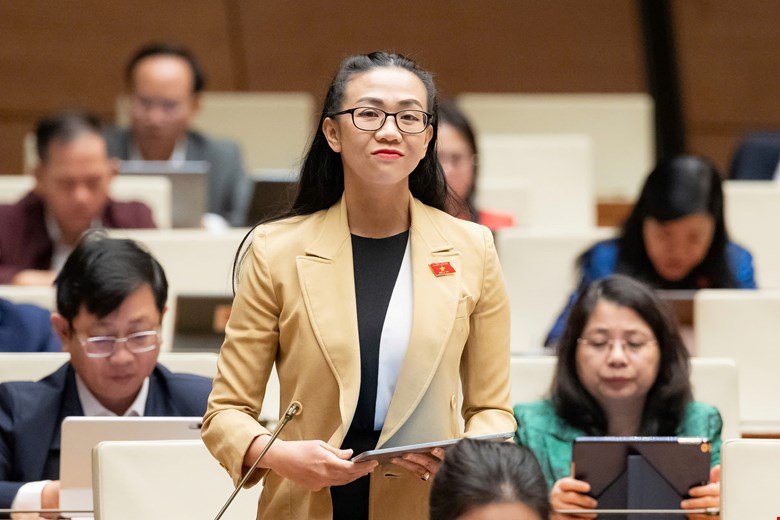
"Many new-generation drugs, targeted drugs, and immunotherapy have proven to be effective in treatment, helping to prolong life and improve quality of life. However, high costs prevent patients from accessing optimal treatment" - the delegate said.
Citing statistics on drug prices, which always account for about 33% of the cost structure of medical examination and treatment, the delegate said that this figure is still very high, although it has decreased by 40 - 50% compared to last year.
From there, delegate Tu Anh proposed to update the list of drugs in a timely manner, especially new-generation cancer drugs, air conditioners, and immunomodicals to reduce people's out-of-pocket expenses, ensuring the rights of more than 95.5 million people participating in current health insurance.
"I think we should prioritize drugs with strong clinical evidence and clearly proven effectiveness. The list needs to be flexibly updated and activated promptly according to international medical advances.
Along with that, in conjunction with expanding the portfolio with cost efficiency assessment, to ensure payment is both fundamental and sustainable. This is a direct and practical solution to help patients with serious illnesses and difficult family circumstances not be left behind in their treatment journey" - delegate Tu Anh said.


