
On the morning of December 2, the National Assembly discussed the draft Resolution on a number of breakthrough mechanisms and policies in protecting, caring for and improving people's health.
Delegate Pham Thi Kieu (Lam Dong delegation) was interested in the issue of salaries and allowances for human resources in the health sector (Article 3).
Allowing doctors, preventive medicine doctors, and pharmacists to be paid from the second level of professional titles when recruited is completely appropriate, timely, and has a direct impact in attracting and retaining high-quality human resources.
To achieve a comprehensive effectiveness of the policy, the delegate suggested that the drafting committee consider expanding the scope of this policy to nurses with deep professional qualifications and highly skilled medical technicians in specific technical fields such as imaging diagnosis, testing, positions that are seriously lacking and play an essential role in modern medical examination and treatment activities.
The delegate also highly appreciated the orientation of implementing hospital fee exemption at the basic level within the scope of health insurance benefits until 2030. This is a historic step, contributing to reducing the direct cost burden for people and strengthening social security.
However, to make the policy feasible and sustainable, the delegate suggested that the drafting committee should clearly and qualitatively define the concept of "basic level of hospital fees exemption" and be more clearly regulated on the scope, roadmap and operating mechanism in the direction of: Building a set of scientific and transparent criteria, along with a full assessment of the scenarios for balancing the health insurance fund and the State budget.
The delegate noted that when implementing the increase in benefits for policy beneficiaries and low-income people, it is necessary to calculate carefully to avoid creating too much pressure on the fund, ensuring policies but not sacrificing the financial sustainability of the health system.
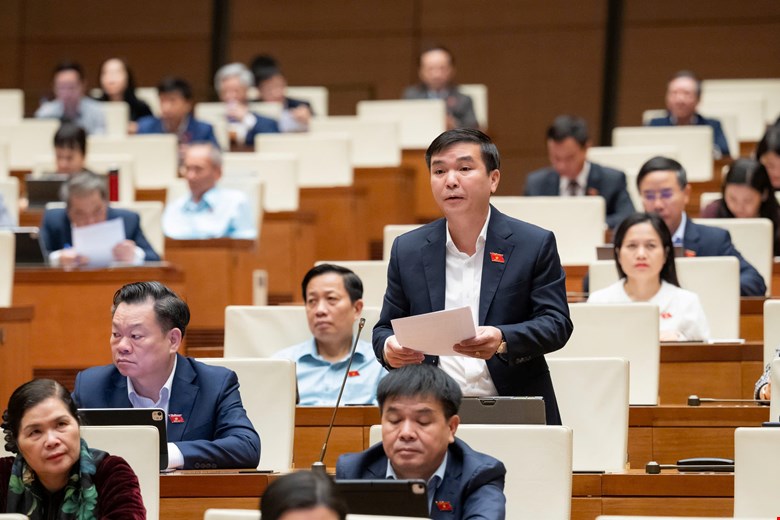
Regarding hospital fees exemption, delegate Ha Sy Huan (Thai Nguyen delegation) also suggested that the drafting agency supplement regulations on specific priority groups, such as the elderly, workers in toxic environments or workers in disadvantaged areas so that localities have a roadmap to proactively arrange resources for implementation and unify nationwide.
At the same time, the Government is assigned to issue a framework for basic screening examination and screening, avoiding the situation of scattered, formal, and ineffective implementation.
The delegate suggested adding to clearly identify the subjects of " disadvantaged people", "low-income people" and "some subjects that need priority" to ensure consistency in the process of organizing the implementation of the Resolution when it is passed.
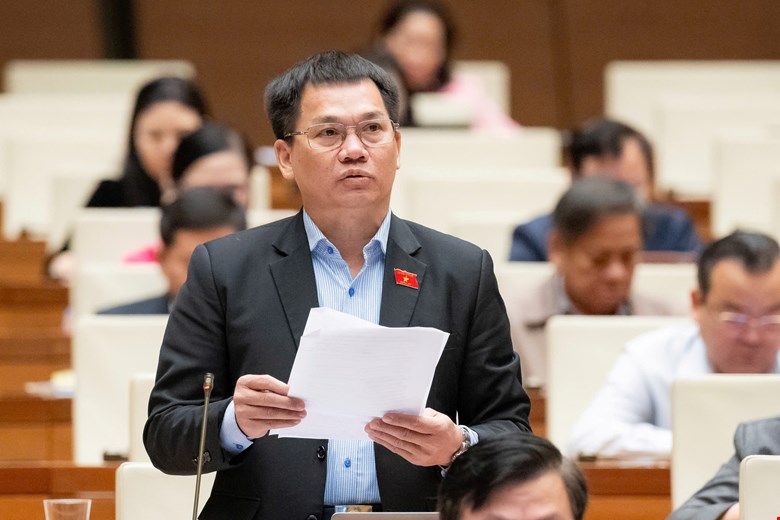
Sharing opinions on the roadmap to increase the level of benefits towards hospital fees exemption, delegate Duong Khac Mai (Lam Dong delegation) suggested that it is necessary to specify the implementation roadmap for each period from 3-5 years, associated with the indicators of balancing the health insurance fund and the State budget.
According to him, practice shows that the demand for medical examination and treatment increases rapidly with the rate of population aging and non-communicable diseases increasing. If the roadmap is not designed strictly, it can lead to the risk of imbalancing the health insurance fund in the medium and long term.
"People's health care is only truly sustainable when the health insurance fund is operated safely, stably and transparently," said the delegate.


