
The practical effectiveness of the sweeps
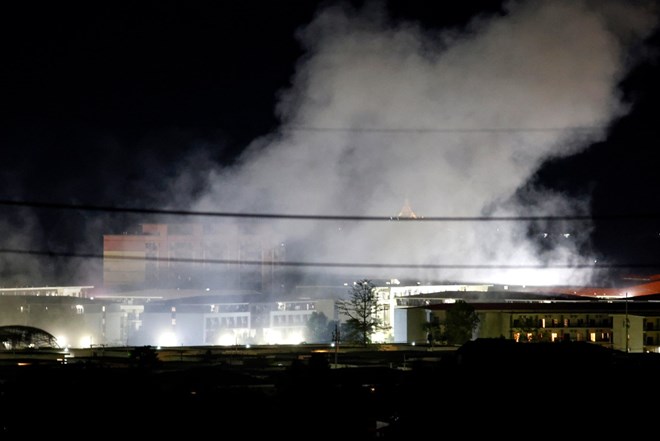
In early December, international media reported that the Myanmar government had demolished KK Park, a complex seen as a center for fraud activities in the border area.
Images of the leveling of buildings and dormitories that used to illegally detain workers have been widely published. However, regional analysts said that these moves have not solved the root problem.
According to field reports, most of the network operators have promptly moved to new locations before the authorities arrived.
Jacob Sims, an expert at Harvard University, said that the current scan campaigns are mostly formal. Instead of being dismantled, criminal organizations simply change their operating areas, continuing to maintain their huge money-making apparatus in more secretive areas.
The rise of the concept of "Fraudulent National"
The growing scale of this illegal industry has led to the emergence of the concept of "Scam State" in the international research community.
Similar to the term "Drug nation" used to describe the situation in Latin America, the term refers to places where cybercrime has developed into a spearhead economic sector, capable of dominating legal economic activities.
The latest statistics show the severity of the problem. As of the end of 2024, revenue from online fraud activities in the Mekong sub-region is estimated at 44 billion USD per year.
globally, the scale of this underground market is forecast to be on par with the international drug trafficking industry.
Technolizing fraud processes
The method of operation of criminal groups has shifted from small-scale fraud to industrial models with the effective support of technology. The most popular scenario today is the "pig slaughter" scenario. Accordingly, scammers will persistently build trust with victims for a long time before convincing them to invest large sums of money in fake financial platforms.
Notably, these organizations have begun to apply artificial intelligence (AI) to automate translation and use deepfake technology to make fake video calls with relatives or financial experts. The sophistication of technology has caused the average amount of damage per victim to skyrocket, in some cases losing hundreds of thousands of USD.

Relationship with the management apparatus
The factor that makes it difficult to thoroughly handle this problem is the sponsorship of a part of the local government. Many large-scale fraud complexes are operating openly in special economic zones or border areas in Laos, Cambodia and Myanmar.
International organizations have pointed out signs of the inter-related relationship between cybercriminals and local authorities. The case of former Mayor Alice Guo in the Philippines being sentenced for being involved in a fraud center is a typical example.
Mr. Jason Tower - an expert from the American Institute of Peace - commented that in some areas, these criminal networks are not only operating freely but seem to have become a part of the structure of the local economy, making external intervention extremely complicated.


