
Grassroots authorities proactively propagate
The official adjustment of the receiving time frame at Da Phuoc landfill, which has shifted all 1,800 tons of garbage from day to night, has created a major challenge in the direction of traffic and adjustment of garbage dumping habits for the city's waste treatment system.
In this situation, in October, the Ho Chi Minh City People's Committee issued Official Letter No. 2805, requiring the People's Committees of wards, communes and related units to operate stably, ensuring that environmental sanitation is not interrupted during the process of converting transportation plans.
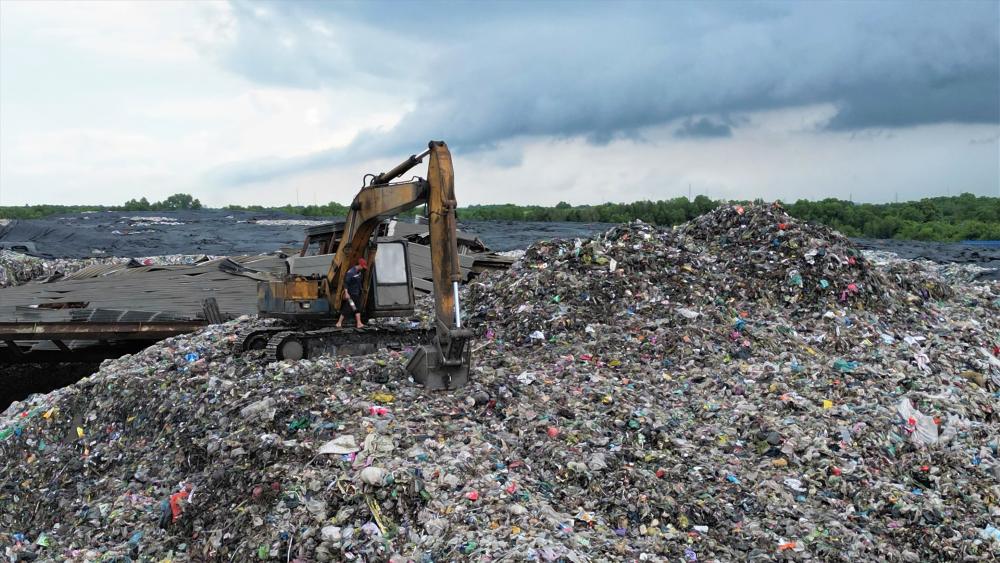
At the same time, the Department of Agriculture and Environment of Ho Chi Minh City (DONRE) requires the People's Committees at the commune and ward levels, in coordination with collection units and the Project Management Board, to inform people about adjusting the time of garbage collection from day to night. Inspection and supervision at transit stations have also been strengthened to ensure no congestion.
In reality, in wards and communes, preparation has been effective. In Binh Hung Hoa ward, the Economic, Infrastructure and Urban Affairs Department has deployed Official Letter No. 12068/SNNMT-CTR of the Department of Natural Resources and Environment to 81 Quarters and all units collected via Zalo group.
Speaking to Lao Dong newspaper, Mr. Pham Hoang Khanh, Vice Chairman of Binh Hung Hoa Ward People's Committee, said that there are 36 collection units in the ward with a total volume of about 120 tons of waste per day.
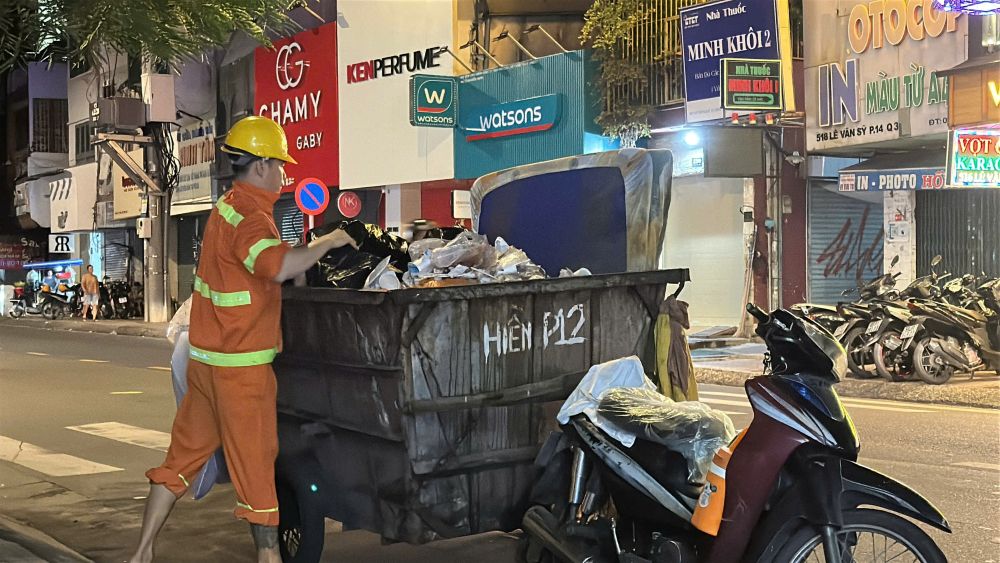
Mr. Khanh informed: "In the ward, there are 24/27 collection and transportation units coming to Binh Long meeting place from 6pm the previous day to the next morning. Therefore, when the Department of Agriculture and Rural Development adjusts the time frame for receiving waste at the Da Phuoc landfill, it will not greatly affect the ward's waste collection and transportation work".
Binh Hung Hoa Ward currently receives 20 tons of waste per shift to Phuoc Hiep landfill and 100 tons per night shift to Da Phuoc, ensuring a total of 120 tons are stably treated.
Stable collection, no longer passive when Da Phuoc landfill changes hours
Similarly, a representative of Phu Dinh Ward People's Committee shared that the ward has proactively announced the time to receive new waste from October 15. The ward encourages people to deliver garbage directly to the collection unit or leave it in packaging or containers in front of their house waiting for collection.

Phu Dinh Ward People's Committee said that changing the time to receive garbage in Da Phuoc after 6pm does not cause difficulties. This work was piloted by the People's Committee of District 8 (formerly) when converting garbage collection from day shift to night shift on Pham The Hien and Phu Dinh streets.
Thanks to that, Phu Dinh ward has eliminated large garbage collection points, converted them into small appointment points, no longer storing garbage during office hours, contributing to reducing pollution.

Up to now, the Ward People's Committee has not received any feedback from people regarding the environmental sanitation situation.
The local government affirmed that it will continue to inspect and monitor the situation of garbage reception at the appointment points to ensure that garbage does not clog, causing environmental pollution and losing the urban beauty.
According to a report from the Department of Natural Resources and Environment of Ho Chi Minh City, the total volume of waste from 14 districts (formerly) coordinated to Da Phuoc landfill was about 4,550 tons/day, equivalent to 443 trips. Before December 1, 2025, the amount of waste was divided into two shifts: daily shift about 1,800 tons (175 shifts) and night shift about 2,750 tons/day (268 shifts).
The fact that Da Phuoc landfill changed the reception time from 6:00 p.m. the previous day to 6:00 a.m. the following morning, from December 1, means that all 1,800 tons of garbage from the daily shift had to be rushed to night shift transportation, creating pressure on collection and transportation units.
The Department of Agriculture and Environment of Ho Chi Minh City has proposed a number of solutions such as: transferring the volume of domestic waste in some urgent areas that are likely to be congested during the day to the Waste Treatment Complex in Cu Chi district (formerly), about 450 tons/day. Transfer the daily shift to transport the night shift to Da Phuoc processing area about 1,350 tons/day.


