
First of all, I highly appreciate the initiative of Lao Dong Newspaper to organize the Workshop with the theme "Energy shift - Driving force for double-digit growth goals".
I think this is not just a topical issue but a strategic issue for the future development of the country.
As we know, for many years, we have often recognized that ensuring energy is enough electricity and enough gasoline for production and consumption. That approach over time has always been correct, but in fact, today it is no longer enough.
We are witnessing the world enter a new stage of competition, fiercer and more intense competition where: energy is not only the input of the economy but has become a decisive factor in the autonomy and competitiveness of an entire nation. A country wants to improve its independence and self-reliance, then energy autonomy is particularly important. Autonomy helps the economy become less dependent on external energy supply and demand fluctuations, implement socio-economic development plans more stably, or in other words, develop more sustainably.
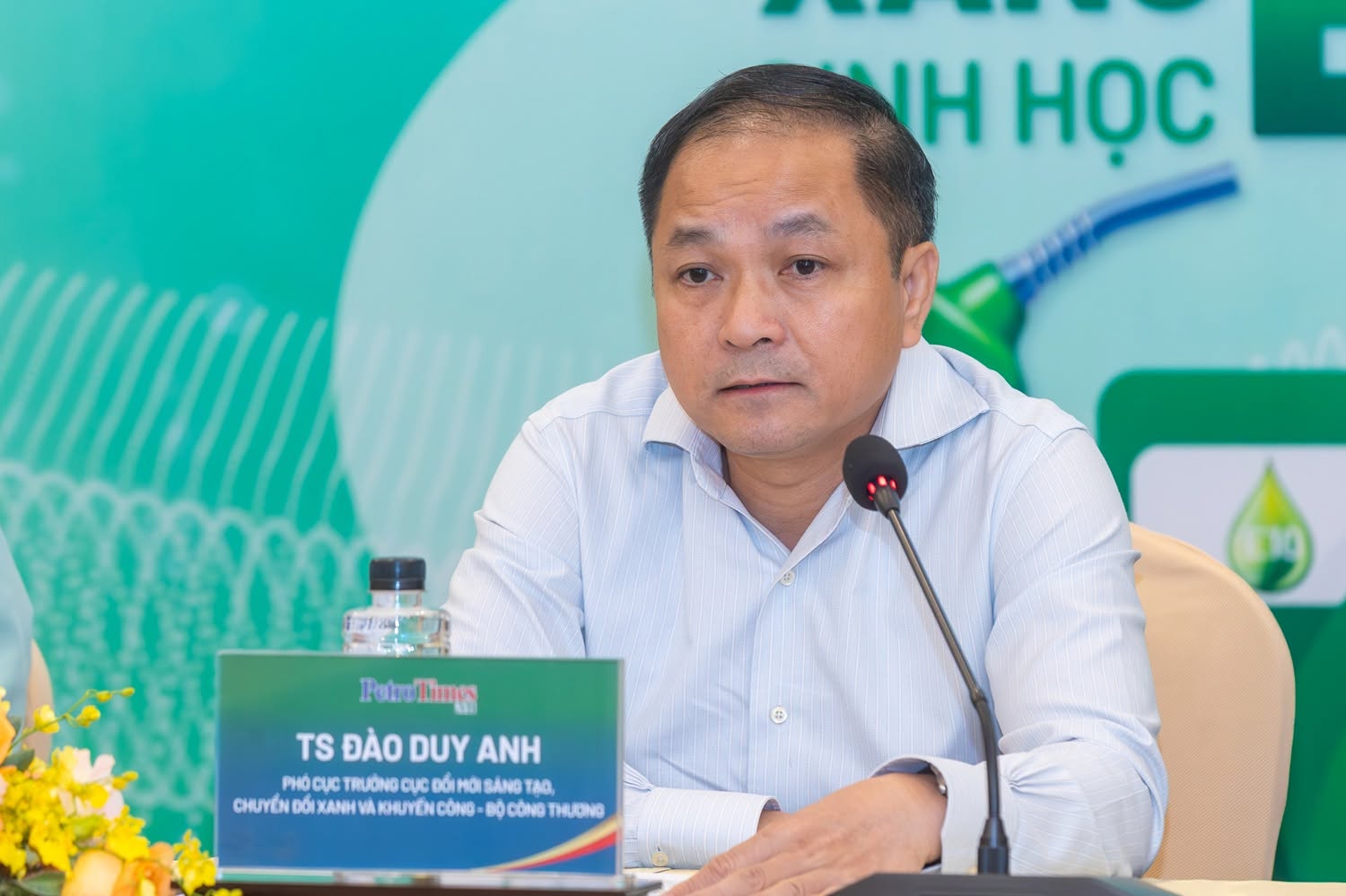
For businesses: Currently, products produced must not only compete by price or quality, but also compete by methods and energy for production. A greener, cleaner, lower-emission and more environmentally friendly production process will have an advantage; Transport vehicles that want to enter a country, a territory or participate in a global playground must use greener fuels with fewer emissions to protect the living environment for humanity.
Therefore, shifting energy towards a greener direction, developing renewable energy sources, reducing dependence on finite fossil fuels, and improving energy self-sufficiency are inevitable trends of humanity, not just of any particular country.
This is also the consistent spirit in the guidelines and policies of our Party and State, which is concretized by a number of typical guiding documents such as:
Resolution No. 55-NQ/TW, dated February 11, 2020 of the Politburo on orientations for Vietnam's national energy development strategy to 2030, vision to 2045 has established a foundation for prioritizing clean fuels; Resolution No. 70-NQ/TW, dated August 20, 2025 of the Politburo on ensuring national energy security to 2030, vision to 2045 has requested the implementation of solutions to reduce dependence on fossil fuels, reduce emissions, and protect the environment; Resolution No. 57-NQ/TW identifies science and technology, innovation and digital transformation as a breakthrough driving force of growth;
Decision No. 1658/QD-TTg dated October 1, 2021 of the Prime Minister approving the National Strategy on Green Growth for the period 2021-2030, vision 2040; Decision No. 876/QD-TTg dated July 22, 2022 of the Prime Minister approving the Action Program on Green Energy Transition, Reducing Carbon and Methane Emissions of the transport sector; Decision No. 215/QD-TTg dated March 1, 2024 of the Prime Minister approving Vietnam's national energy development strategy to 2030, vision to 2045... all set out goals for the development of renewable energy, green energy, and CO2 emission reduction...
The above Resolutions and Decisions are guidelines, policies, and guiding viewpoints of the Party and Government for the development of a different industry, field, and issue of the country, but all affirm a consistent viewpoint, which is that national development must be associated with environmental protection, development of new energy sources, renewable energy, reducing dependence on fossil fuels, gradually improving energy self-sufficiency, and ensuring energy security for the country.
With the goal of double-digit economic growth this year and in the coming years, strongly developing new energy sources to improve self-reliance to always stabilize energy supply for economic development is a decisive factor to achieve the set goals.
In recent years, the world has witnessed three major trends. The first is the energy transition process taking place more and more strongly.
Second, green standards are gradually becoming mandatory commercial standards.
Third is the restructuring of the global supply chain towards prioritizing countries with green investment environments and sustainable development. For example, the requirement for sustainable aviation fuel use SAF of the European Union and the International Civil Aviation Organization ICAO, or the Carbon Border Ajustment Mechanism of the European Union (CBAM), ESG standards, carbon markets or "zero" net emission commitments are creating very profound changes in the energy industry as well as production and business activities around the world. This poses a very clear requirement for Vietnam:
It is necessary to transform to adapt to the trends and requirements of reality, if we transform slowly, the opportunity to participate and trade integration will decrease and costs will increase.
Rapid and successful transformation will open up many opportunities for integration and improve the competitiveness of the economy.
In other words, green transformation is not a burden or responsibility to be implemented for external reasons, but rather the internal needs of the country to develop a prosperous economy while still maintaining a healthy living environment for the people, green transformation also creates opportunities for Vietnamese businesses to participate more deeply in production and trade chains with higher added value. And above all, it is the path for the country to improve its energy self-sufficiency, ensure energy security to contribute to the overall national capacity.
From the perspective of the Department of Innovation, Green Transformation and Industrial Promotion, Ministry of Industry and Trade, we believe that energy issues need to be approached with a new mindset:
If in the past we talked a lot about energy security in the sense of ensuring sufficient supply, now it is necessary to expand it to the concept of new generation energy security, in the new era. It is not only about sufficient energy, but also that energy must be greener, cleaner, and renewable. The country's energy potential must be better resistant to geopolitical fluctuations, must diversify supply sources, not depend on one source of raw materials, fuel or certain markets. Especially, it is necessary to improve energy self-reliance, and self-reliance must be achieved by renewable energy sources to ensure sustainable development.
In the overall energy transition process, the deployment of E10 bio-gasoline from June 1st is a solution to the transition process, a specific and practical step towards green transformation in fuel use. It can be said that E10 is not the destination, it is just the beginning, and we need to recognize that the greatest significance of E10 lies not only in the 10% ethanol ratio in each liter of gasoline, but more importantly, E10 has opened up development opportunities for the new fuel production industry - a chain of raw material value, production, supply, and use of greener, cleaner fuels with higher added value for the economy.
The initial results in the first days of implementation nationwide from June 1 to now have shown that the market is basically stable, supply is guaranteed, and people are receiving it more positively than initially predicted. One thing that is once again affirmed: When policies are carefully prepared, have a suitable roadmap and are fully disseminated, it is entirely possible to create social consensus.
In the coming time, our task is not only to successfully implement the E10 gasoline roadmap, but more importantly to continue to develop an innovative ecosystem in the energy sector, strongly develop green energy sources, promote sustainable production and consumption models, improve the localization rate in the energy supply chain and gradually develop new industries based on the advantages of the green transition process.
Implementing well the tasks set out for green growth, energy transition will become a new driving force for growth, helping to improve labor productivity; helping businesses improve competitiveness, the economy develops but carbon emissions decrease, contributing to reducing global climate change. It is the foundation for Vietnam to participate more effectively in the green technology race taking place around the world, towards the goal of becoming a developed, high-income country and people enjoying a healthy living environment by 2045.



