
Mr. Dao Viet Long, Deputy Director of Hanoi Construction, said that to effectively implement the low-emission zone, the city will strongly strengthen the public transport system and consider this an important pillar.
Regarding buses, the Department is developing a plan to arrange routes to serve travel needs, especially routes connecting from the outside to Ring Road 1.
The orientation is to use mini electric buses, because this type is suitable for the infrastructure of old towns, old streets - small roads, high density. Small, clean, flexible vehicles, minimizing traffic obstruction. In December 2025, the consultant will have a first report for the Department to consider.
Regarding urban railways, Hanoi identifies a network of 15 routes - more than 600 km - as a backbone to reduce personal vehicles.
In addition to the existing lines in operation, the underground section of railway line 3.1 (Nhon - Hanoi Railway Station) is expected to complete the tunnel drilling work in the first quarter of 2026 and start implementing equipment installation, striving to complete in 2027; continue research and preparation for route 3.2 (Hanoi - Hoang Mai station) in 2026.
At the same time, route 2.1 (Nam Thang Long - Tran Hung Dao) started construction on October 9, 2025; route 5 (Van Cao - Hoa Lac) will start construction on December 19, 2025 and is expected to be completed in 2030.
With breakthrough mechanisms from Resolution 188 of the National Assembly and lessons learned from routes 2A and 3.1, Hanoi is confident that it will complete the set goals to ensure the capacity to transport large volumes, meeting daily travel needs in low-emission zones and the whole city.
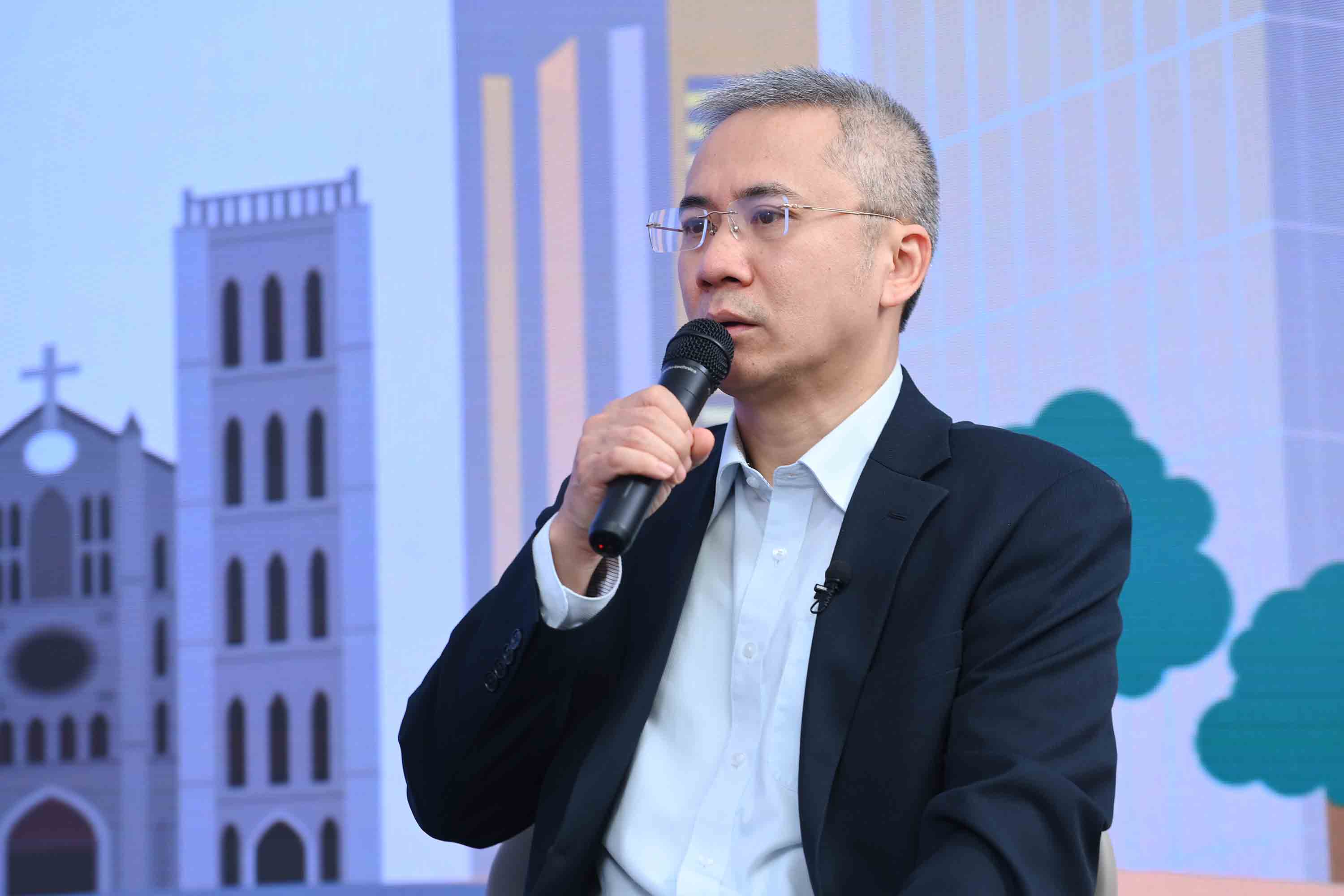
Mr. Phan Le Binh - transport expert, Head of the OCG Japan Consulting Office said that the process of building the metro system in Hanoi still takes a lot of time, so the city needs to focus on investing, focusing on the role of buses.
According to Mr. Binh, this is a very good time for the city to deploy more routes dedicated to buses in the area, because currently everyone shares the same awareness of prioritizing public transport and limiting private vehicles.
From a practical perspective, transport expert Phan Le Binh also pointed out the disadvantages of buses such as: people have to walk at the beginning and end of the trip; the number of stops is quite large, so the total journey is quite long compared to private vehicles...
Because of the above inconveniences, Hanoi is having to prioritize bus users with the same ticket price.
"Going by bus is very cheap, but this type of public passenger transport is not prioritized on the road, so it does not create advantages in speed and time. Therefore, it is impossible to attract a large number of people to use it" - the traffic expert said.
Mr. Phan Le Binh said that with some routes that cannot be invested in infrastructure, it is necessary for the Department of Construction to propose opening additional private lanes for buses. Other vehicles are not allowed to encroach on the lane and violations must be strictly handled.
"If we can do that, I think Hanoi will promote the conversion from personal vehicles to public transport quickly and sustainably" - Mr. Binh said.


