
On December 2, news from the Gia Lai Provincial People's Committee said that it is reviewing and proposing to competent authorities to direct the handling of thousands of hectares of dead and ineffective rubber in the area.
The program to convert more than 50,000 hectares of poor forests to rubber cultivation was a major policy more than 17 years ago.
Currently, in addition to the area of rubber growing and developing normally, more than 17,000 hectares are dead, with stunt blades and underdeveloped.
Many businesses are leased land but cannot create jobs for workers and do not create economic efficiency from land.
To improve land use efficiency and avoid resource waste, Gia Lai province plans to propose to competent authorities to allow many enterprises to change their purpose from rubber planting projects to other projects such as livestock farming, renewable energy, crop cultivation, etc.
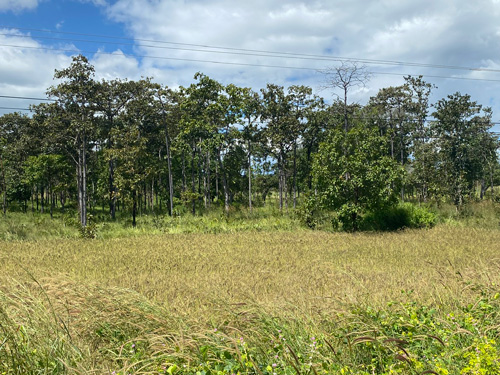
However, there needs to be a special mechanism, when converting the land area to another purpose, the enterprise will pay a one-time replacement forest planting fee.
The People's Committee of Gia Lai province also proposed returning some land areas to local management to arrange production and provide land to poor and near-poor households to stabilize their lives. The principle is that land granted to people must be agricultural land and can be cultivated.
It is expected that more than 400 hectares of rubber land will be returned to the communes for management, mainly from two units: Corporation 15 - Branch 710 and Binh Duong Company Limited.
There are three enterprises proposing to research and implement the renewable energy project including Quang Duc Company, Trang Duc Company and Duc Long Gia Lai Joint Stock Company. Through a pilot survey, border communes such as Ia Lau, Ia Mo, Ia Puch have good, stable wind potential and high solar thermal radiation.
For a long time before that, a series of enterprises had experimented with growing some other types of trees besides rubber but this was not feasible and low efficiency. Specifically, Chu Se Rubber One Member Co., Ltd. planted hybrids, cajuput, and goji berries, but a large number of trees died. Binh Duong Company and Branch 710 grow tech wood but the mortality rate is high, the growth of the trees is not uniform.


