
Changing old habits
In Nam Nen commune, Dien Bien province, the story of cattle raising is associated with the practice of freeing or keeping cages under the floor. However, this mindset is gradually being eliminated.
From the end of September and the beginning of October 2025, the People's Committee of Nam Nen commune has established a team to inspect compliance with legal regulations on environmental protection at 35 livestock and poultry farming households in the area.
Although some households are conscious in treating livestock waste and collecting waste properly.
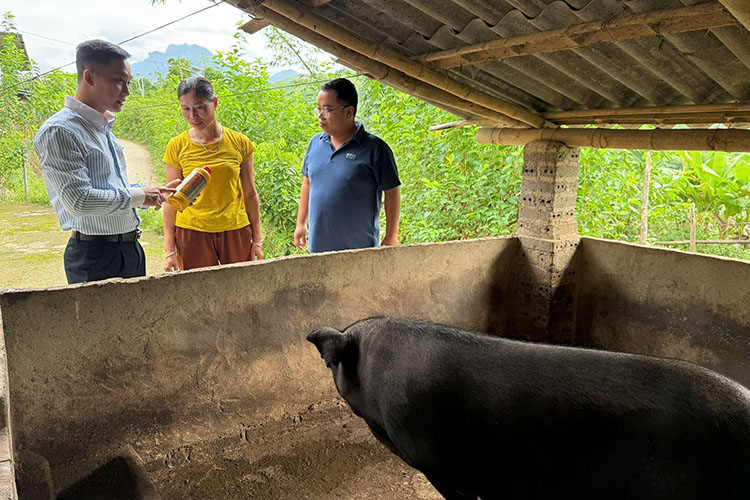
However, many households have not fully implemented environmental protection requirements, leading to a situation where waste is not thoroughly treated, causing odor and risk of water pollution, affecting the landscape and the daily life of surrounding people.
The new point in the way of doing things in this mountainous commune is in addition to mouth-catching, switching to signing a commitment to strictly implement environmental protection measures in accordance with the provisions of law.
In particular, not discharging waste directly into the environment, ensuring a safe distance between the livestock farming area and the residential area, ensuring hygiene, not throwing garbage or animal carcasses into the environment, reporting immediately when there is an epidemic...
Ms. Luong Thi Ngoan (Nam Nen commune) said: "Before, I thought that raising pigs and chickens must have a foul smell, and the wastewater that was poured into the garden was a good tree. But the commune officials explained that it must be done correctly. Now the barn must be covered, the waste must be contained, and must not be discharged haphazardly."
According to the leader of Nam Nen Commune People's Committee, signing the commitment is a " strong medicine" to rectify old habits. "We don't just go to check, but the important thing is to guide. When seeing the house next to it clean and the pets have few diseases, people will follow suit" - said the leader of Nam Nen commune.
Mobilizing the strength of the people
Determining environmental protection as an important task, contributing to the completion of environmental criteria in building new rural areas, Muong Pon commune has mobilized all people to participate in environmental protection.
Responding to the call, people, youth union members, and women's unions in villages simultaneously took action to collect garbage, clear forest dust, and clean national highways, alleys, and public areas.
Mr. Nguyen Gia Tuan - Vice Chairman of Muong Pon Commune People's Committee determined that mobilizing the strength of the whole community is a key factor.
The pioneering and exemplary spirit of each individual joining hands to clean up, collect garbage in the right place... will help the village look cleaner and more beautiful. At the same time, spreading awareness of environmental conservation and protection in the community.
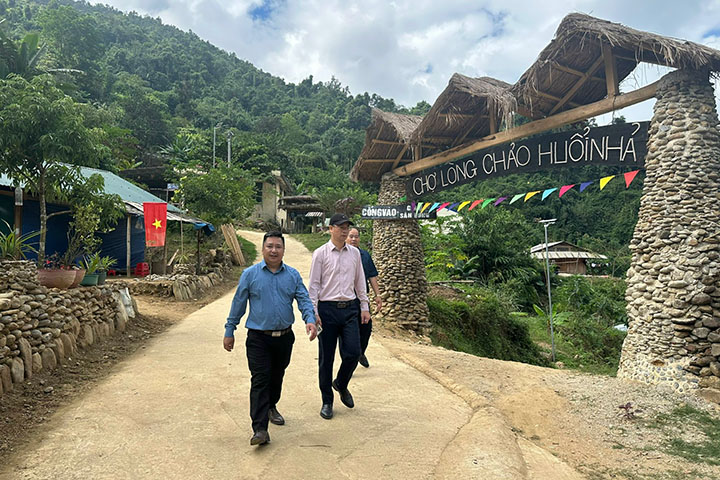
In fact, in Muong Phang commune - a historical land of the Dien Bien Phu Campaign Command, the movement of maintaining hygiene has spread to every house.
If previously, waste treatment in rural areas depended on the government's campaigns, now, in many places, people have proactively classified waste.
In Phang 1 village, Muong Phang commune, general cleaning work is maintained regularly twice a month, assigned to the women's association in charge. The types of waste can be recycled by people and classified and collected separately; organic waste is grown as fertilizer for crops. This model is being replicated in many other villages in the commune.
Mr. Luong Van Hai (Muong Phang commune) said: "If our house is clean and our alley is clean, the whole village will be beautiful. In the past, garbage was often thrown ashore in streams, now every household is sorting it. The environment is fresh, and tourists coming will feel very proud".
According to the leader of the Economic Department of Muong Phang commune, with a large area of 3 merged communes, maintaining environmental sanitation is a challenge. However, with close guidance and continuous propaganda, people have formed the habit of periodically cleaning and sorting garbage right at their households. The commune identifies environmental sanitation as an important criterion to develop eco-tourism and attract visitors to Muong Phang.
After the two-level government came into operation, Bung Lao commune focused on promoting the movement of the entire population to participate in general environmental sanitation, sweeping the village roads, alleys, residential areas, agencies, schools, markets and public areas.
In particular, socio-political organizations have become the core force, directly participating in organizing, guiding and supervising the movement.
Mr. Lo Van Duong - Secretary of the Bung Lao Commune Youth Union said that the "Banh Hoa Trang" youth project has become a brand with the image of a banh hoa tree along National Highway 279 being carefully cared for.
"The shock of young people not only beautifies the landscape but also contributes to building a bright - green - clean - beautiful image of the homeland" - Secretary of the Bung Lao Commune Youth Union said.
People directly benefit
According to statistics, in the period of 2021-2025, the Women's Union of Dien Bien province has implemented many practical activities, contributing to the effective implementation of the national target program on new rural construction, associated with the campaign "Building a 5-no, 3-clean family".
The Association has built 10 key models to nurture good values, develop the Vietnamese family value system and spread the movement of "5 no, 3 clean".
In particular, specific models on waste classification at source and organic waste treatment using IMO4 products have been given specific instructions, helping people change their habits and raise awareness of environmental protection.
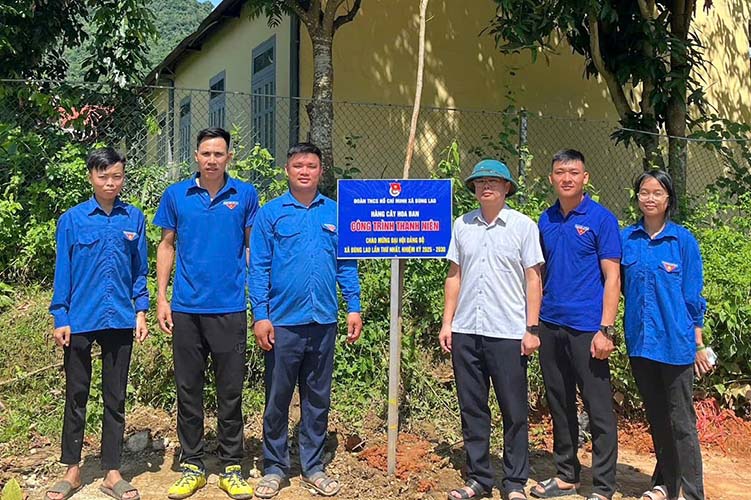
Promoting its shock role, the Provincial Youth Union has implemented many environmental protection activities such as collecting 30 tons of waste, clearing 58km of sewers... These activities have attracted over 62,000 union members and young people to participate, demonstrating a sense of responsibility, contributing to creating a new, green - clean - beautiful appearance for rural areas.
To date, 92.2% of production, trading, aquaculture establishments and craft villages have ensured environmental regulations; 90% of concentrated residential areas no longer have stagnant domestic wastewater, the landscape is increasingly green - clean - beautiful.
Waste management is of concern, with 90% of domestic solid waste and non-zedicated waste collected and treated according to regulations.
In the period of 2021-2025, the whole province has over 90% of households in the area with waste heaters, bathrooms, and hygienic water storage equipment, and waste classification at source. The rate of plastic waste collected, recycled and treated reaches 90%, contributing to building a safe and sustainable living environment.
According to Mr. Mua A Vang - Alternate Member of the Party Central Committee, Deputy Secretary of the Provincial Party Committee, Chairman of the Vietnam Fatherland Front Committee of Dien Bien province, in recent years, the Front at all levels has promoted its role as a bridge between the Party, government and people, linking the environmental protection movement with the goal of developing advanced new rural areas and civilized urban areas.
Every year, the Vietnam Fatherland Front of the province organizes many activities in response to World Environment Day, campaigns "Making the world cleaner", "Combating plastic waste", " Say no to single-use plastic products"...
In addition, the Front at all levels of Dien Bien province also promoted its role in monitoring and social criticism in the environmental field. The Front levels have recommended that local authorities invest in improving infrastructure for collecting and treating rural waste, encouraging the development of recycling models and using environmentally friendly products.
A clean environment not only helps improve the quality of life for ethnic minorities but is also the "key" for Dien Bien to develop sustainable tourism and clean agriculture.


