Wave of investment proposals for BT projects in Ho Chi Minh City
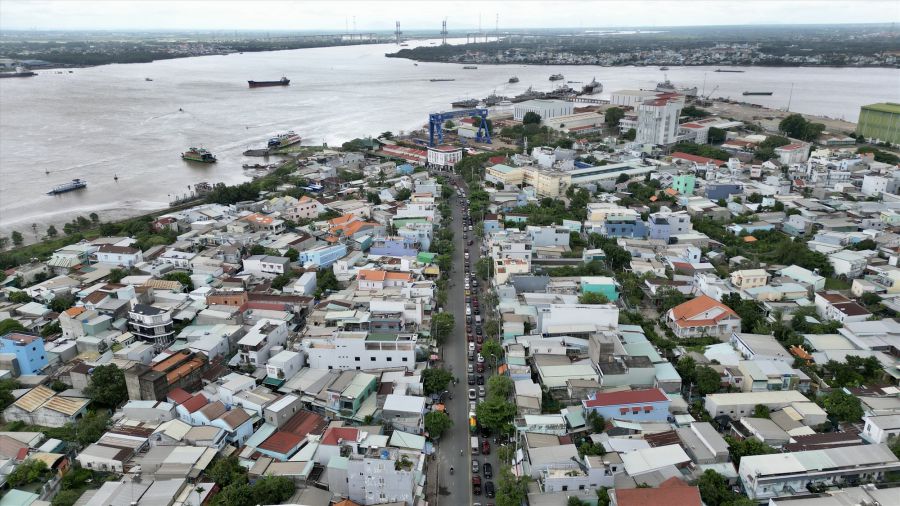
Mr. Nguyen Van Thanh (Thu Duc Ward) drove his family to Can Gio to visit Rung Sac. When he arrived at Huynh Tan Phat Street, he had to queue up and wait more than an hour to get to Binh Khanh ferry. "The city has planned to build Can Gio bridge for a long time but has not implemented it yet, and there are continuous traffic jams like this, who will dare to go on weekends anymore!" Mr. Thanh lamented.
The construction of Can Gio Bridge has been proposed by Ho Chi Minh City since 2016 under the BOT (build - operate - transfer) model combined with BT (build - transfer) with a total capital of about 5,300 billion VND. When the 2020 PPP Law abolished the BT contract, the project was forced to adjust the plan.
By December 2023, the Department of Transport (now the Department of Construction) had completed the project's pre-feasibility study report. Can Gio Bridge has a total length of 7.3km, including nearly 3km of main bridge and more than 4.3km of approach road; scale of 6 lanes, designed speed of 60km/h, total capital of about 11,000 billion VND under the BOT form. However, due to not being updated in the related planning, the project could not be submitted to the Ho Chi Minh City People's Council, continuing to be delayed by 2 more years. Currently, two domestic enterprises are proposing to build bridges under the BT form.
A similar situation also occurred with Thu Thiem 4 Bridge, when Ho Chi Minh City had applied to appoint an investor under a BT contract since 2017 with a total capital of more than 5,200 billion VND.
In 2023, the Department of Transport proposed 5 clearance options for Thu Thiem 4 Bridge, with a total preliminary investment of VND 4,365 to VND 8,953 billion under the BOT contract. However, the project has not yet reached a consensus and continues to be behind schedule. Currently, Thu Thiem 4 Bridge is also proposed by a business to be implemented under the BT form.
Some other major bridge projects are also proposed by businesses to be implemented under BT contracts, such as Phu My 2 bridge connecting Ho Chi Minh City - Dong Nai with a total investment of nearly 13,000 billion VND, the sea-crossing route connecting Can Gio - Vung Tau...
A series of metro lines are also being proposed under the BT form, associated with exploiting land funds according to the TOD model (urban development according to the orientation of public transport).
Masterise Group proposed to prepare an investment dossier for metro No. 3 (An Ha - Hiep Binh Phuoc), 45.8km long. The Industrial Investment and Development Corporation (Becamex) proposed to study the extension of metro line 1 from Binh Duong New City to Suoi Tien (nearly 30km) and Bau Bang - Cai Mep railway line (127km). Sovico Group proposes to study metro line No. 4 (Dong Thanh - Hiep Phuoc), over 47km long...
New mechanism creates a strong boost for investors
It can be seen that the wave of BT project proposals in Ho Chi Minh City has increased sharply again when businesses have noticed positive changes from Law No. 57/2024/QH15 amending and supplementing a number of articles of the Law on Planning, the Law on Investment, the Law on PPP and the Law on Bidding.
In particular, the amended PPP Law allows the re-application of BT contracts and clearly stipulates the payment mechanism using land funds or the State budget, thereby removing bottlenecks that have caused many BT projects to "frozen" for many years. Law 57/2024/QH15 tightens the investor selection process through transparent bidding...
By June 2025, the National Assembly will continue to pass Law No. 90/2025/QH15 (amending and supplementing a number of articles of the Law on Bidding, the Law on PPP, the Law on Investment, the Law on Public Investment, etc.) allowing strong decentralization of authority to approve investment policies from the Prime Minister to the Provincial People's Committees for 7 project groups.
Avoid getting into a car crash
A representative of the Ho Chi Minh City Department of Construction said that BT is a form that the city applied early and brought high efficiency, then expanded to the whole country. Many projects have been successful in paying investors with land funds such as Phu My bridge approach road, D3 road connecting Hiep Phuoc port, Thu Thiem 2 bridge; cash payment projects such as Kenh Te 2 bridge, Ong Lanh, Van Thanh 2, Nguyen Tri Phuong, Saigon 2 have also achieved positive results.
However, some BT projects have fallen into a deadlock due to legal problems and payment mechanisms. A typical example is the flood prevention project worth nearly VND10,000 billion, started in 2016, although more than 90% has been completed, it had to stop in November 2020 due to lack of capital and no land fund to pay. The arising costs are huge, with interest alone being over 1.7 billion VND per day.
need for a transparent BT contract to ensure the harmony of interests of all parties
* Dr. Chu Cong Minh - Ho Chi Minh City University of Technology - warned that Ho Chi Minh City's transportation BT projects have a very large scale of capital, so the risks are also high. Lack of transparency was once the reason for BT's suspension; "land exchange for infrastructure" can easily cause losses if land valuation is not close to the market. Slow site clearance is also a factor that causes progress and costs to increase.
"Therefore, the cooperation mechanism between the city and investors must be built clearly and transparently to ensure project efficiency and harmonize the interests of all parties" - Mr. Minh emphasized.
* According to Dr. Tran Quang Thang - Director of the Ho Chi Minh City Institute of Economics and Management, the entire process from proposal, bidding, land fund valuation to payment must be made public and assessed independently to avoid loss of public assets. Second, financial risks must be clearly distributed, limiting budget obligations and avoiding over-reliance on commercial loans. The mechanism for adjusting prices, fines - bonuses and resolving disputes must be strictly regulated, ensuring project progress and efficiency.
Third, investors' capacity needs to be comprehensively assessed in terms of finance, technology and governance, combined with competitive bidding to select reputable partners. Finally, site clearance, resettlement, independent supervision, audit and periodic reporting must be seriously implemented to reduce legal and social risks. Thanh Huy