
At the preliminary conference on press work in the first 6 months of 2026 held on the afternoon of June 9, Ms. Nguyen Thi Thu Ha - Deputy Director of Lao Cai Provincial Department of Home Affairs - said that on June 8, the Standing Committee of the Lao Cai Provincial Party Committee met and gave guidelines for the overall plan for arranging villages and residential groups in the province.
Accordingly, Lao Cai is a border mountainous province with a natural area of 13,255 km2, a population of over 1.8 million people, including 99 commune-level administrative units (10 wards, 89 communes). The whole province currently has 2,349 villages and 557 residential groups.
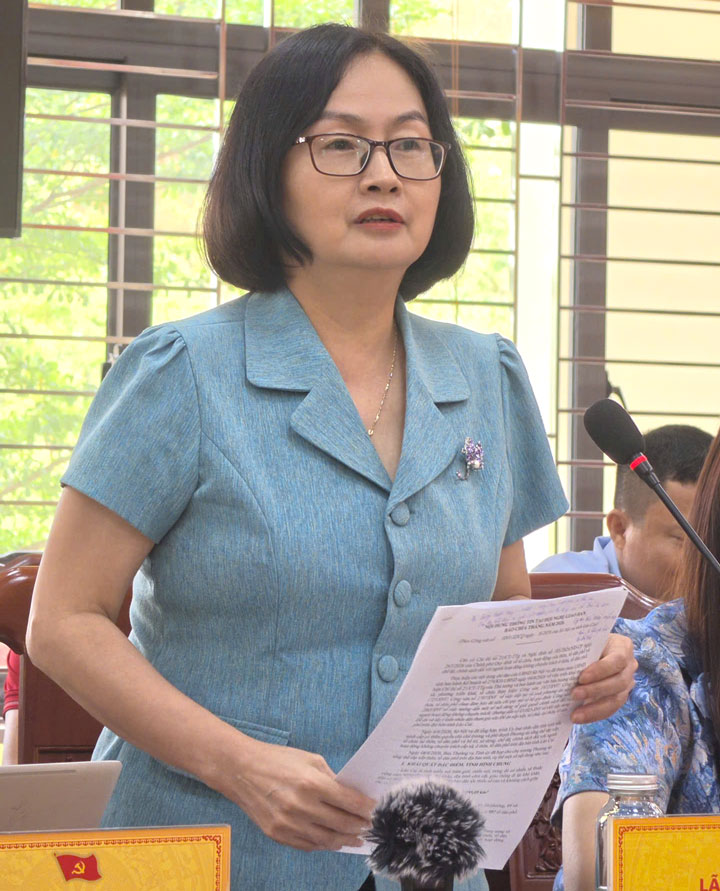
Implementing Resolution No. 18-NQ/TW and current regulations, the province will proceed to arrange villages and residential groups that do not meet the criteria according to regulations.
For 89 communes, after arrangement, there will be 1,392 villages (a reduction of 957 villages). Of which 157 villages are under 150 households; 1,235 villages are from 150 households or more.
For 10 wards, after arrangement, there will be 232 residential groups (a reduction of 325 groups). Of which 8 residential groups are under 300 households, 224 residential groups are from 300 households or more.
According to the Deputy Director of the Lao Cai Provincial Department of Home Affairs, after the arrangement, the whole province has 1,624 villages and residential groups.
Reduced 1,282 villages and residential groups, reduced 3,846 non-specialized workers in villages and residential groups; Reduced about 12,820 people who do not participate in grassroots activities. Expected expenditure will decrease by about 315 billion VND/year.
Regarding the plan for arranging and using regimes for non-specialized personnel in villages and residential groups, it is expected to include Village/Residential Group Heads; Party Cell Secretaries and Heads of Front Work Committees (number not exceeding 3 people/village, residential group).
Mr. Duong Quoc Huy - Head of the Propaganda and Mass Mobilization Committee of Lao Cai Provincial Party Committee also shared that the arrangement of villages and residential groups is not only aimed at streamlining the apparatus and improving the effectiveness and efficiency of management at the grassroots level, but also to ensure stability in community life.
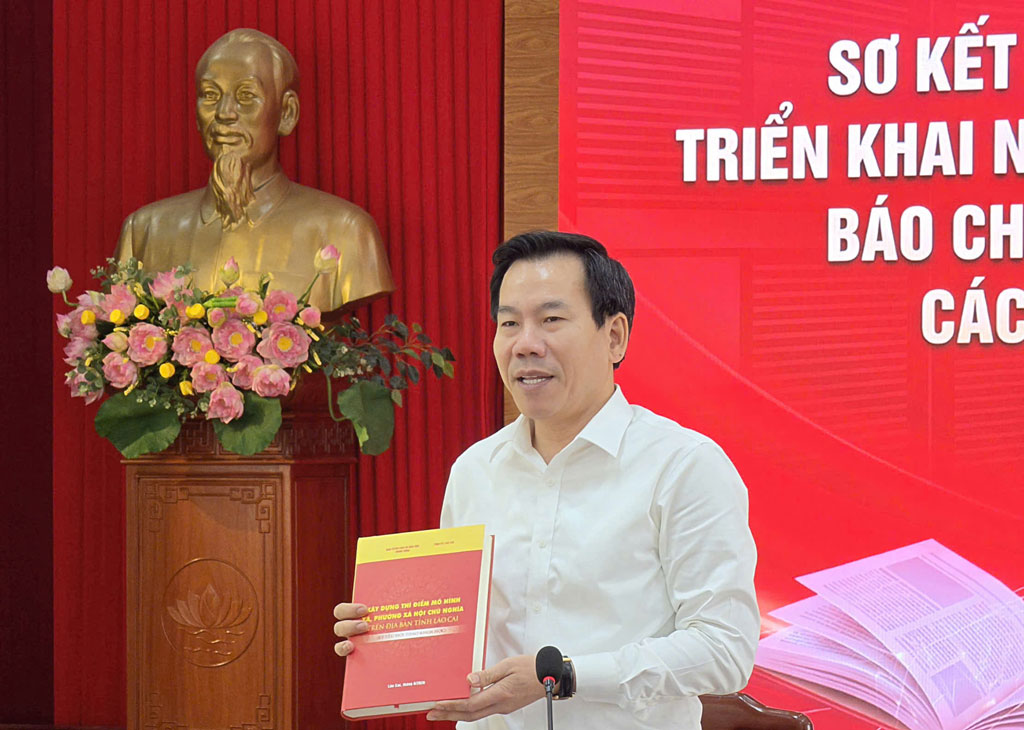
According to Mr. Huy, the implementation process needs to closely follow the criteria and conditions according to the Government's regulations, and at the same time fully consider the specific factors of the locality such as historical formation, cultural identity, customs and habits, geographical conditions, national defense - security and the natural cohesion of the community, especially in highland communes, border areas, and ethnic minority areas.
The arrangement must create consensus among the people, ensuring that after the merger, the villages and residential groups still promote their self-management role, preserve cultural identity and meet management requirements in the two-level local government model," Mr. Huy emphasized.
The Head of the Propaganda and Mass Mobilization Committee of Lao Cai Provincial Party Committee also noted that the arrangement and use of non-specialized personnel at the commune, village, and residential group levels must be carried out publicly, transparently, and objectively; and at the same time, fully resolve regimes and policies according to regulations, ensuring legitimate rights and ideological stability for the contingent of cadres in the process of arranging and consolidating the organization.


